
Automotive
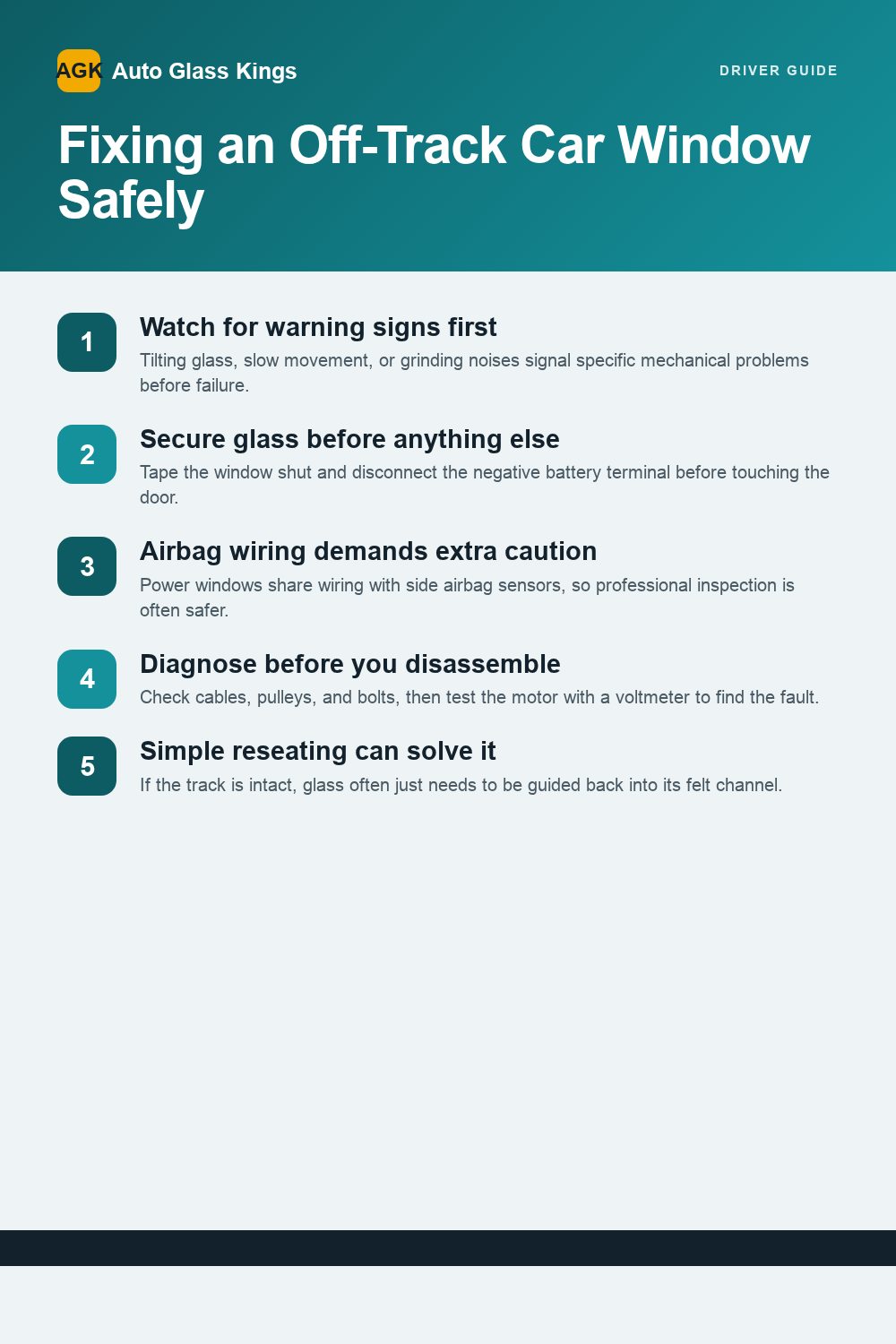
If your car window has slipped off its vertical track, don’t force the switch. Secure the glass with painter’s tape, disconnect the negative battery terminal before touching anything inside the door, and check whether the problem is a snapped cable, a broken clip, or a bent track. A slow tilt or grinding sound is often fixable by an experienced DIYer in an afternoon. Grinding paired with a sudden drop, or any exposed wiring near the airbag module, means it’s time to call a shop.
TL;DR:
- Repairing a window that has come off track may involve replacing a snapped cable, broken pulley, or regulator but can often be fixed by reseating the glass if the track is intact.
- Tools needed include a trim removal set, a voltmeter, silicone spray, and the ability to safely disconnect the battery and peel back the vapor barrier.
- If the window tilts unevenly, moves slowly, or makes grinding noises, it indicates specific issues like broken clips, dried channels, or bent tracks that require targeted repair.
- DIY fixes are suitable for minor issues such as re-aligning the glass or replacing small clips, but complex wiring near airbags or bonded glass should prompt professional service.
- Regular maintenance, like silicone lubrication into channels and inspecting clips and weatherstripping, helps prevent future off-track problems, but persistent grinding or tilt signals a mechanical failure that needs replacement.
Table of Contents
- How Do You Know Your Car Window Is Off Track?
- How Do You Fix a Window That Has Come Off Track?
- When Should You Stop and Call a Professional?
- How Do You Keep a Window From Slipping Off Track Again?
- When Does a Professional Mobile Repair Make More Sense?
- Is It Worth Fixing a Window Off Track Yourself?
- Get Your Window Back on Track With a Mobile Repair
- Sources
- FAQ
How Do You Know Your Car Window Is Off Track?
A window off track rarely fails silently. It usually gives you a warning sign before it drops into the door completely, and the specific symptom tells you a lot about what’s broken underneath.
- Tilting glass: One corner sits higher than the other. Usually a broken clip or a cable that’s slipped off a pulley.
- Slow, labored movement: The motor works but the glass crawls. Often dried weatherstripping or a dirty vertical channel.
- Grinding or crunching noise: Metal-on-metal or plastic-on-metal contact inside the door. Frequently a bent track or a stripped regulator gear.
- A pop, then the glass drops: This is the classic sign of a snapped regulator cable or broken pulley. Mechanical failure like this typically means the regulator itself needs replacing, not just realigning.
- Motor whirring with zero glass movement: The regulator has likely disconnected from the glass entirely, even though the electrical side still works fine.
Before you touch anything inside the door, tape the glass in place near the top corners so it can’t drop further, then disconnect the negative battery terminal. Power windows share wiring runs with side airbag sensors in many vehicles, and a professional inspection is generally the safer call once you’re working near those circuits.
Pro Tip: If the glass tilts but the motor still runs smoothly, don’t keep cycling the switch trying to “pop it back.” Repeated up/down cycling on a cable that’s already frayed is what turns a $150 clip job into a $400 regulator replacement.
How Do You Fix a Window That Has Come Off Track?
This sequence assumes you’re comfortable removing interior trim, working around airbag wiring safely, and reading a basic voltmeter. If any of that sounds unfamiliar, skip to the section on when to call a professional instead.
Tools you’ll want on hand:
- Plastic trim removal tool set (metal screwdrivers gouge door panels)
- 10mm socket and ratchet (the most common regulator bolt size, though some vehicles vary)
- Voltmeter
- Painter’s tape
- Silicone spray lubricant
- Work gloves and eye protection
Step 1: Secure the glass and disconnect the battery. Tape the window shut at both top corners before you do anything else. Pull the negative battery cable and wait a few minutes. This isn’t optional caution. It’s the same advice repair guides consistently give before opening a door panel, precisely because of the SRS and electrical wiring routed through most doors.
Step 2: Remove the door panel and vapor barrier. Most panels hide two or three screws behind the interior door handle trim, the armrest, or a small plastic cap near the speaker grille. Work a trim tool around the perimeter to pop the plastic clips loose rather than pulling straight out, which snaps them. Once the panel is off, you’ll find a vapor barrier, usually a sheet of black plastic or foam, sealed to the door with adhesive or double-sided tape. Peel it back slowly and set it aside; you’ll need it intact for reassembly.
Step 3: Inspect the regulator, cables, and mounting bolts. With the door open, look at the regulator arm or cable system. Check for:
- A cable that’s frayed or completely separated from its spool
- A cracked or missing plastic pulley
- Bolts that have backed out from vibration over time
- Rust or corrosion on the metal track itself
Run the switch briefly (with the battery reconnected just for this test, then disconnected again) and touch a voltmeter to the motor leads. If the motor draws power but the glass doesn’t budge, the regulator assembly itself is almost certainly compromised, not the motor.
Step 4: Reseat the glass into its channel, if the track itself is intact. Sometimes the glass has simply jumped out of its felt-lined vertical channel without anything breaking. Loosen the regulator’s mounting clamp on the glass just enough to move it, then guide the front and rear edges of the glass back into their felt runs by hand. Once it’s seated evenly, hold the glass in the “up” position and retighten the clamp. This reseating approach, removing the panel, aligning the glass into its guide channels, and securing the mounting clips, resolves a surprising number of “off track” complaints that have nothing to do with a broken part.
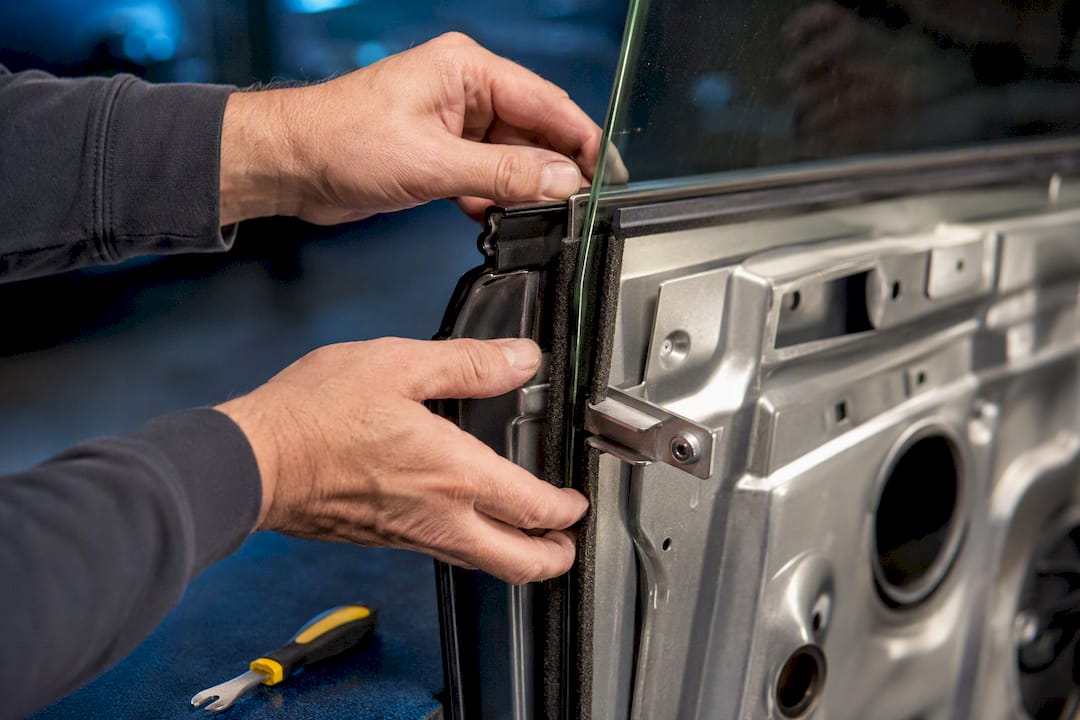
Step 5: Replace the regulator if a cable or pulley has failed. Unbolt the damaged regulator and cable assembly from the door. If the new regulator is a like-for-like replacement, many people transfer the original motor over to the new regulator rather than buying a motor separately, since motor mounts are often vehicle-specific and reusing a working motor saves money. Feed the new assembly into the door, bolt it loosely first, attach it to the glass, and check alignment before torquing everything down fully.
Step 6: Lubricate and reassemble. Spray silicone lubricant into the felt channels and along the metal track, never grease or WD-40, which attract grit and degrade rubber over time. Reseat the vapor barrier, reconnect the wiring harness, refit the door panel, and reconnect the battery.
Step 7: Test thoroughly. Cycle the window up and down at least five or six times. Listen for grinding, watch for tilt, and confirm the glass seals flush against the weatherstripping at the top. A proper test also means checking for binding or unusual noise across the full range of motion, not just one smooth cycle.
If the tilt comes back after a few cycles, the clamp likely isn’t gripping the glass evenly. If grinding returns, you probably missed a cracked pulley that needs replacing rather than lubricating. Realigning a track without fixing the part that actually failed tends to be a temporary patch at best.
When Should You Stop and Call a Professional?
Some situations aren’t worth the DIY risk, no matter how capable you are with a socket set.
- Wiring near the door harness looks exposed, frayed, or tied into the SRS/airbag system
- Plastic mounting clips are shattered rather than just loose
- The glass was bonded to its mounting bracket with adhesive, and that bond has failed. Re-bonding glass to a mount requires automotive-grade adhesive and proper cure time, and household adhesives won’t hold safely
- Heavy rust has eaten into the track or regulator frame
- You don’t have the tools, the time, or the confidence to finish the job in one sitting
On cost: typical shop estimates for an off-track window repair, including regulator replacement, tend to fall in a mid-range price band once you factor in both parts and labor, though the exact number swings a lot based on your vehicle’s make and model. A diagnostic fee at most shops covers the initial inspection and usually gets applied toward the repair if you move forward. Expect a same-day or next-day turnaround for a straightforward regulator swap. If you’re filing an insurance claim, photograph the damage before and after, keep every receipt, and ask the shop whether they handle direct billing so you’re not fronting the cost yourself.
How Do You Keep a Window From Slipping Off Track Again?
A little maintenance twice a year beats another afternoon with a trim tool.
- Spray silicone lubricant into the vertical felt channels every 6 to 12 months, or sooner if the window starts moving sluggishly. Silicone doesn’t attract dust and won’t break down rubber the way petroleum-based products do, which makes it the only lubricant worth using here.
- Wipe down the channels with a clean cloth before spraying, to clear out grit that’s already accumulated.
- Check plastic clips and cable tension every few months if your vehicle is older or the window has acted up before. Brittle clips rarely give warning before they snap.
- Inspect the rubber weatherstripping for cracking or stiffness, since dried seals make the glass work harder to travel through the channel.
Pro Tip: Lubrication fixes friction, not broken parts. If you’ve already sprayed the channel and the window still tilts or grinds, you’re looking at a mechanical failure that oil can’t solve.
When Does a Professional Mobile Repair Make More Sense?
Some window problems go beyond a regulator swap. Adhesive-bonded glass, full regulator replacement on a vehicle you’re not familiar with, or any repair that touches a camera or sensor tied into your car’s driver-assist systems calls for a shop that can also handle ADAS recalibration in-house.
Auto Glass Kings backs every install with a lifetime warranty, uses OEM-quality materials, and performs ADAS recalibration on-site rather than sending your car elsewhere. A mobile visit may cover diagnosis, the repair or replacement, a full function test, and sometimes direct insurance billing, reducing coordination between shop and insurer.
Is It Worth Fixing a Window Off Track Yourself?
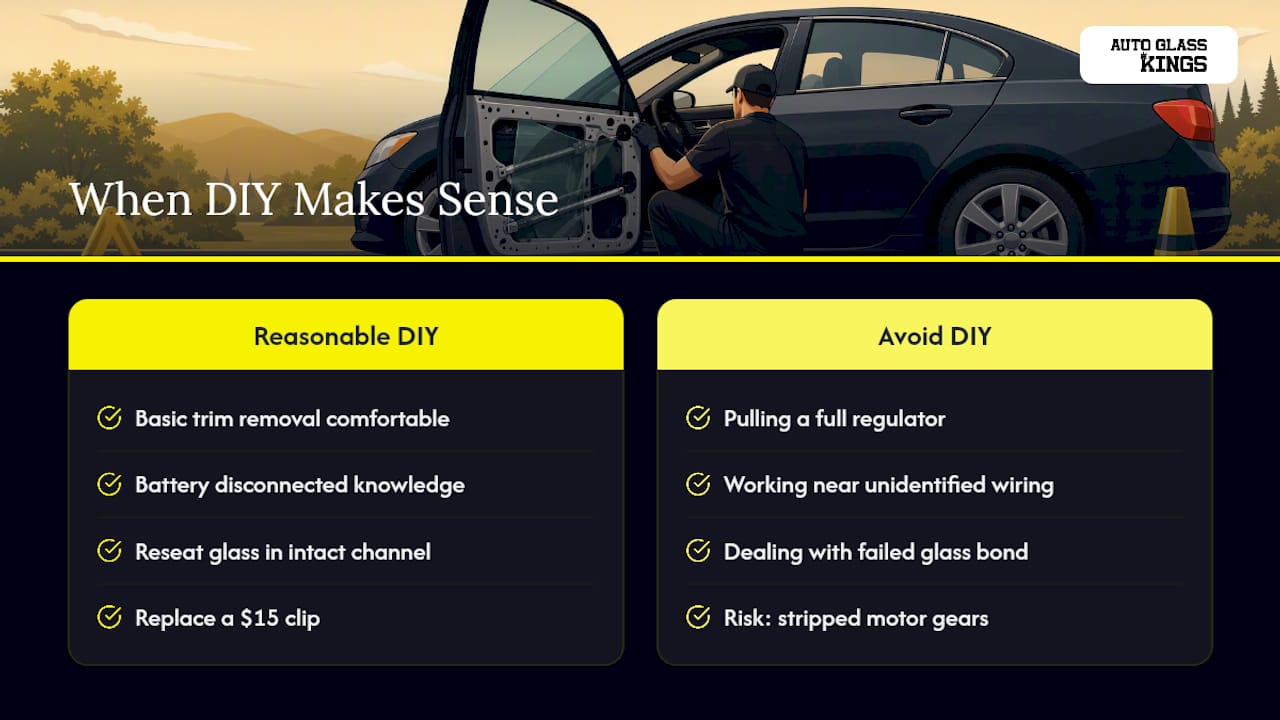
Small checks are fine to attempt if you’re already comfortable with basic trim removal and know how to work safely around a disconnected battery. Reseating glass into an intact channel or replacing a $15 clip is a reasonable weekend project.
Where I’d draw the line: once you’re pulling a full regulator, working near wiring you can’t positively identify, or dealing with a glass bond that’s failed, the math changes. A botched regulator install can strip the motor gears or leave the glass misaligned enough to crack later. A wiring mistake near the door harness can disable more than the window. Cheap DIY only stays cheap when it goes right the first time.
— Auto Glass Kings
Get Your Window Back on Track With a Mobile Repair
Some mobile auto glass services handle failures like snapped regulator cables, cracked clips, glass separated from its mounting bracket, and recalibration for sensor-equipped vehicles. Jobs typically come with a warranty and OEM-quality parts, performed at your home or office rather than a shop waiting room.

Insurance policyholders sometimes pay nothing out of pocket when service providers bill carriers directly instead of requiring you to file claims yourself. If your window has dropped, is grinding on the way up, or won’t stay sealed against the weatherstripping, request a quote for side or back window repair and have your vehicle’s make, model, the symptom you’re seeing, and a photo or two ready. That’s usually enough for a same-day or early-morning appointment, and if the fix touches your car’s sensors, ADAS calibration gets handled in the same visit.
Sources
- How Do I Fix a Car Window That’s Off Track? — Jerry
- How to fix car window off track: A Complete DIY Guide — T1A Auto
- Rapidrepair
- Carparts
FAQ
What should I do first if my car window falls off track?
Tape the glass in place so it can’t drop further, disconnect the negative battery terminal before working inside the door, and check whether the issue looks like a simple misalignment or a broken cable or clip.
How much does it cost to fix a window that’s off track?
Shop estimates for an off-track window repair, including regulator replacement, typically fall in a mid-range price band for parts and labor combined, though the exact price depends heavily on your vehicle’s make and model.
Can I fix a house window that’s off its track the same way?
No. House windows use sash balances or rollers rather than a regulator and motor system, so the diagnostic steps and repair tools in this guide apply specifically to power windows in vehicles, not residential window frames.
How do I know if it’s a DIY fix or a job for a professional?
If the glass is just tilted or slow, and you’re comfortable removing a door panel safely, a DIY reseat is often realistic. If wiring near the airbag system is exposed, clips are shattered, or the glass bond itself has failed, professional inspection is the safer route.
Will lubricating the channel fix a window that keeps falling down?
Only if the cause is friction or dried-out felt runs. Lubrication won’t repair a snapped cable or broken clip, so if the window still grinds or drops after spraying silicone into the channel, the part itself needs replacing.
Recommended
- Side Window Replacement Orange County
- Auto glass replacement: 7 common mistakes to avoid
- Auto Glass Replacement: A Complete Guide for US Drivers
🎧 Listen to This Article
Share
Recent Posts

October 27, 2026
Windshield Frit Band: What the Black Edge Does
What is the black band and dot pattern around your windshield? Learn what frit is, why it matters for adhesive bonding, and what...

October 26, 2026
Heads-Up Display Windshield: What Changes When You Replace It
A HUD windshield is built differently from standard glass. See how it works, what to check before replacement, and why calibration matters in...
October 25, 2026
Lifetime Windshield Warranty: What It Covers and What It Doesn’t
A lifetime windshield warranty rarely covers everything. Learn what it should include, what it excludes, and how ADAS calibration and insurance fit in....