
Automotive
Most stickers can be moved once, if you move them the right way. The stickers that matter most, an inspection sticker or a toll tag, are the ones with rules attached. Some are built to be peeled off and reapplied. Others are designed to die the moment you lift them. If a windshield replacement is coming, sort your stickers before the technician arrives. With our mobile service in Orange County, the glass is replaced at your home or office, so you can do this at your own driveway in a few minutes.
TL;DR
- Check each sticker by type first. Ordinary decals can usually be lifted and reapplied. Tamper-evident toll tags usually cannot.
- A valid inspection sticker can generally go onto a new windshield on the same vehicle. Moving it to a different car is another matter, and state rules vary.
- A clear transfer film, applied to the sticker’s adhesive side, lets you peel a sticker off and set it back down without scraping.
- Clean glass, mild temperatures and patience with the transfer tape decide whether a sticker lays flat.
- In California, Vehicle Code § 26708 limits where stickers may sit on a windshield, so placement matters as much as technique.
Table of Contents
- Start by identifying what kind of sticker you have
- Official stickers: inspection and registration
- Toll tags: usually one use only
- Ordinary decals: what a transfer film does
- How to transfer a sticker step by step
- Where a sticker may go on a California windshield
- Before a windshield replacement: a sticker checklist
- Removing a sticker without damage
- Why a windshield replacement is the moment to get this right
- Promo: replacement at your door, done in one visit
- Our view: sort the stickers once, and sort them early
- FAQ
- Sources
Start by identifying what kind of sticker you have
“Sticker transfer” means three different jobs, and they have different answers.
Decals and parking permits. A decal made for your own taste, a campus permit or a neighborhood pass is usually a vinyl sticker with adhesive on the back. It can be peeled, but most lose their grip after the first removal.
Official stickers. An inspection sticker is a government document in many states. These carry legal rules about whether and where you can move them.
Toll and access tags. Sticker-style transponders contain a small circuit. The glass itself often acts as part of the antenna, and the adhesive is designed so the tag breaks if it is torn off.
Why this matters for a windshield job: the old glass goes in the bin, and every sticker stuck to it goes too, unless you rescue it first. The time to decide what happens to each one is before the replacement, not after.
Official stickers: inspection and registration
If your state puts an inspection sticker on the windshield, the rules turn on one question: is the sticker staying with the same vehicle?
Virginia is a clear example. Virginia State Police says state code permits a valid inspection sticker to be removed solely to transfer it to a newly installed windshield. The same page explains that these stickers belong to the vehicle, that current anti-counterfeiting stickers are designed for removal and reapplication, and that minor cosmetic changes during a transfer do not invalidate them before the next annual inspection.
Two takeaways travel well beyond Virginia:
- Moving a sticker to a new windshield on the same car is the situation lawmakers expect and plan for.
- Moving a valid sticker to a different car is not the same thing. These stickers are tied to a vehicle, so do not treat one as a portable item. Your state motor vehicle agency or inspection program is the place to confirm its own rule.
California drivers: ask yourself which stickers on your glass are actually official. If you see one, check with the DMV or the agency that issued it before you move it anywhere other than back onto the replacement glass of the same vehicle.
Toll tags: usually one use only
People are most often surprised by toll transponders. A sticker-style tag looks like a decal, but it is a device.
The Maine Turnpike Authority’s July 27, 2026 notice describes its $5 sticker tag as tamper-evident and says removing it deactivates the tag, so it cannot be reused. A separate agency, the Southern Connector in South Carolina, gives similar instructions: its sticker tags are not transferable from vehicle to vehicle, must be mounted on the inside of the windshield, and stop working once removed. The same instructions say adhesive residue can be cleaned with isopropyl alcohol, and that a replacement is issued at no cost when the old tag is returned.
Practical rule: do not peel a toll tag off an old windshield and hope it works on the new one. Contact the toll operator before your appointment and ask what it does when glass is replaced. Many operators issue a replacement. Some tags are designed to be removed with care, but that is the operator’s instruction to give, not a guess.
A toll tag that mounts on a clip or sits loose on the dash is different. It is a portable device and simply moves with you.
Ordinary decals: what a transfer film does
A normal sticker has its adhesive on the back, which is exactly what makes it hard to move. Peeling it takes much of the grip with it, and a scraper can scratch glass or tear thin defroster lines.
One way around this is a clear transfer film. Sticker Shield’s application guide says its film is meant for stickers with a strong adhesive on the front, applied inside the glass and facing outward, and it separates these from ordinary back-adhesive stickers. For a suitable sticker, the guide says to press the sticker’s adhesive side onto the film, trim close to the edge, then set the film-backed sticker on clean glass. To move it later, peel up one corner and lift the film and sticker together, with no scraping or solvents.
So the film is a good fit if:
- the sticker is something you will move again, such as a permit you carry between vehicles;
- the sticker has front adhesive and goes inside the glass;
- you want to avoid razor blades near a tinted windshield or defroster strips.
The film does not suit a sticker you are not allowed to alter. Do not add film to an official inspection sticker unless the issuing agency permits it. Doing so could conflict with the rules for that document.
How to transfer a sticker step by step
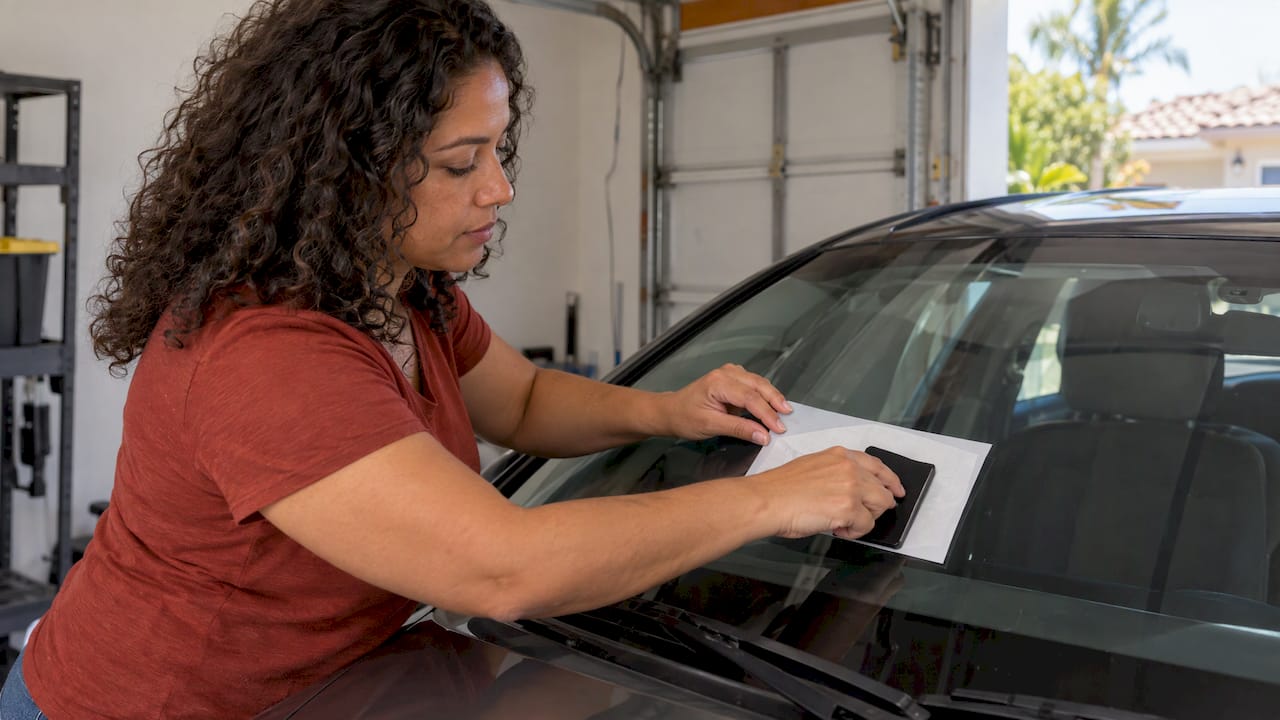
This is the routine for a decal you are free to move, for example a permit or a plain vinyl decal.
1. Wait for the right conditions
Weather affects adhesive more than people expect. StickerNerd’s installation guidance recommends a dry day between 60°F and 80°F, in shade. In Orange County, that usually means working early in the morning or in a garage, not on a hot driveway at noon.
2. Gather the basics
You need rubbing alcohol (isopropyl) or soapy water, lint-free cloths or paper towels, masking or painter’s tape, and a squeegee or an old credit card. The Car Stickers transfer guide adds a ruler and a straight edge for lining things up.
3. Lift the sticker gently
Heat helps. BuildASign’s decal guidance describes loosening adhesive with low hair-dryer heat and lifting an edge with a plastic scraper. That is the maker’s advice for its own decals, not a universal method, so do not use it on an official tag or on tinted glass. Never reach for a metal blade on a windshield.
If the sticker is on transfer film, just peel up a corner and lift the whole stack together.
4. Clean the new spot
Wash and dry the area. Then wipe with 70% isopropyl alcohol. Both StickerNerd and Car Stickers say to avoid glass cleaner, since it can leave a film that causes the decal to lift. Sticker Shield’s guide asks you to clean your hands as well, free of dirt, dust, moisture and grease.
5. Position before you commit
Hold the sticker where you want it and mark the corners with masking tape. This is where a ruler earns its place. Once the adhesive touches glass, you get far less chance to adjust.
6. Press from the center outward
Peel the backing, lower the sticker, and squeegee from the center out to push out air. The StickerNerd guide says to wait at least 2 hours, up to 24, before peeling off the clear transfer tape at a sharp 180-degree angle. Car Stickers suggests waiting 24 hours. If you are unsure, take the longer option.
7. Check placement against the law
A perfectly applied sticker in the wrong place is still a problem. See the next section.
Where a sticker may go on a California windshield
California limits what can sit on a windshield. Vehicle Code § 26708 generally prohibits objects or material on the windshield and prohibits anything that obstructs or reduces clear view. The exceptions that most drivers use:
- a sign or sticker in a seven-inch square at the lower corner of the windshield farthest from the driver;
- a five-inch square at the lower corner nearest the driver;
- transparent material at the top of the windshield under set conditions, including a bottom edge at least 29 inches above the undepressed driver’s seat reference point, no red or amber color, and no opaque lettering.
The code was amended in 2025 by SB 506, effective January 1, 2026, and it also covers clear UV-protection film for medical cases. It requires that clear, colorless material has at least 88% visible light transmittance and that the driver has a dermatologist’s certificate. The same code requires material that tears, bubbles or is otherwise worn enough to block clear vision to be removed or replaced. Ask yourself whether an old, curling decal in your line of sight fits that description.
A common mistake after replacement is to put every sticker back where it was on the old glass. Check each against the sizes above, and place it in the legal corner, not wherever it used to sit.
If you are working with a tint strip along the top, see our guide to the windshield tint strip and the 70% rule, since it follows a separate set of limits.
Before a windshield replacement: a sticker checklist
This is the most useful time to think about transfers, because the old glass leaves with the technician.
- Photograph the glass. Take a clear photo of the whole windshield from inside. It records where each sticker sat and what it says.
- List what you have. Inspection or registration sticker, toll tag, parking or campus permits, dealer decals, dash cam mounts.
- Sort by type. Official sticker: keep it for the same vehicle and follow the issuing agency’s rules. Toll tag: contact the operator about a replacement. Permit decal: use transfer film or plan to replace it.
- Remove what you want to keep, calmly. Do this at home the day before, in cool conditions, rather than rushing at the door.
- Plan the new placement. Decide which corner holds what, within the seven-inch and five-inch limits above.
- Wait before reapplying. New glass needs time for its adhesive to set. Our aftercare guide covers the first 48 to 72 hours, and the drive-away time tells you when the vehicle is ready to go back on the road. Stickers pressed onto the inside of the glass should not interfere with a fresh urethane bond, but keep the area around the edges clear and follow your installer’s instructions.
If your car has a camera, rain sensor or head-up display, remember that the area behind the mirror is reserved for those systems. Keep stickers out of that zone. Our guides on ADAS calibration after windshield work and matching glass to your sensors explain why that area matters.
Removing a sticker without damage
Old stickers leave adhesive, and the wrong tool leaves scratches. Some points to keep in mind:
- Skip scraping. Sticker Shield warns that scraping an old sticker can damage the thin integrated defroster strips in the glass.
- Heat, then peel low. Warm the sticker with a hair dryer, lift a corner with plastic, and pull at a low angle.
- Clean residue with isopropyl alcohol. The Southern Connector instructions name it for adhesive left by a removed tag.
- Do not push a tinted or coated windshield. If the glass has a film or coating, pick the gentlest option.
Defroster lines matter in cold snaps too. If you are curious about how heat interacts with glass, see how to ramp heat to avoid a defroster cracking your windshield.
Why a windshield replacement is the moment to get this right
Most stickers are fine if you lose one. The ones that are not fine are the ones tied to your car’s legal status or your toll account. A replacement forces the question, because every sticker on the old glass is suddenly in play at once.
The less time the job takes, the less time you spend without a working windshield and without your tags. Our mobile appointments start from 5 AM, and the replacement and any required ADAS calibration happen on-site in a single visit, so you are not driving between a shop and a calibration center with a half-sorted windshield.
Promo: replacement at your door, done in one visit
If a cracked windshield is what brought you here, you do not have to arrange a trip. Auto Glass Kings comes to you anywhere in Orange County, at home, at work or at the school drop-off line, with free mobile service, OEM-quality materials and a lifetime warranty on every install. We handle insurance billing directly, and many customers pay nothing out of pocket.
Start on our windshield replacement page to book. For a chip you want fixed fast, see windshield repair, listed at $79 to $129. If your car has driver-assistance cameras, our ADAS calibration is listed at $250 to $700 and is done in-house.
Our view: sort the stickers once, and sort them early
We replace windshields every day, and the pattern is simple: drivers think about the crack first and the stickers last. Our advice reverses that. Spend ten minutes before your appointment deciding what each sticker is, because that decides what you can keep.
Our approach is built around not making you run around. We do the glass, any needed calibration and the insurance billing in one visit, with OEM-quality materials and a lifetime warranty on the install. That leaves you free to deal with the small things, like moving a permit or calling your toll operator, instead of juggling three appointments.
A good windshield job leaves you with clear glass, working sensors and every sticker where the law says it can be. Plan for all three.
Auto Glass Kings
FAQ
Can I move a windshield sticker to another car?
Ordinary decals sometimes can be moved, especially if you used a transfer film from the start. Official stickers and toll tags are different. Inspection stickers belong to the vehicle, and sticker-style toll tags often stop working once removed. Check with the issuing agency before moving either.
Is there a way to transfer a sticker without ruining it?
Yes, with a suitable sticker. Apply it to a clear transfer film, trim close, and place it on clean glass. To move it, peel up a corner and lift the film and sticker together. Heat from a hair dryer helps loosen stubborn adhesive, and plastic tools protect the glass.
Can I put decals on my windshield in California?
Only in limited places. Vehicle Code § 26708 allows qualifying stickers in a seven-inch square at the lower corner farthest from the driver or a five-inch square at the lower corner nearest the driver, plus some conditional exceptions. Anything that obstructs clear view is prohibited.
What happens to my toll tag when my windshield is replaced?
The tag on the old glass usually cannot be reused, since many are designed to deactivate on removal. Contact your toll operator before the appointment and ask about a replacement tag for the new windshield.
Sources
- California Vehicle Code § 26708
- Virginia State Police: inspection sticker questions
- Maine Turnpike Authority: sticker tag notice
- Southern Connector: sticker tag mounting instructions
- Sticker Shield: windshield sticker application
- StickerNerd: sticker installation
- Car Stickers: transfer sticker application guide
- BuildASign: custom car window decals
Recommended
- Stop Windshield Cracks: NHTSA Backed Steps, Repair Rules for Drivers
- Drivers: DIY Windshield Tint Strip, 70% Rule, and ADAS Help
- Drivers: Spot Windshield Delamination Before It Disrupts ADAS
- Windshield Urethane Adhesive: Types, Primer and Cure Times
🎧 Listen to This Article
Share
Recent Posts
November 18, 2026
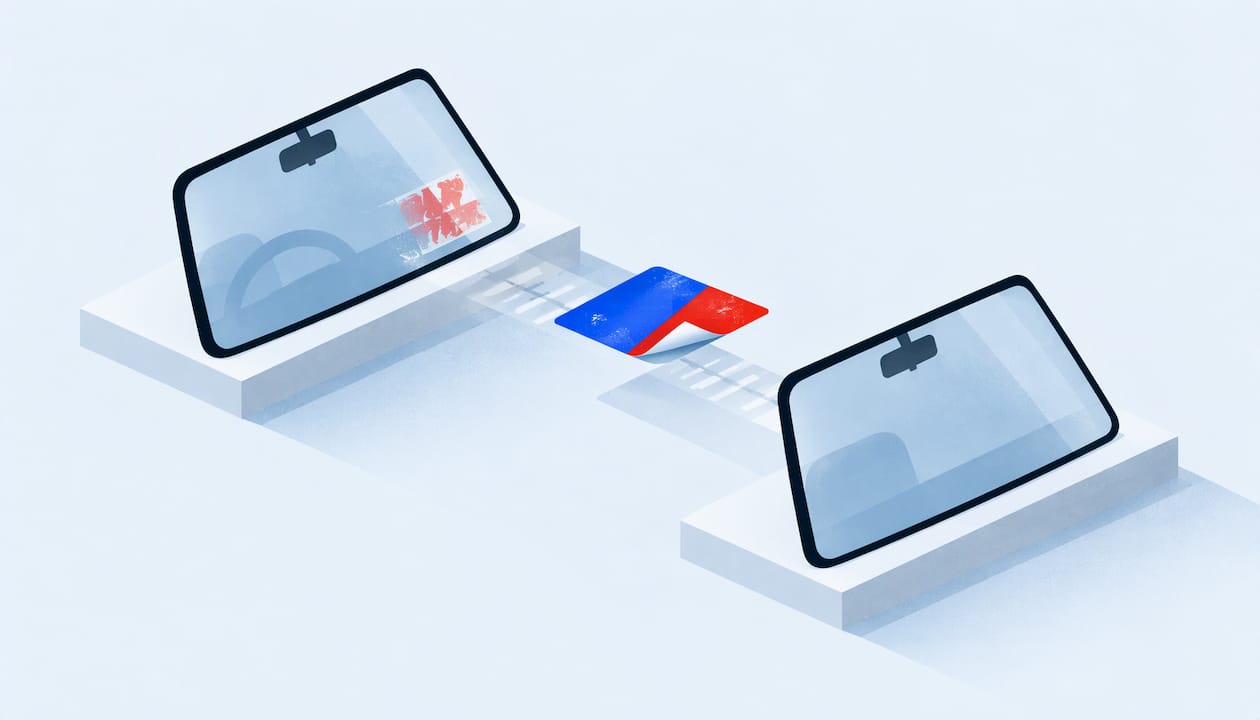
Sticker Transfer on a Windshield: What Moves, What Doesn’t
Moving a windshield sticker to a new windshield or another car: which stickers can be reused, how to peel and reapply them, and...
November 17, 2026
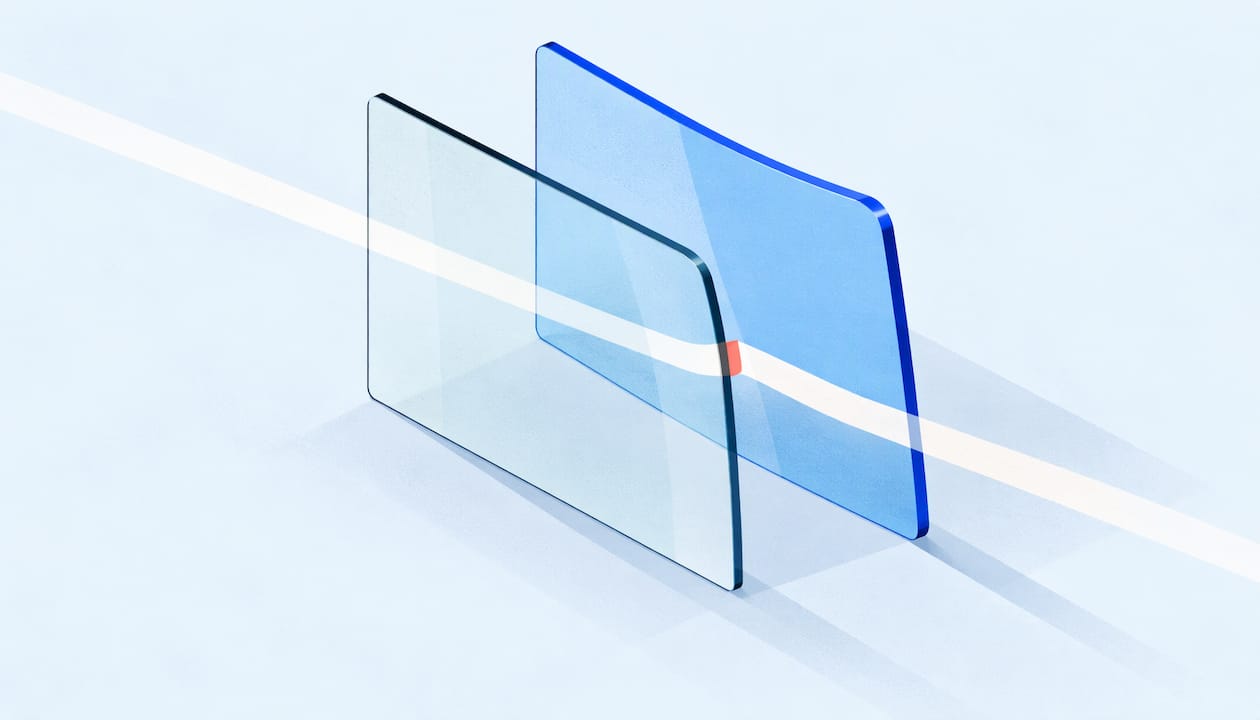
Optical Distortion in a Windshield: What’s Normal, What Isn’t
Wavy or warped view through your windshield? Learn what optical distortion is, what causes it, what’s normal on new glass, and how to...
November 16, 2026
Calibration After Chip Repair: When You Need It
Does a windshield chip repair mean ADAS calibration? Learn when a chip near the camera calls for replacement, what that triggers, and how...