
Automotive
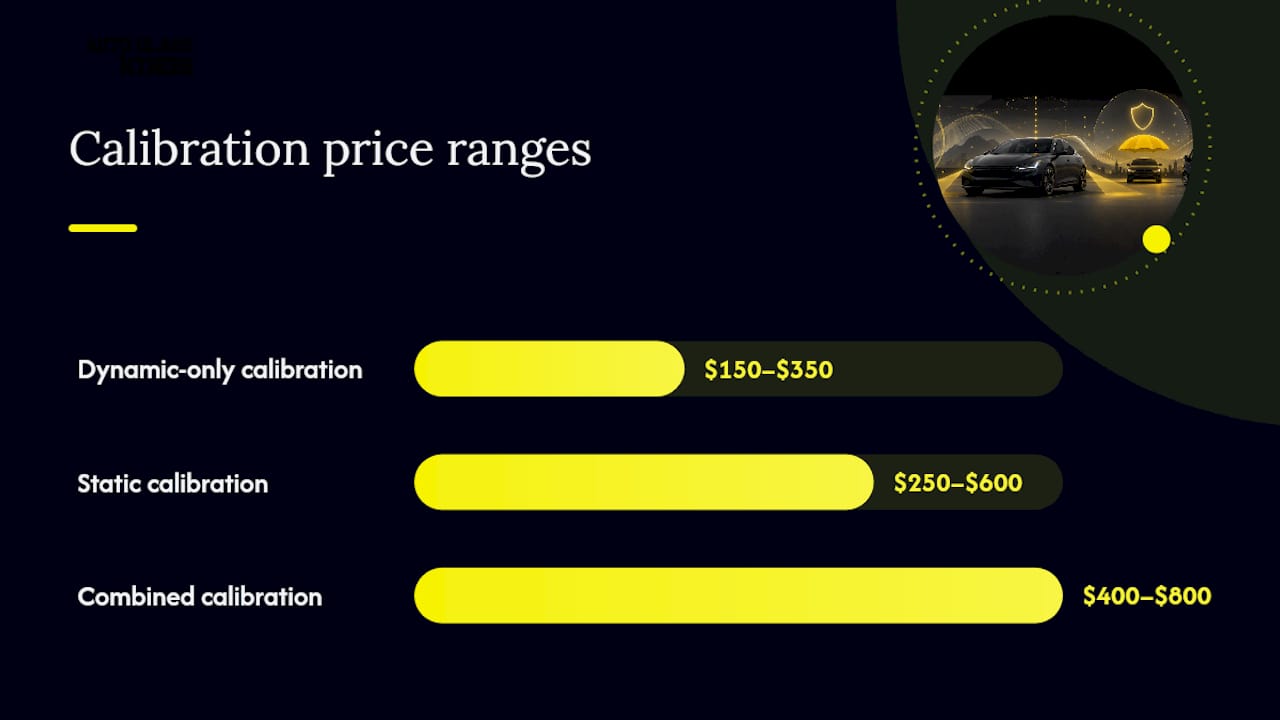
Most ADAS calibrations run $150 to $600 per system, with combined static and dynamic jobs on newer vehicles reaching $400 to $800 depending on the make. If your manufacturer requires calibration after a windshield replacement or collision repair, insurance typically covers it as part of the claim. Your final number depends on the vehicle, how many sensors need resetting, and whether the shop uses static targets, a road test, or both.
TL;DR:
- Calibration costs vary from $150 to $350 for dynamic-only, $250 to $600 for static, and up to $800 for combined procedures, depending on the vehicle and sensors involved.
- Insurance typically covers ADAS calibration if required after windshield or collision repairs, but proper documentation and OEM procedure references are crucial for approval.
- Calibration is needed after repairs affecting sensors, such as windshield replacements or bumper work, and is event-triggered, not based on vehicle mileage or time.
- Shops must include pre-scan and post-scan diagnostics, OEM-specific software, and calibration attempts in their quotes, with detailed documentation to avoid delays or disputes.
- In-house mobile calibration services can perform all steps on-site, with proper paperwork, warranty, and insurance billing, reducing repair time and ensuring adherence to OEM standards.
Table of Contents
- How Much Does ADAS Calibration Cost For Different Procedures?
- What Is ADAS and How Does Calibration Work?
- Why Calibration Matters More Than Finding the Lowest Price
- What Factors Actually Drive ADAS Calibration Pricing?
- Does Insurance Cover ADAS Calibration?
- How Long Does ADAS Calibration Take?
- What Should You Ask For Before and After Calibration?
- First-Hand Capability: What In-House Mobile Calibration Looks Like
- How Does ADAS Calibration Affect Your Vehicle Warranty?
- How Often Should ADAS Be Recalibrated?
- Documentation Beats a Cheap Quote Every Time
- Book Mobile ADAS Calibration With Direct Insurance Billing
- Sources
- FAQ
How Much Does ADAS Calibration Cost For Different Procedures?
A dynamic-only calibration, the kind that just needs a road test with the vehicle driven at a set speed past lane markings, typically runs $150 to $350. Static calibration, which requires target boards, precise measurements, and a level shop floor, tends to cost more: usually $250 to $600. Combined jobs, where a vehicle needs both, commonly land between $400 and $800 depending on vehicle complexity and provider.
Real-world examples make this concrete. A windshield camera recalibration on a mainstream sedan after glass replacement often falls at the lower end of that range. A front radar reset after bumper repair on a vehicle with adaptive cruise control usually costs more, since radar calibration often demands static targets placed at exact distances. A luxury SUV needing both front camera and radar calibration, plus a 360-degree surround system, can push toward the top of the range or beyond.
When a shop quotes a “per system” or “flat” calibration price, ask what’s actually included. Verify these three things before you approve any estimate:
- Does the quote cover pre-scan and post-scan diagnostics, or are those billed separately?
- Is target equipment and OEM-specific software included, or is that a sublet charge to another facility?
- Does the price assume one calibration attempt, or does it include a second pass if the first doesn’t pass?
What Is ADAS and How Does Calibration Work?
ADAS stands for Advanced Driver Assistance Systems, the network of cameras, radar units, ultrasonic sensors, and sometimes lidar that power features like lane departure warning, automatic emergency braking, and adaptive cruise control. Each sensor has to “see” the road from a precise, factory-specified angle. Move it even a few millimeters and the system can misjudge distance or fail to trigger at all.
Static calibration happens in a controlled shop environment using printed targets, measured distances, and sometimes a laser alignment tool. Dynamic calibration happens on the road, where the vehicle’s software recalibrates itself as it drives past lane markings at a specified speed for a set distance. Some vehicles require both steps in sequence.
Windshield replacement almost always affects the forward-facing camera mounted near the rearview mirror. Collision repairs are more likely to disturb radar units in the bumper or fender, along with ultrasonic parking sensors, depending on where the impact occurred.
Why Calibration Matters More Than Finding the Lowest Price
A misaligned camera or radar doesn’t necessarily throw a warning light. It can just quietly perform worse. Most drivers report that safety systems have helped prevent a crash in their own experience, which underscores what’s at stake when those same systems go uncalibrated after repair work.
Skipped or botched calibration creates problems beyond safety. A misaligned sensor can trigger phantom warnings, intermittent dashboard alerts, or false braking events that seem random but trace back to a sensor reading the world at the wrong angle. Diagnosing that after the fact often costs more than doing the calibration correctly the first time.
There’s a liability angle too. If a manufacturer’s repair procedure calls for calibration and a shop skips it to save time or money, and that vehicle is later involved in a crash where ADAS should have intervened, the shop and possibly the insurer can face real exposure. That risk is exactly why insurers increasingly expect calibration documentation as standard practice, not an optional add-on.
What Factors Actually Drive ADAS Calibration Pricing?
Dealerships tend to charge more because they carry higher fixed overhead and use brand-certified technicians and diagnostic software. Independent shops and mobile specialists often price in the middle of the range while still using manufacturer-approved tooling. Whether a shop owns its own static targets and calibration software, or has to sublet the work to another facility, also shows up in your final bill.
Beyond whom does the work, price scales with:
- The number of sensors needing calibration (one camera versus camera, radar, and parking sensors together)
- Whether the procedure is static, dynamic, or both
- Labor for removing and replacing parts, plus pre-scan and post-scan diagnostics
- Vehicle complexity and how detailed the OEM documentation requirements are for that specific model
Average calibration charges cluster around $350 to $500 per vehicle industry-wide, though shops often add research fees tied to vehicle class since looking up OEM specs for a less common model takes real time.
Pro Tip: Ask upfront whether the quoted price includes sublet calibration costs. A shop that sends your car elsewhere for static targeting may tack on a markup you won’t see until the final invoice.
Does Insurance Cover ADAS Calibration?
Insurance commonly covers calibration when it’s required by the manufacturer as part of a covered repair, whether that’s windshield replacement or collision work. It’s typically billed as a distinct line item rather than folded into the glass or body work charge. AAA found that the average cost to relocate ADAS components and calibrate them during windshield replacement runs about $360, and that ADAS-related work can represent up to 37% of total collision repair costs. That’s a big enough number that insurers scrutinize it closely.
To get calibration approved without a fight, follow these steps:
- Ask the shop to list calibration as its own line item on the repair order, not bundled into “labor.”
- Request that the estimate cite the specific OEM procedure number for your vehicle’s calibration requirement.
- Confirm the shop will provide pre-scan and post-scan reports as documentation, not just a verbal confirmation that “it’s calibrated.”
- Submit that documentation with the claim before repairs begin, if your insurer allows pre-authorization.
Insurers are measurably more likely to approve calibration charges when shops attach clear pre-scan and post-scan documentation citing OEM procedures. Vague line items like “system check” get flagged and delayed far more often than itemized, procedure-referenced estimates.
How Long Does ADAS Calibration Take?
Dynamic-only calibration usually takes 20 to 45 minutes, most of it spent driving a specific route at a steady speed. Static calibration often takes longer, generally 45 minutes to 2 hours, since it involves precise target placement, measurements, and sometimes multiple calibration cycles if the first attempt doesn’t register cleanly. Combined jobs can stretch past 2 hours.
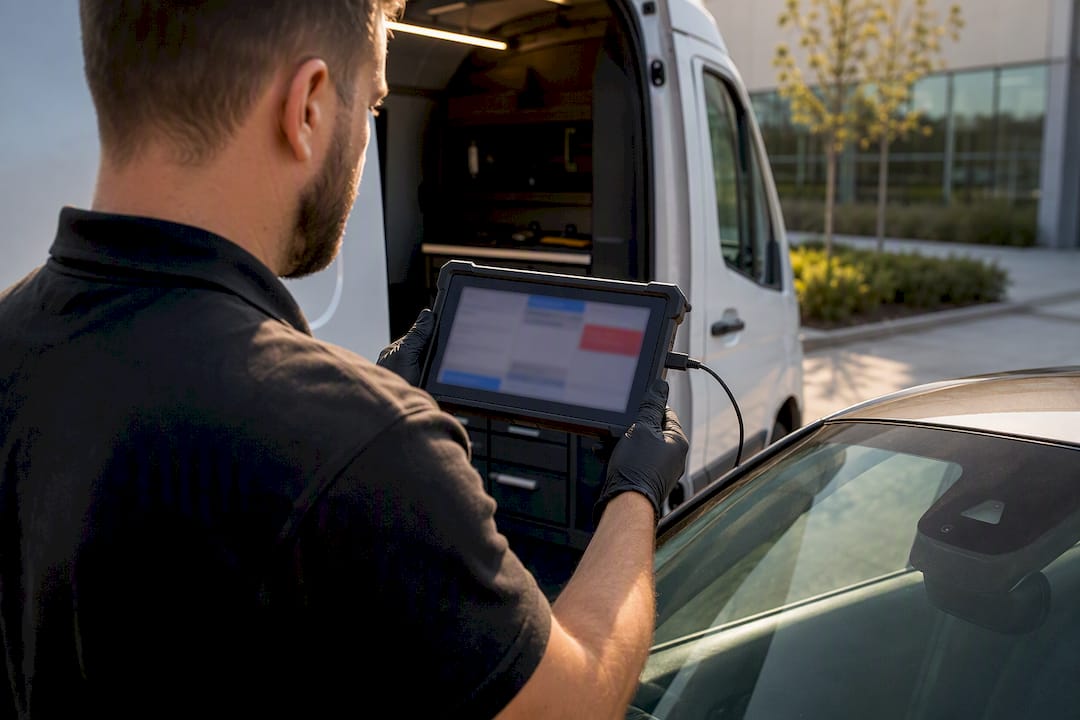
The full appointment includes more than just the calibration itself, including thorough pre-scan and post-scan diagnostics to ensure all systems are properly checked and reset. Technicians run a pre-scan to catch existing fault codes, remove and replace any parts blocking sensor access, complete the static setup or road test, then run a post-scan to confirm the system now reads correctly. Mobile calibration handles all of this on-site in your driveway or office parking lot, provided there’s enough space and a road nearby for the dynamic portion. Shop-based calibration follows the same steps but requires you to drop off the vehicle.
What Should You Ask For Before and After Calibration?
Before work begins, confirm calibration is listed on the insurance estimate, not just verbally promised. Have your VIN, keys, and a clear, flat space ready for mobile technicians, and be prepared to authorize a short road test if dynamic calibration is needed.
After the job, request:
- A calibration certificate naming the exact procedure and equipment used
- Copies of both the pre-scan and post-scan reports
Pro Tip: If a shop can’t produce a pre-scan or post-scan report, or the estimate uses vague language like “ADAS check” instead of citing an OEM procedure, treat that as a red flag and ask questions before you sign off.
First-Hand Capability: What In-House Mobile Calibration Looks Like
Auto Glass Kings performs ADAS recalibration in-house on-site, using OEM-quality materials backed by a lifetime warranty, including for luxury makes. Direct insurance billing means paperwork and approval friction happen behind the scenes, not on your end.
How Does ADAS Calibration Affect Your Vehicle Warranty?
Skipping a required calibration can create warranty complications you won’t discover until something goes wrong. Most automakers specify calibration as a mandatory step after certain repairs, particularly windshield replacement, bumper work, or any service that disturbs a camera or radar bracket. If that step gets skipped and an ADAS-related failure happens later, a dealer can point to the missing calibration record as the reason a warranty claim gets denied.
This cuts both ways for aftermarket repairs, too. Using a non-OEM windshield or bumper part doesn’t automatically void your ADAS warranty, but if that part shifts the camera’s mounting angle out of spec and nobody recalibrates it correctly, the resulting sensor failure may not be covered. The calibration certificate you get after the work isn’t just proof for your insurer. It’s your evidence trail if a warranty dispute ever comes up, showing the procedure was performed to OEM specification with documented equipment.
Some manufacturer procedures go further, specifying vehicle conditions that must be met for the calibration to count as valid: full fuel tank, correct tire pressure, no extra cargo weight in the trunk. A calibration performed outside those preconditions can technically be invalid even if the equipment showed a passing result. Keep your paperwork, and ask your shop whether your vehicle’s procedure has any of these specific requirements.
How Often Should ADAS Be Recalibrated?
There’s no mileage-based schedule for ADAS calibration the way there is for oil changes. Calibration is event-triggered, not time-triggered. You need it any time a sensor’s physical position could have shifted: after windshield replacement, bumper or fender repair, wheel alignment on some vehicles, suspension work that changes ride height, or any collision involving the front or rear fascia.
That said, vehicles that see rougher conditions warrant more attention. Frequent gravel-road driving, regular parking lot fender benders, or a car that’s had multiple glass chips repaired over the years all raise the odds that a sensor bracket has loosened or shifted slightly without anyone noticing. If your lane-keeping assist starts drifting or your automatic emergency braking feels twitchy for no clear reason, that’s worth a diagnostic scan even without a recent repair.
A simple rule covers most situations: any time a technician removes, replaces, or works near a camera, radar unit, or ultrasonic sensor, assume calibration is required until an OEM procedure says otherwise. Waiting for a warning light isn’t a reliable strategy, since many misalignments don’t trigger one at all.
Documentation Beats a Cheap Quote Every Time
The lowest calibration quote rarely turns out to be the best deal once you factor in a denied insurance claim or a warranty dispute down the road. Ask for the paperwork before you ask for the discount.
— Auto Glass Kings
Book Mobile ADAS Calibration With Direct Insurance Billing
Some providers offer mobile ADAS calibration services that bring the calibration bay to your driveway. Instead of driving to a dealership and waiting for a service bay to open up, a technician may arrive with OEM-quality parts, set up static targets or run the dynamic road test on-site, potentially handling insurance billing directly.
Jobs may come with a warranty and documentation to back it: pre-scan and post-scan reports, plus a calibration certificate naming the exact procedure performed. Before any work starts, ask to have calibration listed as its own line item on your estimate so your insurer sees it clearly from the start. That single step is often what separates a smooth approval from a delayed one.
Ready to get a number for your specific vehicle? Request a quote for ADAS calibration and find out what your car actually needs, whether that’s a windshield swap with camera recalibration or a standalone radar reset after body work.
Sources
- Fixing advanced vehicle systems makes up over one-third of repair costs following a crash | AAA Newsroom
- Do insurance companies pay for ADAS calibrations? | ADASfind
- Price your ADAS calibrations | Revv
FAQ
How Long Does an ADAS Calibration Take?
Dynamic-only calibration usually takes 20 to 45 minutes, while static calibration can run 45 minutes to 2 hours depending on the vehicle and number of sensors. Combined static and dynamic jobs typically take longer than either procedure alone, sometimes exceeding 2 hours.
Can Safelite Do ADAS Calibration?
Some national glass chains offer ADAS calibration alongside windshield replacement, though availability and equipment vary by location and vehicle make. Auto Glass Kings performs calibration in-house on mobile visits across the vehicles it services, including luxury brands, without requiring a separate shop appointment.
Does Insurance Cover ADAS Calibration?
Insurance commonly covers ADAS calibration when it’s required by the manufacturer as part of a covered repair like windshield replacement or collision work. Shops that list calibration as a distinct line item and provide pre-scan and post-scan documentation with OEM procedure references see faster approval rates than those using vague wording.
Can I Calibrate ADAS Myself?
Static calibration requires specialized target boards, precise measurements, and OEM-specific software that most owners don’t have access to, making DIY calibration impractical for the vast majority of vehicles. Dynamic calibration technically just requires driving, but without professional scan tools to confirm the system recognized the recalibration, there’s no reliable way to verify it worked.
Recommended
Share
Recent Posts
October 6, 2026
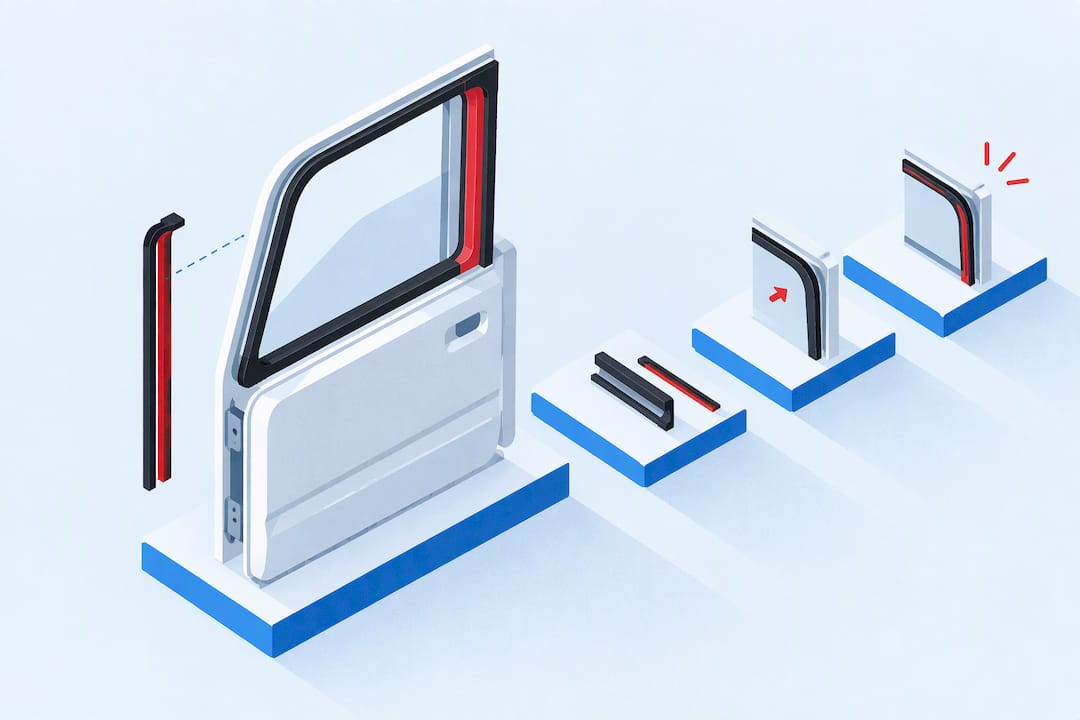
1–3 Hours Per Door: Run Channel Replacement That Puts Fitment First
DIY run channel replacement with a fitment-first approach. Follow parts, tools, and a 1–3 hours per door procedure, plus when to call a...
October 5, 2026
Expect $305–$3,400: U.S. Tesla Windshield Costs and How to Save
U.S. model-by-model Tesla windshield price ranges ($305–$3,400 observed). Practical steps to cut out-of-pocket costs, mobile ADAS calibration options, and…...
October 4, 2026
Drivers, Follow Your Installer’s Wash Time After Windshield Replacement
Follow your installer’s written safe-wash time. If none, wait 24 hours for a hand wash and 48 to 72 hours before automatic or...