
Automotive
An edge crack almost always means replacement, not repair, because the perimeter of the glass is where a windshield loses its structural strength fastest. If the crack is longer than a few inches, growing, or anywhere near your line of sight, stop driving on it and get a professional inspection today. Replacement often means your car’s ADAS cameras need recalibration afterward.
TL;DR:
- Edge cracks tend to spread rapidly and compromise the structural integrity of the windshield, especially when near the perimeter or in the driver’s line of sight.
- Any crack reaching within two inches of the windshield edge typically requires full replacement, as repair offers limited durability and safety.
- Damage at the edge can negatively affect ADAS sensors and safety systems, and most insurers prefer replacement for long or deep cracks.
- Proper installation, clear drainage, and gradual temperature changes can help prevent future edge cracks; rushing repairs or repairs with store-bought fillers increases long-term risks.
- Immediate action is recommended when cracks spread, cross into the driver’s view, or cause glass flexing, prioritizing inspection and professional replacement if needed.
Table of Contents
- What Is an Edge Crack in a Windshield, and How Does It Form?
- Why Edge Cracks Are More Dangerous Than They Look
- Can an Edge Crack Be Repaired, or Does It Need Replacement?
- What to Expect During Repair vs. Replacement
- Safe Temporary Steps Before You Get It Fixed
- How to Prevent Edge Cracks From Happening Again
- Auto Glass Kings’ Perspective: Why We Treat Edge Cracks as Urgent
- Get Your Windshield Inspected and Replaced Without the Runaround
- Sources
What Is an Edge Crack in a Windshield, and How Does It Form?
An edge crack starts at or reaches the outer perimeter of the glass, within roughly two inches of the frame. That’s different from a floater or center crack, which sits inside the main body of the windshield and stays contained longer. Edges behave differently under stress. Glass near a boundary has fewer directions to distribute pressure, so cracks that begin there propagate faster than ones that start in the middle of the pane.
A few things commonly trigger edge damage:
- Improper installation that leaves uneven adhesive or excess pressure at the frame
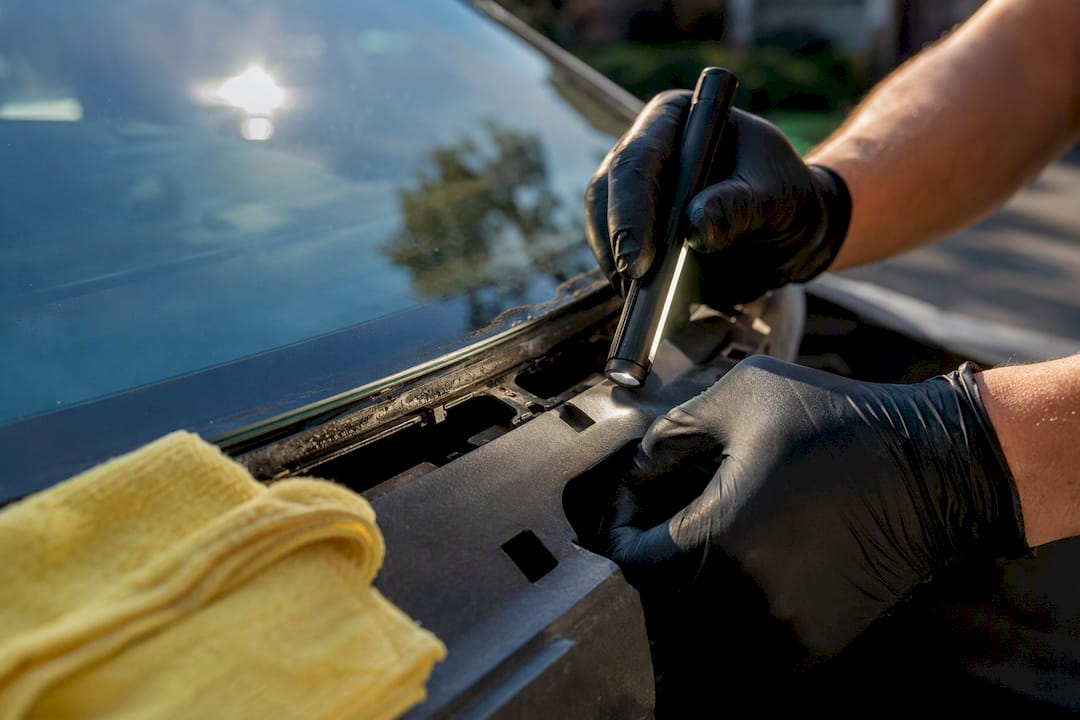
- A worn or damaged windshield cowl panel that shifts how force and water drain around the base of the glass
- Thermal shock, like blasting hot defrost on a frozen windshield
- Body flex from potholes, door slams, or a soft chassis over rough roads
Small installation errors from a prior job often surface months later as a crack with no obvious cause. If your windshield was replaced within the last year and a crack appears at the edge with no impact point, a bad seat or adhesive bead from that install is a reasonable suspect.
Why Edge Cracks Are More Dangerous Than They Look
Your windshield isn’t just a window. It’s a structural part of the car. It helps support the roof in a rollover and acts as a backstop for the passenger airbag, which deploys upward and outward against the glass in many vehicles. Engineering reviews of windshield performance confirm this dual role, which is why damage at the edge matters more than damage in the middle.
Edge cracks spread faster for a simple reason: stress concentrates at boundaries. Research on glass fracture behavior shows that cracks near an edge propagate under lower stress than cracks farther from the boundary, and vibration, temperature swings, and body flex all accelerate that growth.
A small edge crack today can become a full-windshield failure within days, not months, especially in hot climates where daily temperature swings between a cold morning and a sun-baked afternoon put constant tension on the glass. Once a crack reaches the edge, moisture can also work its way into the gap between the glass and frame, corroding the pinch weld underneath and weakening the bond that holds the windshield in place. That’s a problem you can’t see from the driver’s seat, and it’s one more reason edge damage gets flagged differently than a chip in the middle of the glass.
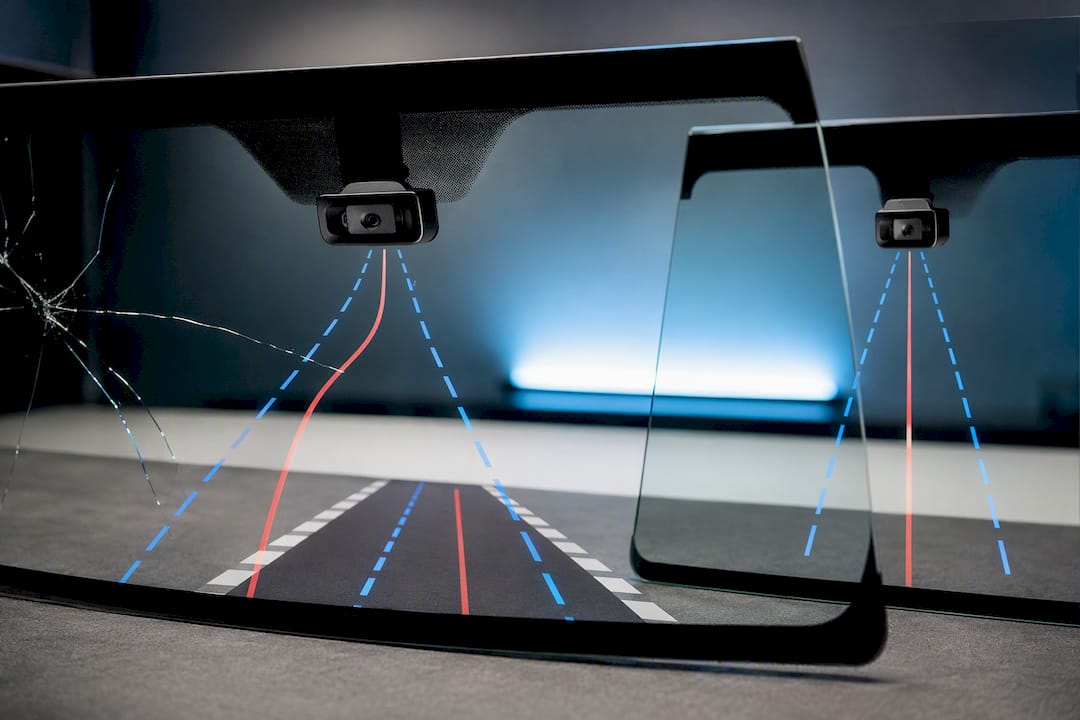
There’s also the ADAS angle. Forward-facing cameras mounted near the windshield read lane lines and following distance through that glass. A crack near the sensor’s field of view, especially at the edge, can distort readings enough to affect how the system behaves.
Can an Edge Crack Be Repaired, or Does It Need Replacement?
Technicians and insurers generally lean toward replacement for edge cracks, but not every one is a lost cause. The decision usually comes down to four factors: length, depth, distance from the edge, and whether the damage sits in the driver’s direct line of sight.
Here’s roughly how shops evaluate it:
- Length: Short cracks are sometimes repairable; longer cracks usually are not, especially if they originate at the edge.
- Depth: If the crack has traveled through both layers of laminated glass rather than just the outer layer, repair typically won’t hold.
- Distance from the edge: The closer the crack sits to the perimeter, the less reliable a resin repair becomes, since the edge is harder to seal against future flexing.
- Sightline: Even a repairable crack in the driver’s direct view is often replaced anyway, since resin repairs can leave slight distortion.
Insurance industry guidance on cracked windshields notes that cracks originating from installation stress or frame pressure tend to spread and commonly get flagged for replacement rather than repair. Some shops will still attempt a repair on a short, shallow edge chip if it hasn’t reached the driver’s sightline, but even then, industry examples of edge-crack cases show technicians frequently recommending replacement anyway for long-term durability, because a repaired edge crack has a real chance of reopening under normal driving stress.
Pro Tip: If your insurer is deciding between a $0 copay glass claim and a full deductible, ask specifically whether they classify edge damage differently from center damage. Many policies waive the deductible for repairable chips but not for replacements, so getting the classification right matters for your wallet, not just your safety.
Insurers and manufacturers both weigh in here, and their guidance usually points the same direction: when in doubt on an edge crack, replace it.
What to Expect During Repair vs. Replacement
A resin repair, when it’s actually viable, takes about 30 minutes. A technician injects clear resin into the crack under pressure, cures it with UV light, and polishes the surface. It stops the spread but doesn’t fully restore the glass to its original strength, which is exactly why edge cracks rarely qualify.
Replacement is a longer process:
- The old windshield is removed along with the failed urethane seal.
- The frame is cleaned and prepped, and any cowl panel or clip issues are addressed before the new glass goes in.
- The new windshield, ideally OEM-quality glass, is set with fresh adhesive and left to cure.
- Cameras and sensors tied to ADAS features (lane departure, automatic braking, adaptive cruise) get recalibrated.
- A final safety and leak check confirms the seal and sensor alignment before the car is handed back.
The adhesive cure time is the real bottleneck. Most jobs need the vehicle to sit for at least an hour before it’s safe to drive, and ADAS recalibration can add another hour depending on the system. A same-day replacement is standard, but rushing the drive-away time is where a lot of botched jobs start.
Safe Temporary Steps Before You Get It Fixed
Do this while you wait for a technician:
- Park in shade or a garage to limit temperature swings on the glass.
- Skip the defrost blast. Warm the cabin gradually instead of shocking cold glass with hot air.
- Keep the crack dry. Cover it with clear packing tape if rain is likely.
- Avoid rough roads and hard door slams, both of which flex the frame.
Don’t reach for superglue or any store-bought filler. It seeps into the crack, hardens unevenly, and makes it far harder for a technician to run a proper resin repair later, often forcing a replacement that might not have been necessary otherwise. Avoid pressing on the cowl area near the base of the windshield too, since that’s already a stress point if the panel underneath is worn.
If the crack is spreading visibly, crosses into your sightline, or the glass flexes when you press near it, stop driving and arrange a mobile inspection rather than waiting it out.
How to Prevent Edge Cracks From Happening Again
Most edge cracks trace back to installation quality or neglected hardware, both of which are preventable.
- Use certified installers who properly seat the glass and apply an even adhesive bead. Rushed jobs are a top cause of installation-related edge stress.
- Keep the cowl panel and drainage channels clear of debris. A clogged or cracked cowl changes how pressure and water sit against the base of the glass.
- Warm up frosted glass gradually and scrape ice carefully rather than chipping at it near the edges.
- After any fender-bender or hard pothole hit, have the seal and frame checked even if the glass looks fine.
Pro Tip: If you notice a whistling sound at highway speed that wasn’t there before, check the edge of your windshield. It’s often the first sign of a seal gap that precedes a crack, not just wind noise.
Auto Glass Kings’ Perspective: Why We Treat Edge Cracks as Urgent
We don’t treat edge cracks the way we treat a small chip in the middle of the glass, because they aren’t the same risk. An edge crack is a structural warning sign, and waiting on it usually costs more in the end, both in dollars and in safety margin. That’s why our mobile technicians prioritize edge damage for same-week inspection rather than letting it sit on a schedule.
We use OEM-quality glass, back every install with a lifetime warranty, and handle ADAS calibration in-house so your car’s safety systems are verified before we leave, not weeks later at a separate appointment.
— Auto Glass Kings
Get Your Windshield Inspected and Replaced Without the Runaround
This service offers an alternative to sitting on a waitlist or driving your car to a shop with a spreading crack. They come to your home or office to inspect the damage on-site, and if replacement is the right call, install high-quality glass with a warranty and handle ADAS recalibration before finishing the job.
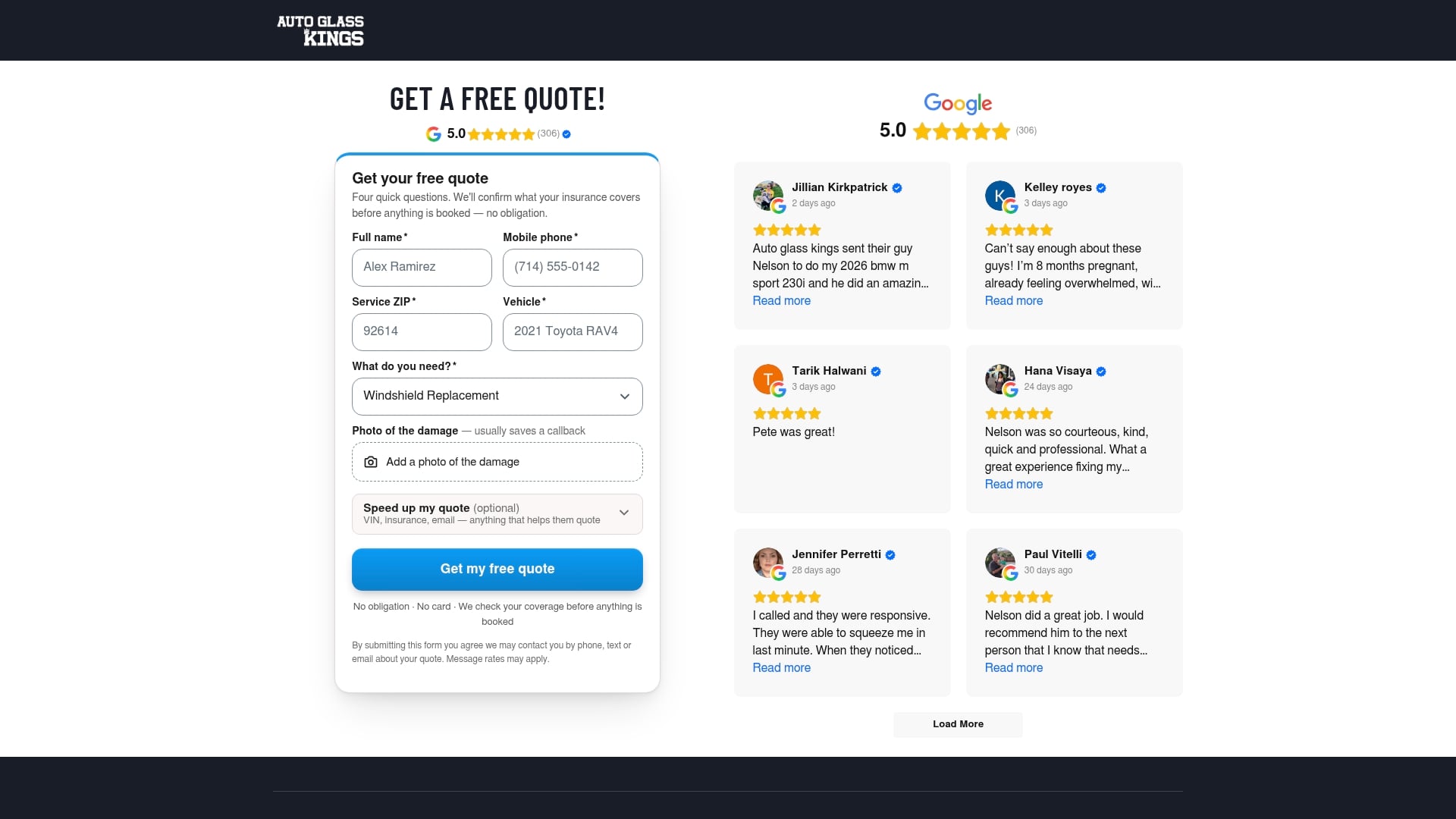
Booking is simple: request a quote, tell us the crack’s location and length, and we’ll confirm whether it’s a repair or a full windshield replacement job before we show up. Most appointments run early morning to fit around your schedule, and we bill most insurance carriers directly, so many customers pay nothing out of pocket. If you’re already looking at a full job, our guide to auto glass replacement walks through cost and process in more detail. Ready to get it checked? Request your quote and we’ll take it from there.
Sources
- Can a Cracked Windshield Be Repaired? – Nationwide
- Windscreens and safety: a review — Monash University
- Glass fracture behavior — University of Michigan (deepblue)
Recommended
- ADAS Calibration Orange County
- Auto Glass Kings Review: ADAS Calibration After Glass Replacement
- Windshield Replacement Orange County
- Auto Glass Replacement: A Complete Guide for US Drivers
🎧 Listen to This Article

Share
Recent Posts

October 27, 2026
Windshield Frit Band: What the Black Edge Does
What is the black band and dot pattern around your windshield? Learn what frit is, why it matters for adhesive bonding, and what...

October 26, 2026
Heads-Up Display Windshield: What Changes When You Replace It
A HUD windshield is built differently from standard glass. See how it works, what to check before replacement, and why calibration matters in...
October 25, 2026
Lifetime Windshield Warranty: What It Covers and What It Doesn’t
A lifetime windshield warranty rarely covers everything. Learn what it should include, what it excludes, and how ADAS calibration and insurance fit in....