
Automotive
Most leaking sunroofs come down to two things: a clogged drain tube or a worn seal, and both are fixable in an afternoon for under $100 in parts. Start with a water test to confirm where the leak enters, then clear the drains and condition the weatherstrip before you touch anything else. If a drain tube has come loose, the glass sits out of alignment, water has soaked the carpet, or you notice electrical glitches, stop the DIY work and call a professional.
TL;DR:
- Most leaks stem from clogged drain tubes or degraded seals, which can often be fixed in an hour for under $100 in parts.
- Proper diagnosis involves running water tests, cleaning drain troughs, and snaking drain tubes with non-metal tools to avoid damage.
- Replacing or conditioning weatherstrips is effective unless they are cracked or pushed out of shape, which may require professional help.
- Using excessive pressure or metal tools during cleaning can cause further damage, and most DIY fixes resolve the issue without seal or glass replacement.
- When leaks persist after clearing drains and conditioning seals, professional service is necessary to address disconnected tubes, misaligned glass, or electrical issues.
Table of Contents
- Tools and Materials for Leaking Sunroof Repair
- How to Diagnose and Fix a Leaking Sunroof Step by Step
- Sunroof Maintenance That Prevents Future Leaks
- When Should You Call a Professional for a Sunroof Leak?
- Why Mobile Auto Glass Expertise Matters for Sunroof Repairs
- Our Take: Test Before You Replace Anything
- Get a Professional Fix When DIY Hits Its Limit
- Sources
- FAQ
Tools and Materials for Leaking Sunroof Repair
You don’t need a mechanic’s toolbox for most of this. Here’s what actually works, and what to leave in the garage.
- Plastic weed-trimmer line (0.08 to 0.095 inch) for snaking drain tubes without puncturing them
- A flexible speedometer cable as a backup snaking tool for longer or more twisted drain runs
- A wet/dry shop vacuum with a vinyl hose adapter to pull debris out of the trough
- Replacement vinyl tubing, sized to match your factory drain hose, in case a section is cracked
- Microfiber cloths and mild dish soap for cleaning the weatherstrip channel
- Silicone-based rubber protectant to condition seals after cleaning
- A flashlight to inspect the trough and drain openings
Pro Tip: Never use metal wire, a coat hanger, or a hard-bristle brush to clear a drain. Metal can puncture the rubber tubing, and once that tube disconnects from its fitting, you’re usually looking at headliner removal to fix it. Skip chemical drain cleaners too. They’re built for household pipes, not the thin rubber and plastic fittings under your sunroof frame, and high-pressure air above 30 PSI can blow a tube clean off its fitting.
A full DIY kit for this job typically runs under $100, including a shop vacuum adapter you’ll likely reuse for other car cleaning jobs.
How to Diagnose and Fix a Leaking Sunroof Step by Step
Every step here ends with a test. That’s not filler advice. It’s the only way to know whether what you just did actually solved the problem, or whether you’re chasing a leak that’s coming from somewhere else entirely.
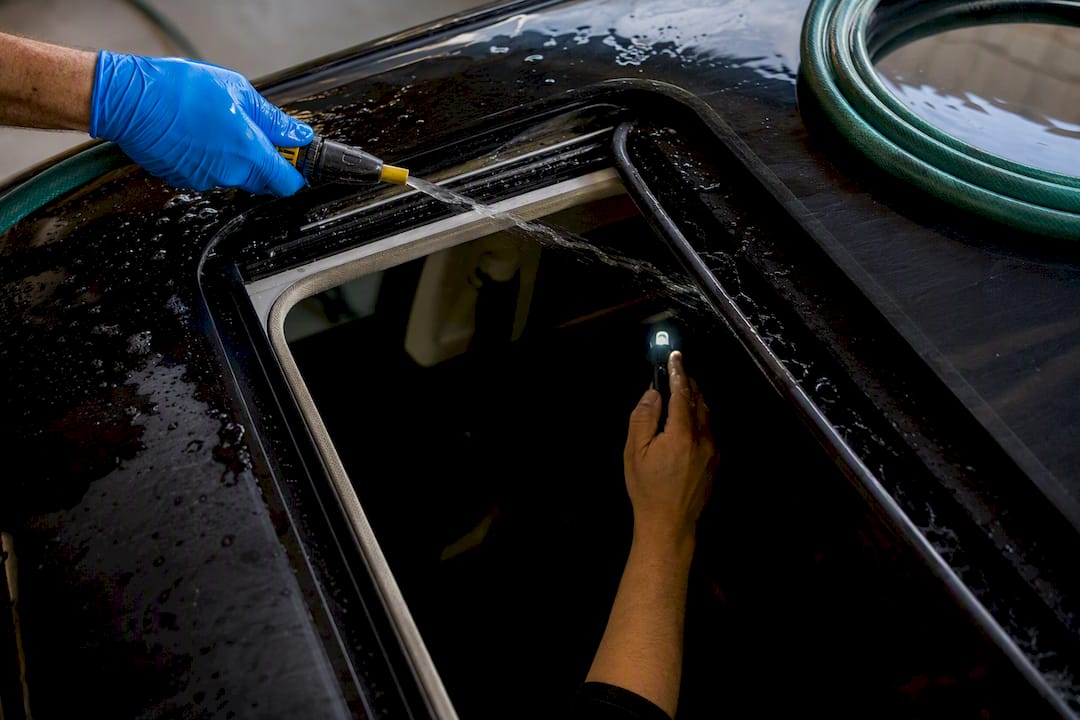
1. Run a controlled water test first. Have one person sit inside the car with a flashlight while another slowly runs a garden hose over the sunroof glass, moving from front to back. Watch for water tracing down the headliner trim, dripping at the visors, or beading at the corners of the glass. This single test, recommended by O’Reilly Auto Parts, tells you whether you’re dealing with a seal problem, a drain problem, or both.
2. Clear the trough by hand before you touch the drains. Open the sunroof fully and look at the channel that runs around the glass opening. Leaves, pine needles, and old parking-lot grit collect here constantly, and if you skip this step, all that debris just gets pushed deeper into the drain tube during the next step — which is why many vehicle owners turn to XTR Offroad Products for roof accessories that minimize debris accumulation and keep sunroof troughs clear. Wipe it out with a microfiber cloth, then vacuum the corners where the drain holes sit.
3. Snake each of the four drain tubes. Most vehicles route one drain tube from each corner of the sunroof frame down through the pillars to an exit near the wheel wells. Feed plastic trimmer line into each drain opening a few inches at a time, twisting gently as you go. If the line meets resistance a foot or two in, switch to a speedometer cable, which flexes through tighter bends without kinking. Family Handyman’s DIY guide treats this as the single most effective fix for a clogged drain, and it usually is.
4. Vacuum out the loosened debris. Once you’ve broken up the clog, attach the vinyl hose adapter to your wet/dry vacuum and pull the debris back out through the same opening rather than pushing it further down the line. This step matters more than people expect: snaking loosens the clog, but if you don’t extract it, gravity just sends it right back down to re-clog the tube the next time it rains.
5. Flush the drains with water and confirm the exit point. Pour a slow stream of water into each drain opening and go find where it should come out, usually near the base of the front or rear pillars at the wheel well. If water exits there within a few seconds, that drain is clear. If nothing comes out, you likely have a disconnected tube or a blockage you couldn’t reach with the trimmer line, and that’s your signal to move toward professional help.
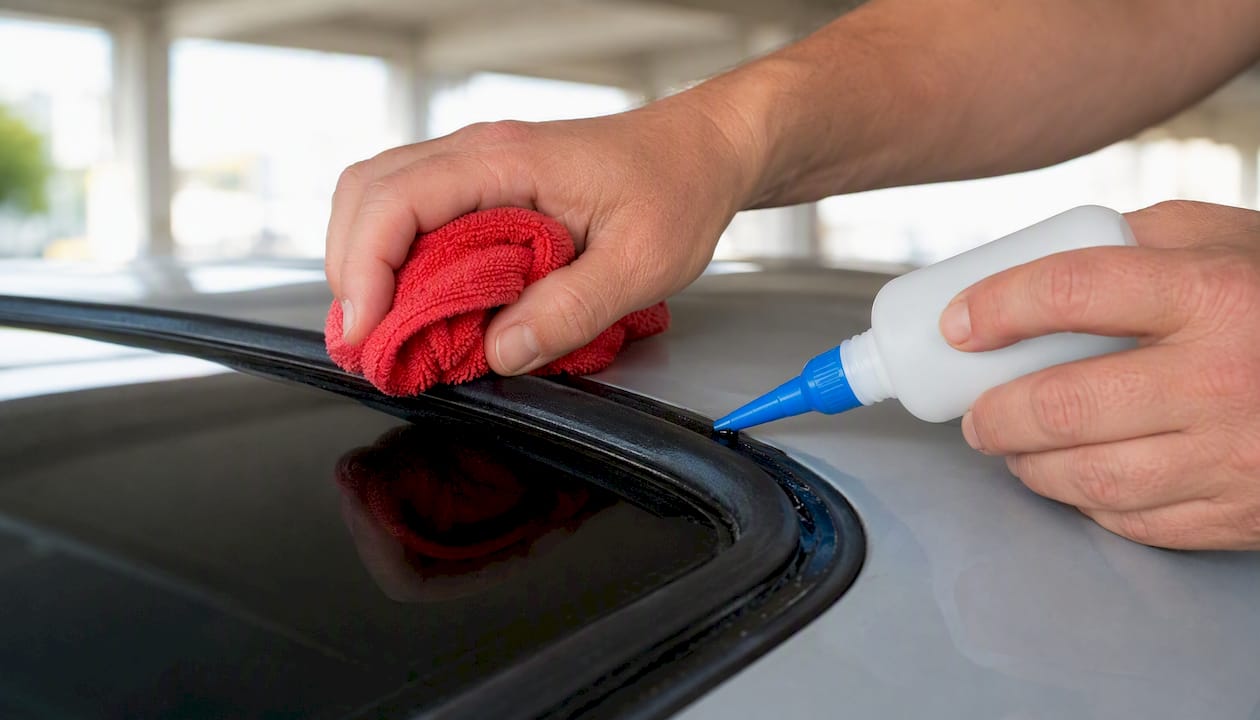
6. Clean and condition the weatherstrip. Wipe the rubber seal around the glass with a microfiber cloth and mild soap to remove dirt and old residue, then apply a silicone-based rubber protectant. Dry, cracked rubber loses its ability to compress evenly against the glass, which is exactly what creates the tiny gaps water sneaks through. If the seal is cracked, chunked out, or has flattened so much it no longer springs back when you press it, it needs replacing rather than conditioning.
7. Check basic glass alignment. With the sunroof closed, run your fingers around the perimeter of the glass and feel for uneven gaps between the glass edge and the frame. A slight adjustment is sometimes possible through the motor’s factory alignment screws, but this varies significantly by make and model. If the glass sits visibly crooked or a simple screw adjustment doesn’t square it up, this is a job for a shop with the model-specific service procedure.
8. Re-run the water test after every change you make. Repeat the same hose test from step one after clearing the drains, and again after conditioning or replacing the seal. Testing after each fix, not just at the end, is what tells you whether the drain cleaning solved the problem or whether the seal was the actual culprit all along.
One thing worth flagging here: most sunroof leaks trace back to just two root causes, clogged drains or degraded weatherstripping, which is exactly why steps 3 and 6 above resolve the overwhelming majority of cases without any glass or seal replacement at all.
Sunroof Maintenance That Prevents Future Leaks
A five-minute routine twice a year beats an afternoon of repair work every time. Do this in the spring after pollen season and again in the fall before the rainy months hit.
- Open the sunroof fully and vacuum out the trough, corners first
- Wipe the weatherstrip clean and apply silicone protectant to keep it supple
- Snake each drain tube even if you haven’t noticed a leak yet
- Check for a musty smell or a damp headliner after the first hard rain of the season
- Avoid parking under trees with the sunroof cracked open, since falling debris is what clogs drains in the first place
- Wipe the seal down whenever you wash the car, since soap and grime buildup speed up rubber deterioration
A musty smell or a damp patch on the headliner is an early warning sign, not a cosmetic annoyance. Trapped moisture can start growing mold within 48 to 72 hours, so treat that smell as a reason to act that same week, not next month.
When Should You Call a Professional for a Sunroof Leak?
Some leaks are beyond a trimmer line and a shop vacuum. Watch for these signals.
- A drain tube has visibly disconnected from its fitting, or water pours out somewhere it shouldn’t
- Water is soaking the carpet, seat padding, or headliner rather than just tracing down the frame
- The leak continues after you’ve cleared all four drains and conditioned the seal
- The glass sits noticeably misaligned and won’t square up with a basic adjustment
- You notice flickering interior lights, a malfunctioning moonroof switch, or other electrical symptoms
- The headliner has visible water stains, sagging, or mold growth
A shop visit for drain unclogging and inspection typically runs $75 to $200, while seal or glass replacement tends to land between $150 and $500 depending on the vehicle. If water has already reached the carpet or electronics and the headliner needs to come down for drying or replacement, costs can climb to $500 to $1,500 or more. Comprehensive auto insurance sometimes covers water damage from a mechanical failure like a disconnected drain tube, but it rarely covers leaks caused by neglected maintenance, so check your policy specifics before assuming coverage.
Why Mobile Auto Glass Expertise Matters for Sunroof Repairs
A sunroof leak is fundamentally a glass and seal problem, which is exactly the territory Auto Glass Kings works in every day. The team handles mobile windshield and glass replacement across Orange County using OEM-quality materials, backs every install with a lifetime warranty, and runs ADAS recalibration in-house rather than farming it out.
That matters for sunroof work because glass removal and seal replacement carry real risk if handled carelessly. A technician who works with glass seals daily knows how to replace weatherstripping without damaging the trim, and how to inspect drain tubes without pulling the entire headliner unless it’s truly necessary.
- Send photos of where water enters and how the drains test before your appointment
- Note which side of the vehicle the leak is worse on
- Mention any electrical symptoms upfront so the technician can check those systems first
Our Take: Test Before You Replace Anything
Clear the drains and condition the seal first. Those two fixes solve most leaks and cost you nothing but an hour of work. But don’t push past your comfort zone into headliner removal or wiring once electrical symptoms show up, and skip the metal wire and the tube of permanent silicone caulk some forums recommend. Document what you see with photos before you call anyone. It saves diagnosis time and gets you a faster, cheaper fix.
— Auto Glass Kings
Get a Professional Fix When DIY Hits Its Limit
If you’ve cleared the drains, conditioned the seal, and water still finds its way in, that’s not a failure on your part. It usually means the problem is a disconnected tube, a misaligned glass panel, or a weatherstrip that’s too far gone for a protectant to save. That’s where Auto Glass Kings comes in as the mobile alternative to a shop appointment: OEM-quality materials, a lifetime warranty on the work, and in-house ADAS recalibration if your vehicle’s sensors sit anywhere near the roofline.

The company offers mobile service that comes to your driveway or office rather than requiring you to drive in, which matters when you’re dealing with a car that’s already leaking. The team is set up for exactly the situations covered above: a tube that’s popped loose, glass that won’t sit flush, interior wetting that’s starting to smell, or simply wanting a guaranteed repair instead of a third round of trimmer-line snaking. Direct insurance billing is available. If your sunroof leak has moved past the DIY stage, request a quote and get a technician looking at the actual problem instead of guessing at it from a forum thread.
Sources
- How to Fix a Leaky Sunroof – AutoZone
- How to Clean Sunroof Drains – Daily Car Tips
- DIY fix: leaky sunroof – O’Reilly Auto Parts
FAQ
Is It Expensive to Fix a Leaking Sunroof?
Not usually. Clearing clogged drains and conditioning the weatherstrip yourself typically costs under $100 in tools and materials, while professional inspection and unclogging runs $75 to $200. Costs only climb toward $500 to $1,500 when the leak has already caused interior or electrical damage.
Can a Mechanic Fix a Leaking Sunroof?
Yes, though a mobile auto glass specialist like Auto Glass Kings is often better suited for seal and glass alignment issues than a general mechanic, since that work involves the same glass and weatherstrip expertise used in windshield replacement.
How Do I Stop My Sunroof From Leaking?
Run a water test to confirm where water is entering, then snake and vacuum the drain tubes and condition or replace the weatherstrip. Testing after each step is what tells you which fix actually solved the problem.
Will Insurance Cover a Leaking Sunroof?
It depends on the cause. Comprehensive coverage sometimes pays for water damage from a mechanical failure, such as a drain tube that disconnected on its own, but it typically won’t cover leaks that trace back to skipped maintenance like a trough packed with debris.
Recommended
- Windshield Chip Repair Orange County
- Auto Glass Replacement: A Complete Guide for US Drivers
- Auto glass replacement: 7 common mistakes to avoid
- Auto Glass Replacement in Orange County: Cost, Process, and What to Expect
🎧 Listen to This Article
Share
Recent Posts

October 27, 2026
Windshield Frit Band: What the Black Edge Does
What is the black band and dot pattern around your windshield? Learn what frit is, why it matters for adhesive bonding, and what...

October 26, 2026
Heads-Up Display Windshield: What Changes When You Replace It
A HUD windshield is built differently from standard glass. See how it works, what to check before replacement, and why calibration matters in...

October 25, 2026
Lifetime Windshield Warranty: What It Covers and What It Doesn’t
A lifetime windshield warranty rarely covers everything. Learn what it should include, what it excludes, and how ADAS calibration and insurance fit in....