
Automotive
Quick Summary: Mobile windshield repair is ideal for busy drivers because it comes to your location, saving time and avoiding missed work. It’s best for minor damage, especially when safety and quick fixes matter, but may not suit vehicles with complex sensors or extensive damage. Proper preparation and understanding insurance options help ensure a smooth, on-site repair process.
You leave a meeting in Irvine, glance up, and see a fresh chip crawling across the passenger side. You do not have two hours for a shop run across Orange County. That is the real problem this guide solves. It shows when mobile repair saves time, how insurance often helps, and why on-site service works well for daily drivers, luxury cars, and classics. This advice comes from real repair and claims questions drivers face every day.
Why Mobile Repair Fits a Busy Driver’s Day
The appointment comes to you. Mobile repair saves the hardest part of glass service: rearranging your day. A technician can meet you at home, the office, or even while your car sits in a parking lot. That means less missed work, less child-care juggling, and no waiting room. For Orange County drivers, that convenience matters more when traffic already eats up enough time. If you want the bigger picture, link this back to the main pillar on why mobile windshield repair is ideal for busy drivers.
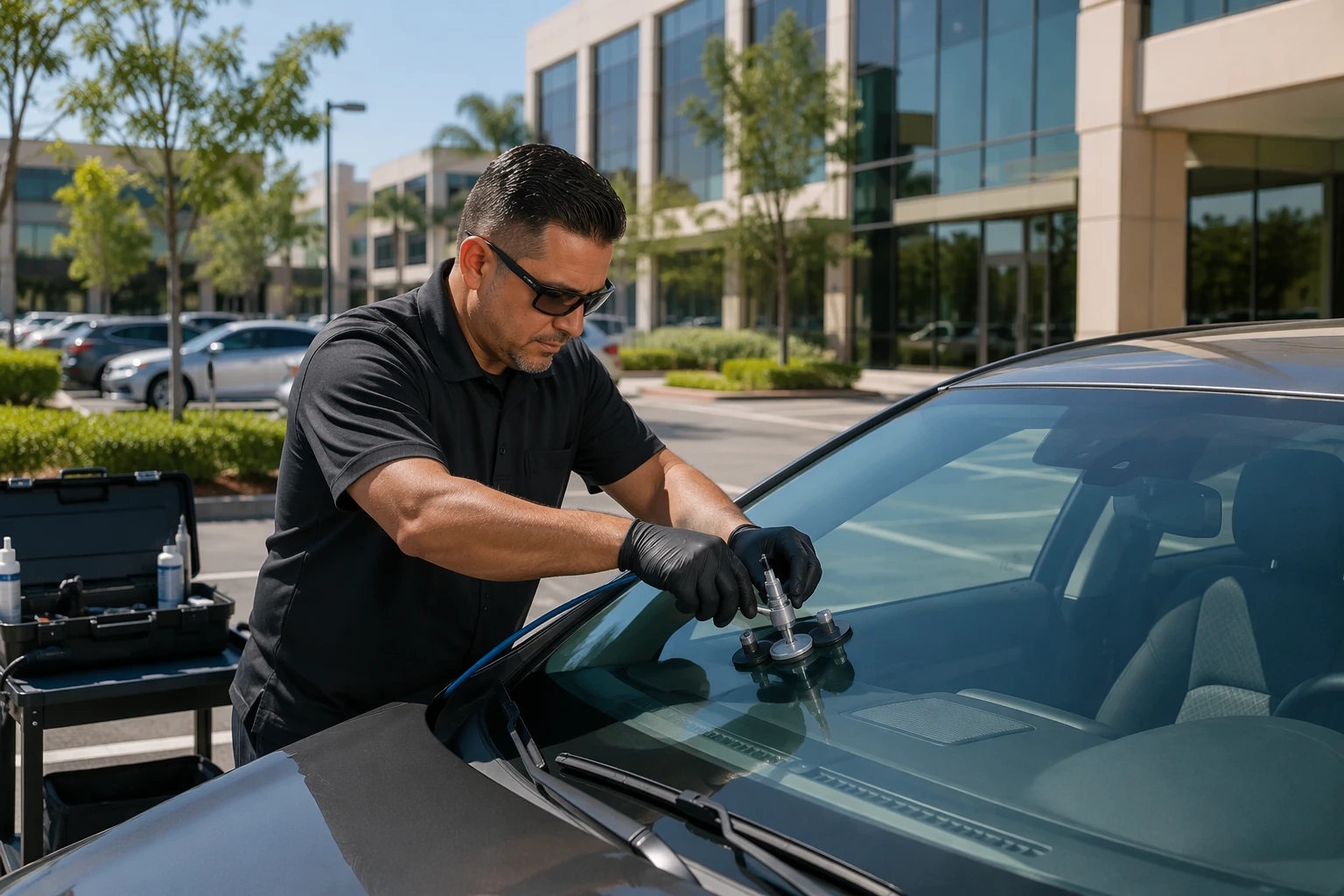
It can be the safer choice when the glass is worsening. If a crack is spreading or sits in your line of sight, driving to a shop may be the wrong move. Federal rules for glazing exist to protect visibility and reduce injury risk in crashes, according to NHTSA Standard No. 205. Some states also ban driving with a windshield cracked enough to obstruct vision, as shown in Minnesota Statutes 169.71.
When Mobile Is the Smarter Choice Than an In-Shop Visit
Mobile service makes the most sense when time matters more than waiting-room convenience. If your chip is small, the car is safe to park, and you cannot spare a half day, on-site repair is usually the smart call. NHTSA says windshield rules focus on safe glazing and driver visibility under FMVSS 205.
- Best-fit situations for mobile service:
- You are at work, home, or managing kids
- The damage is minor and repairable
- You want to avoid driving with a fresh crack
- Your insurer covers repair with little or no out-of-pocket cost
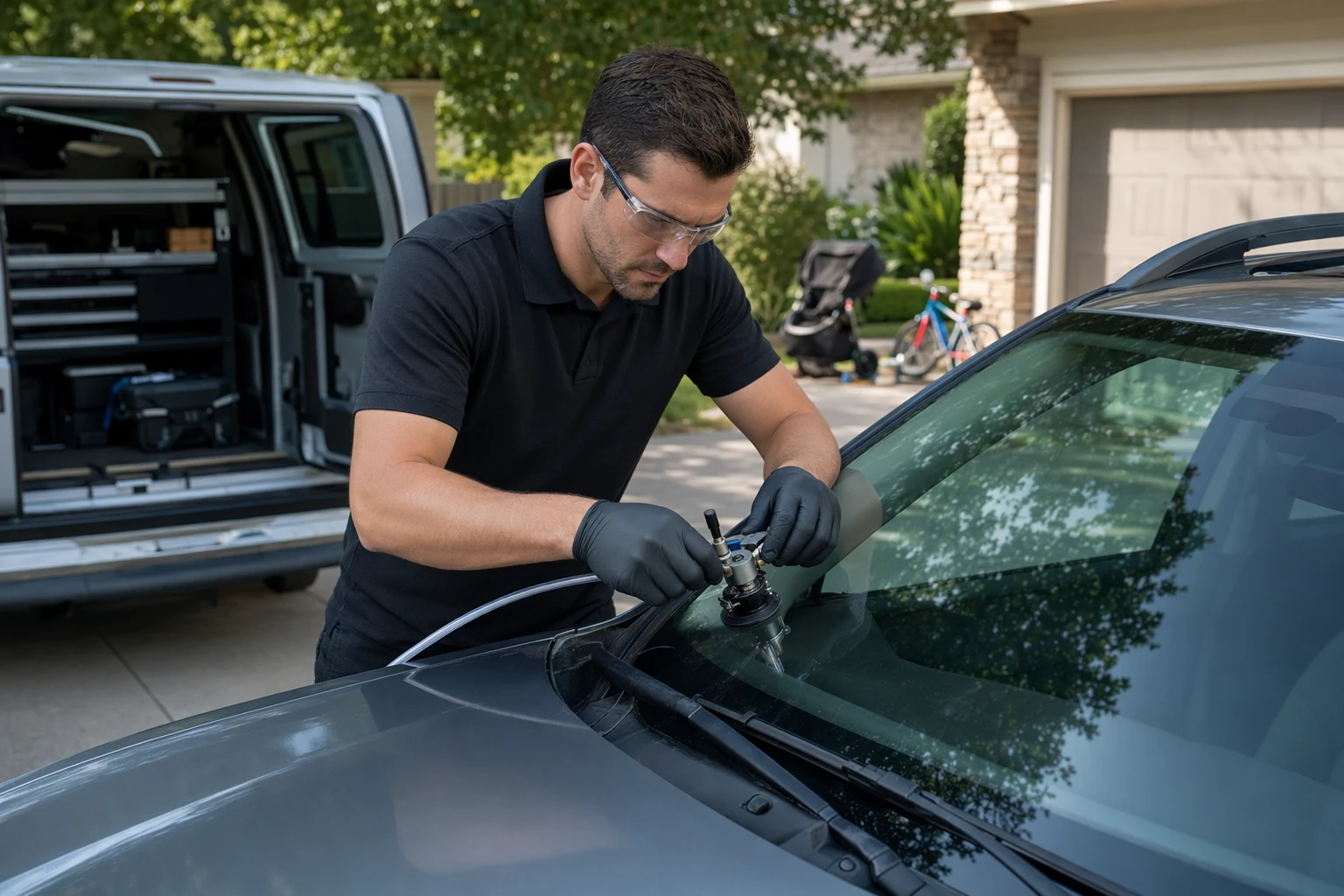
A shop may still be the better call if your vehicle has camera-based safety systems, damage near sensors, or a crack spreading across the driver’s view. Some vehicles have strict no-repair zones near forward cameras, as shown in this NHTSA-hosted Subaru service bulletin.
If your car needs replacement, calibration, or indoor curing control, ask the provider before you book.
Also Read: The Cost Difference Between Windshield Repair and Replacement
What Busy Drivers Need to Check Before Booking
First, confirm the damage type. Small chips and short cracks may be repairable, but edge cracks, long cracks, or damage in the driver’s view often means replacement. NHTSA says it does not set when repairs should be done, so the shop’s inspection matters per NHTSA. Ask if your car has ADAS, rain sensors, heads-up display, or special acoustic glass.
Then check the service setup. Mobile repair works best on flat, safe parking with enough room to open doors and work around the glass. Weather can delay cure time or affect safe install conditions, especially in rain or high wind. If your car has camera-based safety tech, ask whether calibration is needed and done in-house, since New York’s 2025-2026 law highlights required ADAS consumer disclosure for glass work.
Also Read: Top 5 Benefits of Mobile Windshield Repair Near You
How to Make Mobile Repair Work Smoothly From Start to Finish
A smooth appointment is mostly about access. Park on flat ground with enough room for the tech to open doors and move tools. Clear the dash, unlock the car, and confirm your exact address, gate code, and phone number. If your car has camera-based driver aids, ask if calibration or shop work may still be needed.
Good access saves time and helps the repair start on schedule.
Insurance and follow-up should be easy to verify. Many carriers let you choose your own shop, and some mobile glass work can be done at your home or office, according to Travelers’ glass claims guide. Ask for claim status, warranty details, and a final invoice. NHTSA also notes repairs must not make other safety systems inoperative, which matters on newer vehicles with sensors and cameras, per NHTSA guidance.
Need fast, on-site help? Book with Auto Glass Kings for mobile repair, OEM-quality glass, ADAS calibration, and a lifetime warranty.
Frequently Asked Questions
Q1: What are the main advantages of choosing mobile windshield repair for busy drivers?
You save time, avoid waiting rooms, and get service at home or work. Mobile repair also lowers disruption, helps prevent crack spread, and makes quick insurance claims easier when your schedule is tight.
Q2: How does the mobile windshield repair process work from inspection to final installation?
A tech checks the damage, confirms repair or replacement, reviews glass options, and handles setup on-site. After installation, they cure materials, inspect fit, and may complete ADAS calibration if your vehicle needs it.
Q3: When should drivers opt for mobile windshield repair over in-shop service?
Choose mobile service when damage is safe to address on-site, your car is hard to leave at a shop, or your day is packed. In-shop service may fit better for severe damage or complex calibration needs.
Conclusion
Mobile windshield repair saves time, cuts disruption, and works well for many chips and short cracks. Federal guidance notes repair is allowed on used vehicles, while NHTSA and FMCSA rules show why clear, safe glass still matters.
Share
Recent Posts

October 27, 2026
Windshield Frit Band: What the Black Edge Does
What is the black band and dot pattern around your windshield? Learn what frit is, why it matters for adhesive bonding, and what...

October 26, 2026
Heads-Up Display Windshield: What Changes When You Replace It
A HUD windshield is built differently from standard glass. See how it works, what to check before replacement, and why calibration matters in...
October 25, 2026
Lifetime Windshield Warranty: What It Covers and What It Doesn’t
A lifetime windshield warranty rarely covers everything. Learn what it should include, what it excludes, and how ADAS calibration and insurance fit in....