
Automotive
Bullseyes and half-moons are usually repairable if you catch them early. Star breaks and combination cracks can often be repaired too, if they’re small enough. Edge cracks and stress cracks almost always mean replacement. The moment you spot damage, cover it, avoid blasting the defroster on it, and get a technician to measure it before it spreads any further.
TL;DR:
- Repairable cracks like bullseyes, half-moons, star breaks, and small combination cracks must be under industry size limits of 3 inches for star breaks and 14 inches for linear cracks to qualify for repair.
- Edge cracks and stress cracks usually require full windshield replacement because they spread quickly and are influenced by structural load or temperature changes.
- Damage near the true edge of the glass or in the driver’s line of sight often exceeds repairability thresholds and calls for replacement regardless of size.
- Impact cracks are indicated by impact pits or conical shapes visible when glass is wet, while stress cracks show no impact point and often result from temperature swings.
- Prompt inspection and measurement decide whether damage can be repaired or if replacement and recalibration are necessary to ensure safety and avoid further spread.
Table of Contents
- Windshield Crack Types: What Each One Looks Like and Means
- How Repairability Actually Gets Decided
- Impact Crack or Stress Crack? Three Quick Checks
- What to Do Next After You Spot the Damage
- What a Mobile Technician Actually Checks On-Site
- The Real Problem With How Most Guides Explain This
- Getting Your Windshield Looked At Without the Runaround
- Sources
- FAQ
Windshield Crack Types: What Each One Looks Like and Means
Every crack starts somewhere, and that starting point tells you almost everything about whether it can be fixed. Here’s how to read the shape you’re looking at.
- Bullseye: A dark, round ring circling a central impact point, often shaped like a shot glass pressed into the glass. These are usually repairable if caught before dirt and moisture work into the pit.
- Half-moon (partial bullseye): The same round cavity as a bullseye, but only partially formed, so it looks like a crescent instead of a full circle. Repair outcomes are nearly identical to a bullseye.
- Star break: Short cracks radiate outward from a central impact point like spider legs. These are repairable when small, but the “legs” trap air, and even a good repair job can leave faint lines visible in bright light.
- Combination break: A bullseye or half-moon with star legs coming off it. This is one of the more common damage patterns from highway rock strikes, and it’s repairable as long as it’s within size and edge limits.
- Pit or chip: A small crater on the outer layer of glass, sometimes with a tiny piece of glass missing entirely. This is often the origin point that later grows into a bullseye, star, or full crack if left alone.
- Floater (long crack): A crack that runs several inches or more but stays fully within the glass, never touching the edge. Whether it’s repairable depends heavily on length and the technician’s own equipment limits.
- Edge crack: Starts at, or extends into, the outer perimeter of the glass where it meets the frit and molding. These spread fast because the edge carries structural load, and they almost always call for windshield replacement.
- Stress crack: A crack with no pit anywhere along it, meaning no rock or road debris caused it. These typically come from temperature swings or installation pressure rather than impact.
Laminated windshields behave differently from the tempered glass used in side and rear windows. A laminated windshield has a plastic interlayer sandwiched between two glass layers, and that interlayer is exactly why a cracked windshield usually stays in one piece instead of shattering. That containment is also what makes chip repair possible in the first place. A technician can fill the outer layer’s cavity with resin without touching a structurally sound interlayer underneath, as long as the interlayer itself isn’t damaged.
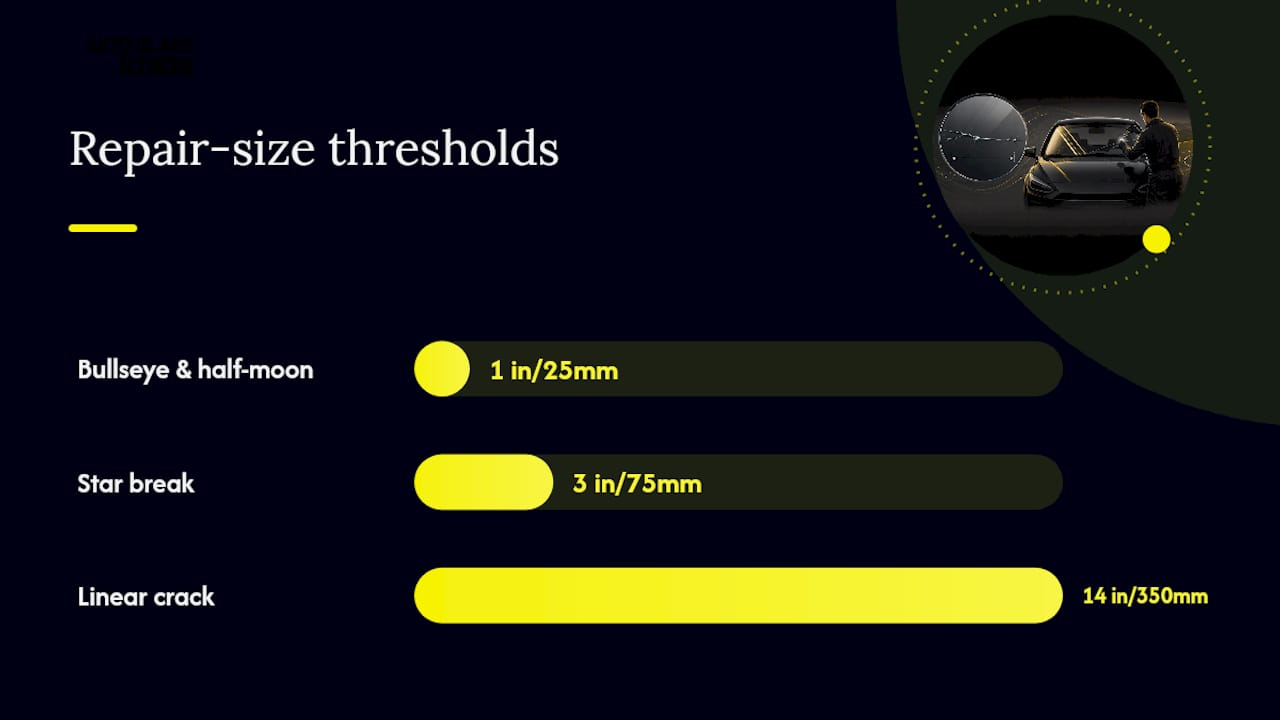
Here’s a number worth knowing: industry repair standards cap star breaks at roughly 3 inches (75 mm) and linear cracks at about 14 inches (350 mm) before a shop will typically recommend replacement instead of repair.
How Repairability Actually Gets Decided
Technicians don’t guess. They measure. Two numbers decide almost every repair-or-replace call: the overall diameter of the damage and its distance from the true edge of the glass.
For diameter, a coin or a small ruler does the job. Industry guidance under the ANSI/AGSC/NWRD ROLAGS 002-2022 standard sets bullseyes and half-moons as repairable up to roughly 1 inch (25 mm), star breaks up to about 3 inches (75 mm), and linear cracks up to around 14 inches (350 mm). Past those thresholds, resin can’t restore enough structural integrity.
Edge distance matters just as much. Measure to the actual glass edge, not to the black ceramic frit border, since the frit can make the edge look further away than it is. Any damage close to the true bonded perimeter is treated as edge damage, since that area carries key structural loads during a collision or rollover.
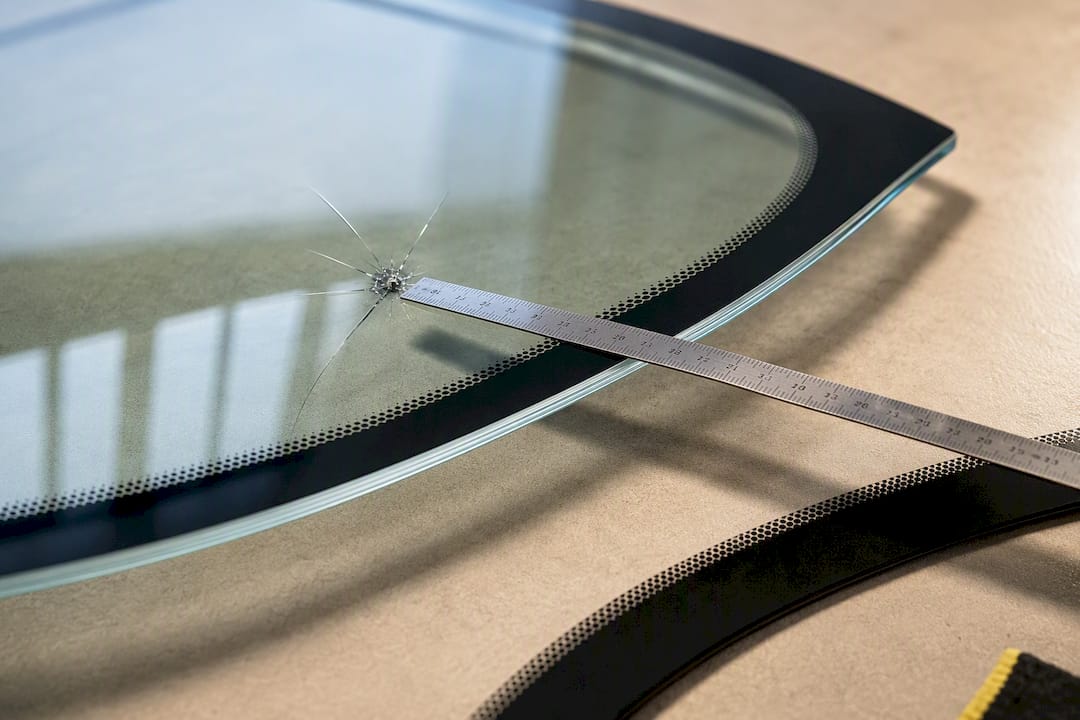
A few other triggers override the size chart entirely. Damage sitting in the driver’s direct line of sight, a pit larger than about 3/8 inch (9 mm), or any sign of delamination or moisture between the layers all push a technician toward replacement, regardless of how small the crack measures.
Impact Crack or Stress Crack? Three Quick Checks
You don’t need a shop visit to narrow this down. Try these first.
- Run your fingernail across the damage. A catch or a snag means there’s an impact pit, and repair is likely on the table. No catch anywhere along the crack usually points to a stress crack.
- Wet the glass and check it from inside. With the surface damp and a dark surface behind it, an impact pit or cone shape will show up clearly. A stress crack shows no such feature.
- Think about timing. Did you hear a sharp tap or ping right before the crack appeared? That’s an impact. Did the crack show up gradually, maybe after a cold morning followed by a blast of hot defroster air? That’s a classic stress pattern.
The distinction isn’t just academic. A technician’s whole decision tree starts with finding the pit: no pit, no resin repair, and no impact means the damage may fall under installation warranty rather than your insurance.
What to Do Next After You Spot the Damage
Your urgency depends entirely on which type you’re dealing with.
- Bullseye or half-moon: Repair soon. These hold up well if addressed within days, not weeks.
- Star or combination break: Repair promptly. The longer dirt sits in those radiating legs, the more visible the repair line will be later.
- Edge crack or stress crack: Start arranging replacement. Waiting rarely helps and often makes the crack longer.
- Floater: Get it measured. Length determines whether it’s a repair candidate or not.
While you wait for service, avoid blasting hot defrost air or hot water on a cold windshield, since rapid temperature shifts are a leading cause of stress crack spread. Park in shade when you can, and skip rough roads that flex the body more than necessary. Clear tape over a chip is a reasonable stopgap to keep out moisture and debris, but it’s not a substitute for getting it looked at.
Pro Tip: Never use super glue or nail polish on a chip before a repair appointment. It seals dirt into the cavity permanently and can prevent resin from bonding properly, turning an easy repair into a mandatory replacement.
If replacement is the answer, ask whether the shop handles ADAS calibration in-house. Many newer vehicles have forward-facing cameras mounted to the windshield, and disturbing that mounting during replacement typically requires recalibration before those safety systems work correctly again. One more thing worth knowing: stress cracks tied to installation defects are sometimes covered under workmanship warranty, while impact damage from road debris is usually a job for your insurance or your own wallet.
What a Mobile Technician Actually Checks On-Site
A proper on-site visit starts with the same measurements described above: diameter, edge distance, and a check for anything in the driver’s sightline. Auto Glass Kings technicians inspect the damage in person and give a straight recommendation, repair or replace, before any work begins.
If replacement turns out to be necessary, ADAS recalibration happens in the same visit rather than a separate trip to a dealership. Every install carries a warranty and uses quality glass, with insurance billing handled so customers may not incur out-of-pocket expenses. A clean repair on a bullseye or half-moon often ends up nearly invisible, while a full replacement restores clear visibility but only counts as complete once any camera or sensor recalibration is verified.
The Real Problem With How Most Guides Explain This
Most windshield damage guides give you a shape chart and stop there, as if knowing the name of your crack is the finish line. It isn’t. The shape only matters because it predicts two things: how the repair will look afterward, and whether the technician can legally call it a repair at all under the size and edge-distance rules that govern the trade.
Where conventional advice falls short is the assumption that any crack under a few inches is automatically fine to leave alone. Star breaks and combination cracks trap air in their radiating legs, and that trapped air is exactly why a repair delayed by even a week can leave visible lines that a same-day repair wouldn’t. Edge proximity gets underweighted too. A two-inch stress crack sitting an inch from the frit is a very different problem than the same crack sitting in the middle of the glass, and most drivers have no way to know that without someone actually measuring it.
If there’s one thing to prioritize, it’s speed of inspection over speed of decision. Get the damage measured before you decide anything.
— Auto Glass Kings
Getting Your Windshield Looked At Without the Runaround
A repair shop visit means dropping off your car and hoping for a same-day turnaround. Auto Glass Kings skips that entirely by bringing the inspection, the repair or replacement, and the ADAS calibration to your driveway or office parking lot in a single visit, with technicians available from 5 AM for drivers who can’t afford downtime.
If your damage matches a bullseye, half-moon, or small combination break, windshield repair runs $79 to $129. If it’s an edge crack, a stress crack, or damage sitting in your line of sight, windshield replacement is the safer call, and any required ADAS recalibration gets handled the same day, in-house, instead of a separate dealership appointment. Every job carries a lifetime warranty and OEM-quality materials, and Auto Glass Kings bills most insurance carriers directly so you’re not fronting the cost yourself. Reach out for a quote and get a technician out to measure the damage before it spreads any further.
Sources
- Repair of Laminated Auto Glass Standard (ANSI/AGSC/NWRD ROLAGS 002-2022)
- ANSI/AGSC/NWRD ROLAGS 002-2022 (supporting PDF)
- Windshield Damage Identifier: What Break Is It? – QuickFix Windshields
- Tempered vs. Laminated Glass: Understanding the Differences | GlassAdvisor
FAQ
What Kind of Windshield Cracks Cannot Be Repaired?
Cracks that reach the edge of the glass, stress cracks with no impact pit, and any damage sitting directly in the driver’s line of sight are generally not repairable. Damage exceeding industry size limits, such as a pit larger than about 3/8 inch (9 mm) or a linear crack longer than roughly 14 inches (350 mm), also typically requires replacement.
What Types of Windshield Cracks Can Be Repaired?
Bullseyes, half-moons, small star breaks, and combination breaks are usually repairable when they fall within size and edge-distance limits. The earlier you get them repaired, the less likely dirt and moisture have contaminated the pit, which affects how invisible the finished repair looks.
How Can I Tell if a Windshield Crack Is Serious?
Measure how far the crack sits from the true edge of the glass and check whether it crosses into your direct line of sight as the driver. A crack within about two inches of the edge, or one wider than a hairline with a visible pit deeper than 3/8 inch (9 mm), is a serious candidate for replacement rather than repair.
What Does a Stress Crack Look Like in a Windshield?
A stress crack is a clean line running across the glass with no central pit or crater anywhere along it. If you run a fingernail along the entire length and never catch on an impact point, that’s the sign you’re dealing with a stress crack rather than damage from a rock or road debris.
How Much Does Windshield Repair Cost Compared to Replacement?
Windshield repair through Auto Glass Kings runs $79 to $129, while replacement pricing depends on the vehicle and glass type and isn’t published as a flat rate. ADAS recalibration, when needed after a replacement, costs $250 to $700 and can be completed in-house during the same visit.
Recommended
Share
Recent Posts
October 6, 2026
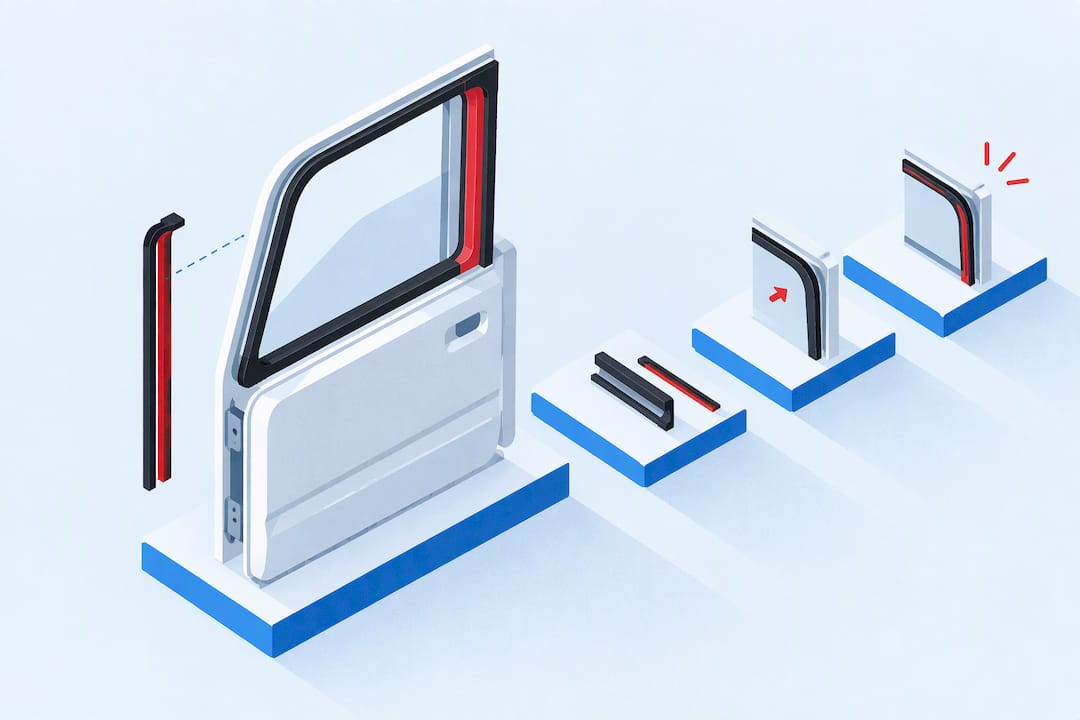
1–3 Hours Per Door: Run Channel Replacement That Puts Fitment First
DIY run channel replacement with a fitment-first approach. Follow parts, tools, and a 1–3 hours per door procedure, plus when to call a...
October 5, 2026
Expect $305–$3,400: U.S. Tesla Windshield Costs and How to Save
U.S. model-by-model Tesla windshield price ranges ($305–$3,400 observed). Practical steps to cut out-of-pocket costs, mobile ADAS calibration options, and…...
October 4, 2026
Drivers, Follow Your Installer’s Wash Time After Windshield Replacement
Follow your installer’s written safe-wash time. If none, wait 24 hours for a hand wash and 48 to 72 hours before automatic or...