
Automotive
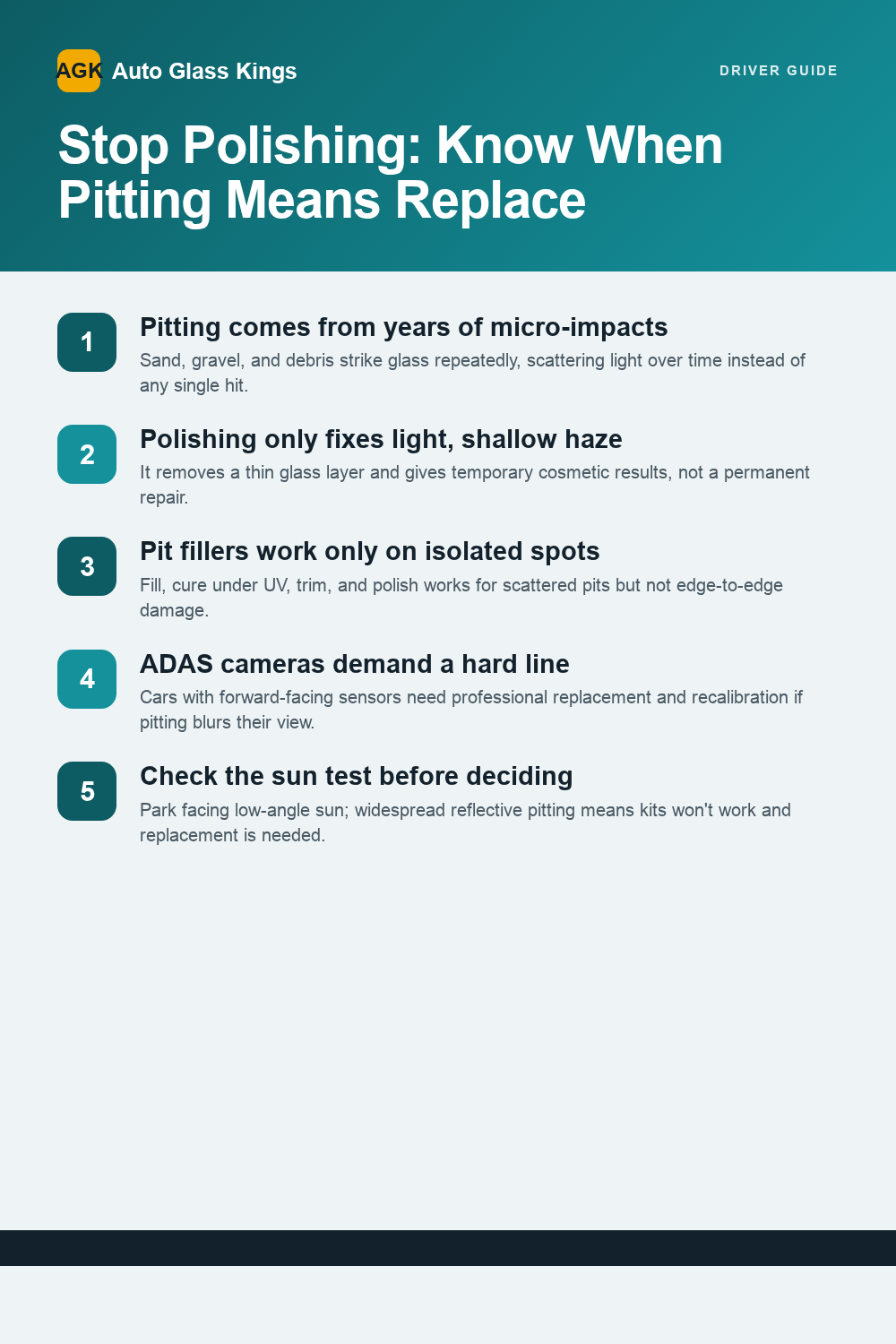
Windshield pitting can be polished out only when the damage is very light and confined to the outer surface. Once pitting spreads across your line of sight or clouds an ADAS camera’s view, the sensible move is professional inspection followed by replacement, not repeated polishing. Think of it as triage: catch it early and you have options; wait too long and glass, not chemistry, is the fix.
TL;DR:
- Polishing is only effective for very light, confined pitting and is usually temporary; extensive or spread-out damage warrants full replacement.
- Pitting results from years of tiny impacts from sand, gravel, and debris, with highway, construction, coastal, and hail conditions accelerating deterioration.
- Modern vehicles with ADAS systems require professional windshield replacement and calibration if pitting affects sensors or camera views for safety reasons.
- Inspection is vital to distinguish between cosmetic haze and safety risk, with early detection preventing costly full replacements later.
- Windshield repair costs range from $79 to $129 for light damage, while replacement involves higher costs and insurance depends on whether policies treat pitting as normal wear or damage.
Table of Contents
- What Causes Windshield Pitting and How to Spot It
- Repair Options: Polishing, Pit Fillers, and Resin Compared
- When to Replace a Windshield: ADAS and Safety Triggers
- Cost and Insurance: What to Expect
- Prevention and Maintenance to Slow Down Pitting
- Auto Glass Kings Perspective: Inspect First, Then Decide
- Get Your Windshield Inspected the Easy Way
- Sources
- FAQ
What Causes Windshield Pitting and How to Spot It
Every mile you drive, tiny particles of sand, grit, and gravel strike your windshield at speed. Each impact leaves a microscopic crater. One chip is nothing to worry about, but thousands of them, accumulated over years, scatter light instead of letting it pass straight through. That’s pitting, and it’s caused by repeated micro-impacts rather than any single event.
Some conditions speed up the damage:
- Highway driving at high speeds, where debris impacts the windshield with greater force
- Following construction trucks or gravel haulers too closely
- Coastal roads with blowing sand
- Hail events that pockmark glass in one afternoon instead of years
You’ll notice pitting before it gets bad if you know what to look for. Run your fingers across the glass. Does it feel gritty instead of smooth? Drive at night and watch for halos around headlights or a general haze that wasn’t there last year. Wipers that streak no matter how new the blades are often mean the glass itself has roughened, not the rubber.
Repair Options: Polishing, Pit Fillers, and Resin Compared
Not every fix works on every kind of damage, and picking the wrong one wastes money or makes the glass worse. Here’s how the four common approaches actually stack up.
- DIY cerium oxide polishing. You buy a kit, attach a felt pad to a drill or orbital buffer, and work cerium oxide compound across the pitted area. It can knock down light haze on very shallow pitting, but there’s a real ceiling here: polishing removes a thin layer of glass with every pass. Do it unevenly, or too many times, and you create optical distortion that’s arguably worse than the pitting you started with.
- Professional polishing. A trained technician removes glass in a controlled, measured way and checks for distortion as they go, which is the main advantage over doing it yourself. Even done right, expect the results to be cosmetic and temporary. It buys time; it doesn’t reverse aging glass.
- Pit filler kits. These target isolated pits, not widespread haze. The standard process is fill, cure under UV light, trim with a razor, then polish. Manufacturer instructions for pit filler kits call for filling slowly to avoid trapping air bubbles, followed by a UV cure that runs anywhere from one to seven minutes depending on the lamp. Great for a handful of stray pits. Useless against a windshield that’s pitted edge to edge.
- Resin chip repair. This is built for a distinct impact, like a rock chip or crack, not for distributed surface wear. Injecting resin into thousands of scattered micro-craters isn’t practical or effective.
Pro Tip: If you can’t tell whether your pitting is “light” or “moderate,” park facing the sun at a low angle in the early morning or evening. Distributed pitting will light up like a spiderweb of tiny reflections. If you see that pattern across a large section of the glass, polishing kits and pit fillers are not going to solve it.
When to Replace a Windshield: ADAS and Safety Triggers
Replacement isn’t a fallback option, it’s the correct call once pitting crosses certain lines. Watch for these triggers:
- Pitting spans a significant portion of the driver’s direct sightline
- Nighttime glare or halos make driving uncomfortable or unsafe
- The pitting is deep enough that a fingernail catches on individual craters
- Your car has a forward-facing camera or sensor system behind the glass
That last point matters more every year. Modern vehicles rely on cameras and radar mounted at or near the windshield for lane-keeping, automatic braking, and adaptive cruise control. Those systems depend on precise optical clarity to interpret what’s ahead. Pitted glass distorts that signal the same way it distorts your own vision, and industry sources note that ADAS-equipped vehicles need professional recalibration after any windshield swap.
During inspection, a technician checks pit coverage across the glass, measures depth where possible, and often runs an optical distortion test by looking through the glass at a grid pattern. If distortion shows up in the driver’s cone of vision, that’s your answer. For a deeper walkthrough of the replacement process itself, see this guide to auto glass replacement.
Cost and Insurance: What to Expect
Polishing runs cheaper than replacement, whether you buy a DIY kit or pay a shop for a single session. Full windshield replacement costs more upfront but it’s the only option that restores complete optical clarity and structural integrity, and prices vary by region and vehicle.
Insurance coverage on pitting is a mixed bag. Because pitting develops gradually rather than from a single event, some policies treat it as normal wear and exclude it, similar to how tire tread wear isn’t covered. Comprehensive policies with glass coverage are more likely to help, but deductibles differ by carrier.
Before you file anything:
- Photograph the pitting in different lighting to document severity
- Get a written assessment from a technician stating the extent of damage
- Ask your insurer specifically about glass-only coverage and deductible waivers
Prevention and Maintenance to Slow Down Pitting
You can’t stop pitting entirely, but you can slow it down considerably with a few habits.
- Swap wiper blades regularly and use washer fluid made for glass, not window cleaner substitutes
- Wash with a soft microfiber mitt and a dedicated glass cleaner instead of abrasive rags
- Back off from gravel trucks and slow down through active construction zones
- Park away from loose gravel lots or active worksites when you have a choice
- Look into protective films or ceramic coatings if you drive high-mileage highway routes often
Wiper care alone makes a bigger difference than most drivers assume, since old or gritty blades drag debris across the glass every time they run. This guide to wiper maintenance covers the basics well.
Pro Tip: Get your windshield inspected once a year, ideally before a road trip season. Catching light pitting early is the difference between a $79 repair visit and a full replacement six months later.
Auto Glass Kings Perspective: Inspect First, Then Decide
Most drivers wait too long before getting pitted glass looked at, mostly because pitting develops slowly and feels easy to ignore. That’s a mistake. A short inspection tells you whether you’re dealing with cosmetic haze or genuine visibility risk, and it costs you nothing to find out.

Auto Glass Kings treats that inspection as the starting point every time, not a formality before a sales pitch. When replacement is the right call, using OEM-quality glass and handling ADAS calibration in-house matters because mismatched glass or a skipped recalibration can leave safety systems misreading the road ahead. Skipping calibration to save a step is how comeback jobs happen.
Polishing and pit-filler kits have a place for isolated, shallow damage. Once pitting spreads across the glass or touches a camera’s field of view, a single-visit, mobile replacement beats chasing a temporary cosmetic fix.
— Auto Glass Kings
Get Your Windshield Inspected the Easy Way
Auto Glass Kings is the alternative to bouncing between a polishing kit, a body shop, and a dealership for recalibration. One mobile visit covers the inspection, the windshield replacement itself, and any required ADAS recalibration, without you driving anywhere.
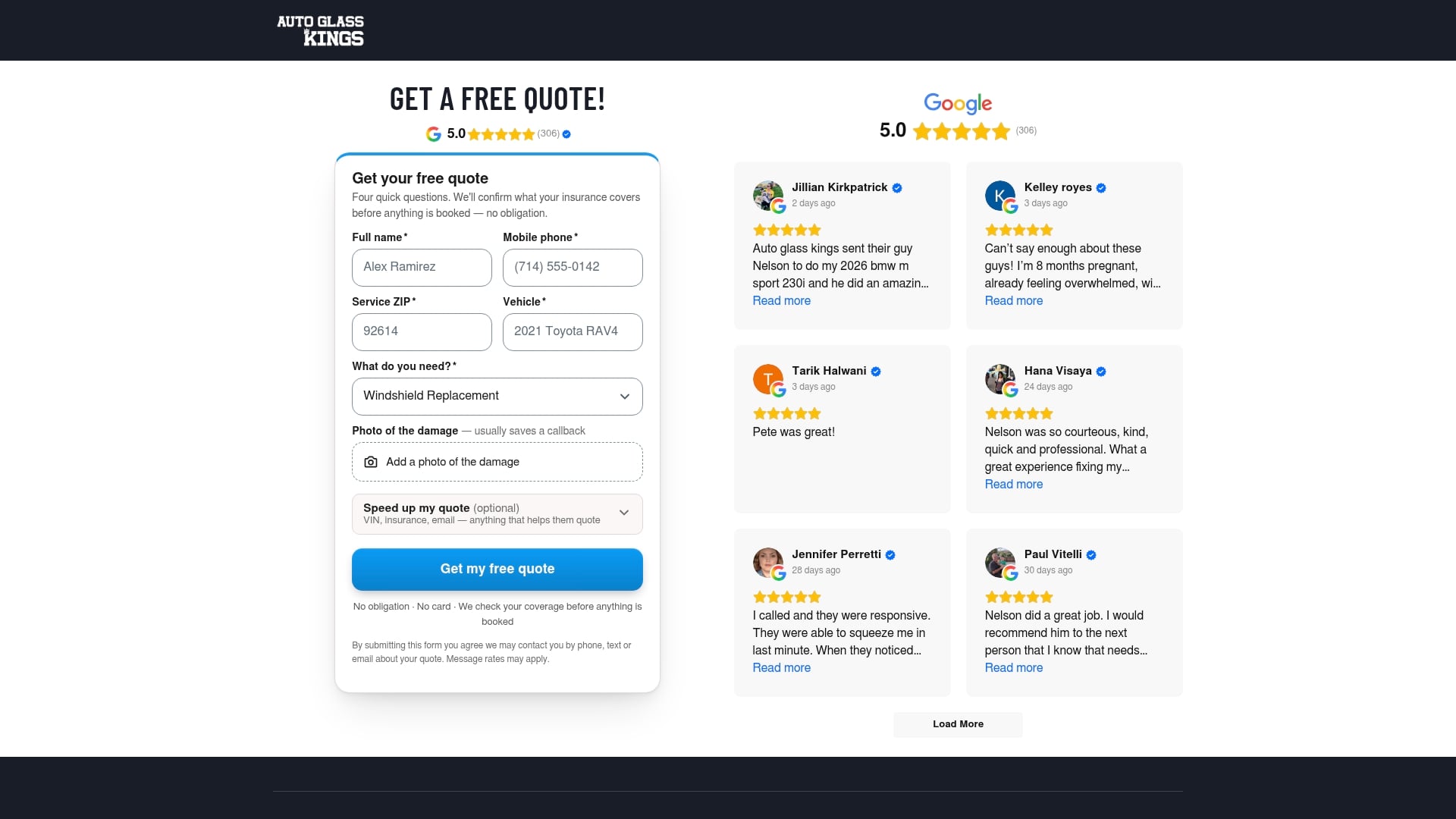
If your pitting is still light, a windshield repair visit runs $79 to $129 and can address isolated chips before they spread. Every completed job carries a lifetime warranty, and the company bills most insurance carriers directly, so many customers pay nothing out of pocket. Appointments start early in the morning, which matters if you need your car back on the road before work. Book an inspection or get a quote today and find out in minutes whether polishing, a pit filler, or replacement is the right call for your glass.
Sources
Technical background for this guide comes from NHTSA’s federal safety standards, pit filler kit manufacturer instructions, and independent explainers on windshield pitting causes and replacement thresholds.
- Pit Filler Kit instructions (AEGIS / WPG)
- What Is Windshield Pitting and When to Replace? — SLP Auto Glass
- Everything You Need to Know About Windshield Pitting — Famous Auto Glass
FAQ
Can You Fix a Pitted Windshield?
Yes, but only within limits. Very light, shallow pitting can be temporarily improved with professional polishing, while widespread or deep pitting requires full replacement to restore clear, safe vision.
Will Insurance Pay for a Pitted Windshield?
It depends on your policy. Many insurers treat pitting as gradual wear rather than sudden damage, which can affect coverage, so check your policy’s glass provisions and ask your provider directly about glass-only deductibles.
Can You Polish Pitting Out of a Windshield?
Polishing can reduce glare from shallow surface pitting, but it works by removing a thin layer of glass, and repeated polishing increases distortion risk and weakens the glass over time. It’s a temporary cosmetic fix, not a permanent solution for extensive pitting.
What Causes Pitting on Windshields?
Pitting comes from years of small impacts, sand, dust, and gravel kicked up by traffic, striking the glass at speed. Each strike leaves a microscopic crater, and thousands of them accumulated over time create the hazy, glare-prone surface drivers eventually notice.
Recommended
- ADAS Calibration Orange County
- Auto Glass Kings Review: ADAS Calibration After Glass Replacement
- Auto Glass Replacement: A Complete Guide for US Drivers
- Windshield Chip Repair Orange County
🎧 Listen to This Article
Share
Recent Posts
October 6, 2026
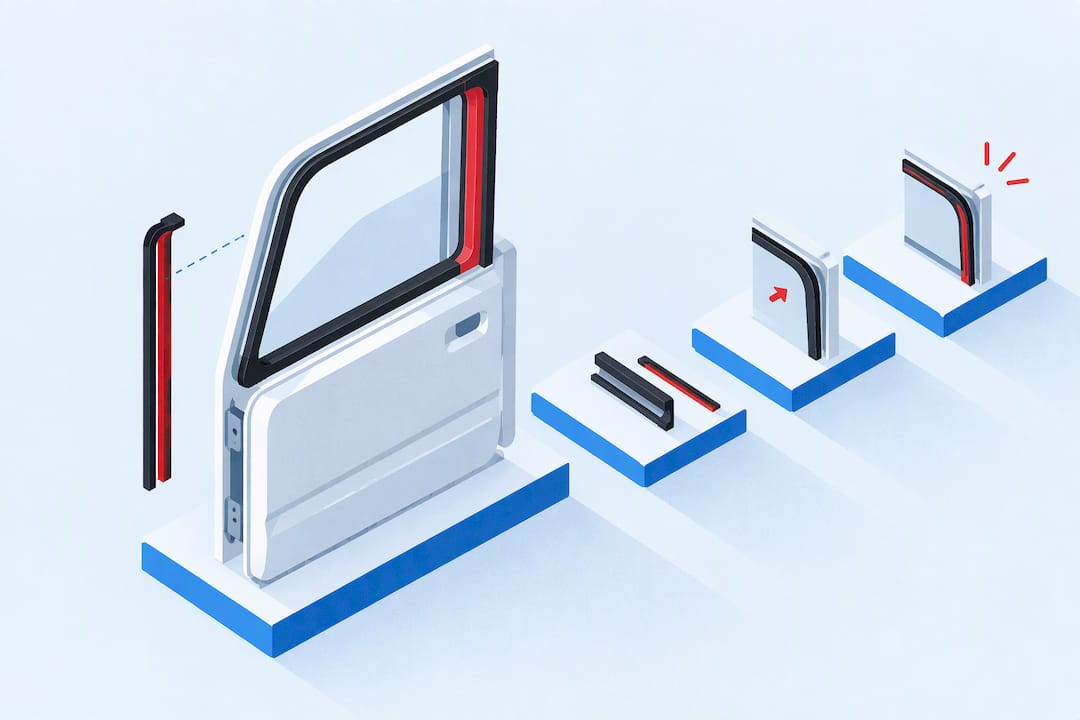
1–3 Hours Per Door: Run Channel Replacement That Puts Fitment First
DIY run channel replacement with a fitment-first approach. Follow parts, tools, and a 1–3 hours per door procedure, plus when to call a...
October 5, 2026
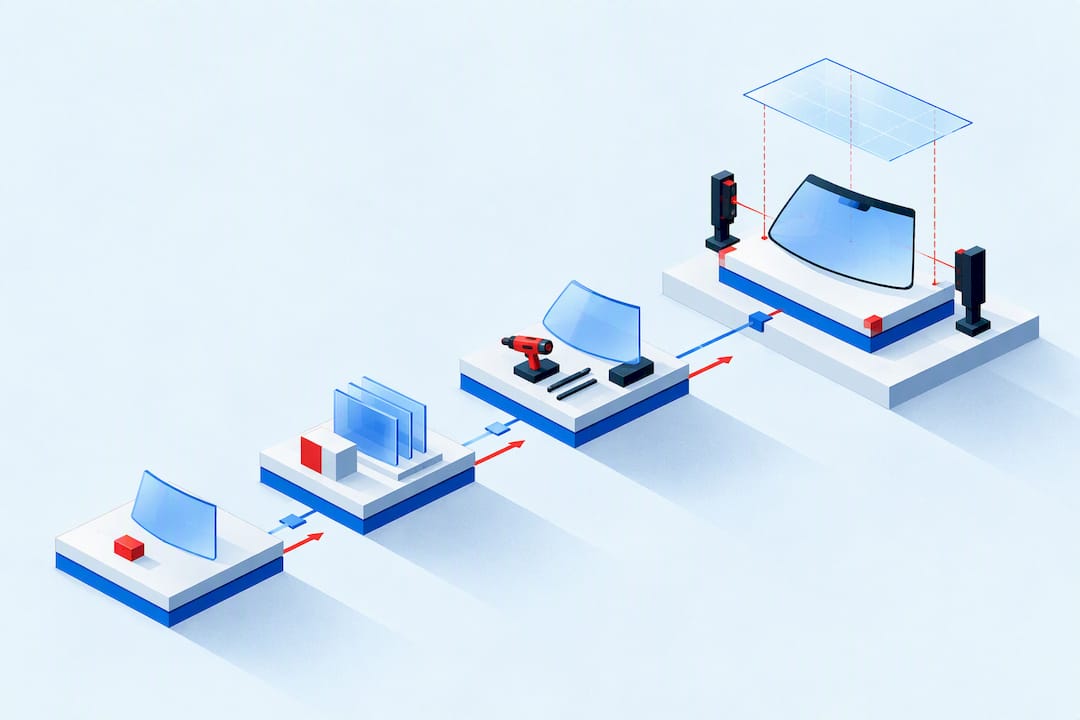
Expect $305–$3,400: U.S. Tesla Windshield Costs and How to Save
U.S. model-by-model Tesla windshield price ranges ($305–$3,400 observed). Practical steps to cut out-of-pocket costs, mobile ADAS calibration options, and…...
October 4, 2026
Drivers, Follow Your Installer’s Wash Time After Windshield Replacement
Follow your installer’s written safe-wash time. If none, wait 24 hours for a hand wash and 48 to 72 hours before automatic or...