
Automotive
If your car has a forward camera, heads-up display, or you’re leasing it, get OEM or OEE glass. If it’s an older or base-model car with a plain windshield, quality aftermarket glass installed correctly is fine. The deciding factors are optical precision for camera calibration and how your insurer handles the price gap, not brand loyalty.
TL;DR:
- Installing OEM or OEE glass is essential for vehicles with ADAS, HUD, or heated windshields to ensure proper calibration and sensor accuracy.
- Federal safety standards guarantee basic fracture and fragment safety but do not address optical precision needed for camera and HUD functions.
- Premium aftermarket glass can perform on par with OEE if it is from a reputable manufacturer and correctly installed, especially on vehicles without sensors.
- Verifying calibration reports and choosing shops that handle ADAS calibration in-house help prevent costly rework and ensure optimal system performance.
- Insurers often limit OEM coverage to control costs, but documenting the need for OEM glass for camera or sensor features can improve approval chances.
Table of Contents
- OEM vs Aftermarket Windshield Glass: What the Labels Actually Mean
- What Federal Safety Standards Guarantee, and Where They Fall Short
- How ADAS, HUD, and Heated Glass Change the Math
- What OEM Actually Costs, and How to Get Insurance to Cover It
- The Checklist to Run Before Any Installer Touches Your Car
- Why Calibration Quality Matters as Much as Glass Quality
- Our Take: Match the Glass to the Car, Not the Price Tag
- Get OEM-Quality Glass Without the Runaround
- Sources
- FAQ
OEM vs Aftermarket Windshield Glass: What the Labels Actually Mean
Every windshield falls into one of three tiers, and the differences matter more than most drivers realize. OEM (Original Equipment Manufacturer) glass is made by or under contract with your car’s automaker, to the automaker’s exact specs. OEE (Original Equipment Equivalent) comes from the same factories, often the same molds, but ships without the automaker’s logo etched in the corner. Aftermarket glass covers everything else, made by independent manufacturers ranging from excellent to genuinely poor.
That range is the catch. “Aftermarket” isn’t one quality level. It’s a category, and premium aftermarket glass can perform on par with OEE.
Every legal windshield, regardless of tier, must carry a DOT code and AS-1 designation showing it meets federal glazing rules. Those markings confirm the glass is legal to install. They say nothing about whether the bracket sits in the right spot for your camera or whether the glass is optically flat enough for your HUD.
- OEM: automaker-branded, automaker-specified
- OEE: same manufacturing source, no automaker logo
- Aftermarket: independent makers, quality varies widely
- DOT/AS-1 marking: proof of legal compliance, not proof of precision
The real question to ask a shop isn’t “OEM or aftermarket?” It’s “who actually made this piece of glass?”
What Federal Safety Standards Guarantee, and Where They Fall Short
FMVSS No. 205 sets the baseline every windshield in the country must clear. It draws on the ANSI Z26.1 standard and governs fracture behavior, fragment size, and where glazing can be installed on a vehicle. Manufacturers self-certify that their glass meets these requirements, and NHTSA enforces the standard through testing and defect investigations rather than pre-approving every batch of glass before it hits a shop.
That’s the floor, and it’s a meaningful one. It’s also not a ceiling. FMVSS 205 has nothing to say about camera bracket tolerances, HUD image distortion, or how cleanly a rain sensor reads through the glass. A windshield can pass every federal requirement and still cause a forward camera to fail calibration.
There’s movement toward closing that gap. California’s proposed Motor Vehicle Glass Act (SB 988) would require shops to disclose ADAS presence, document calibration results, and give customers written notice of outcomes. It’s still pending, but it signals where regulation is headed as more cars ship with cameras built into the glass.
How ADAS, HUD, and Heated Glass Change the Math
Forward-facing camera systems, heads-up displays, heated windshields, rain sensors, and infrared coatings all depend on precision that has nothing to do with federal minimums. The camera bracket has to sit within a tight tolerance of its factory position. The glass itself needs consistent thickness and a correctly angled interlayer, called the wedge, so the HUD image doesn’t double or blur. Coatings and tints that vary even slightly from spec can throw off a rain sensor or distort what a camera sees.
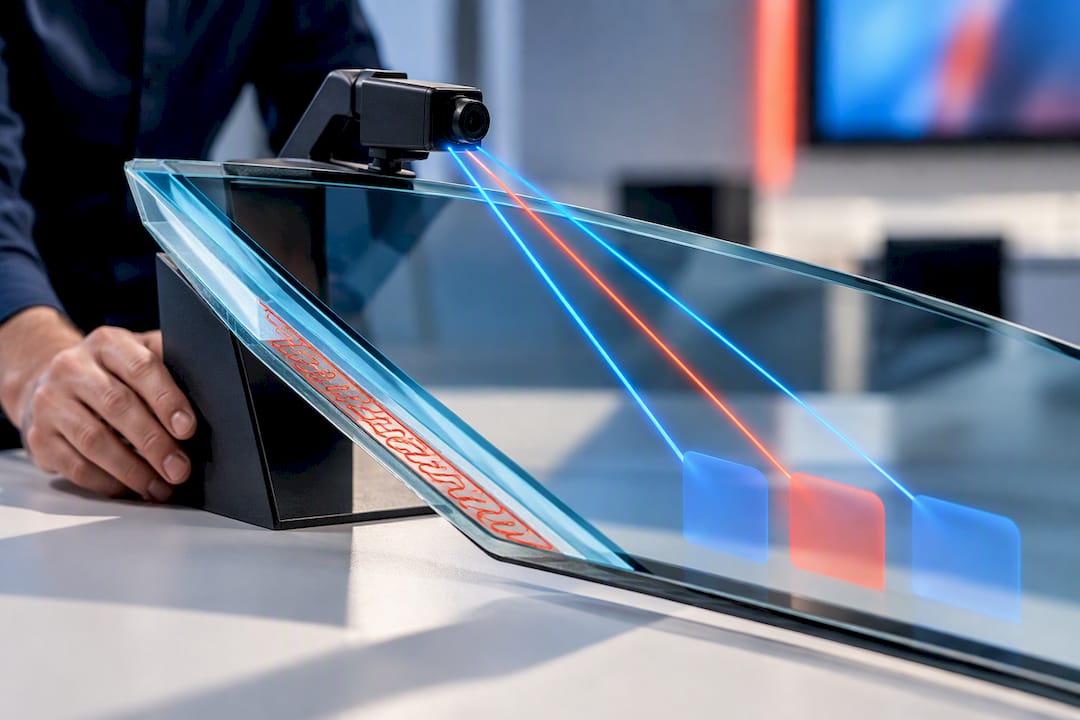
This is where part tier stops being a minor detail. HUD and camera-based ADAS are the two features where the gap between OEM/OEE and generic aftermarket shows up most, because calibration failures trace directly back to bracket placement and optical clarity.
Here’s a simple way to sort it:
- Car has a HUD: go OEM or OEE. Distortion here isn’t a minor annoyance, it affects how you read speed and navigation cues.
- Car has forward-camera ADAS (lane keeping, automatic braking): OEM/OEE, or a well-documented premium aftermarket brand your installer has calibrated successfully before.
- Car has heated glass or embedded antennas: match the OEM spec closely, since aftermarket substitutes sometimes skip these features entirely.
- Plain windshield, no sensors, no HUD: premium aftermarket is a reasonable, cost-saving choice.
Pro Tip: Ask your installer to show you a completed calibration report from a vehicle with the exact glass brand they’re proposing for your car. If they can’t produce one, that’s your answer.
What OEM Actually Costs, and How to Get Insurance to Cover It
OEM glass typically runs significantly more than aftermarket for the same vehicle, and most of that premium reflects the automaker’s licensing, tighter manufacturing tolerances, and smaller production runs compared to aftermarket makers who supply dozens of vehicle models from a handful of production lines.
Insurers know this, and most default to aftermarket parts specifically to control claim costs. Getting OEM approved usually means one of a few paths:
- Check your policy for an OEM endorsement. Some policies include one automatically, especially on newer or leased vehicles.
- Document the technical need. If your car has HUD or camera ADAS, get that in writing from your installer to support the request.
- Offer to pay the price difference. Many insurers will cover the aftermarket-equivalent cost and let you pay the gap for OEM.
- Pick an installer who fights for you. Shops that regularly deal with insurers know how to frame an OEM request so it gets approved instead of automatically denied.
You also have the right to choose your own repair shop under most state rules, even when your insurer suggests a preferred vendor.
The Checklist to Run Before Any Installer Touches Your Car
Before you approve any windshield job, ask a few direct questions and inspect a few things afterward. The gap between a smooth replacement and a comeback repair usually comes down to these details.
Before the work starts, ask: who manufactures the glass, what’s the DOT code, is ADAS calibration included in the price, what adhesive are they using, and what does the warranty actually cover.
After the work finishes, check for visual distortion by looking through the glass at a straight edge like a doorframe, confirm the camera bracket is mounted securely (not just glued to plastic), and get written proof that any required ADAS calibration passed.
| Red flag | What it means |
|---|---|
| No DOT code visible | Glass may not meet federal minimums |
| Plastic-only camera bracket | Camera alignment likely to drift |
| No calibration paperwork | You have no proof ADAS actually works |
| Vague warranty language | Comeback repairs may cost you again |
Installation quality often matters more than part tier alone, especially on vehicles without sensors, where correct adhesive and bracket placement drive the outcome.
Why Calibration Quality Matters as Much as Glass Quality
A windshield that meets every spec on paper still needs correct calibration to make ADAS work. Shops that handle calibration in-house rather than outsourcing it to a separate facility cut down on repeat visits and disputed repairs, because the same team that sets the glass also verifies the camera reads it correctly, on the same visit.
Mobile installation adds a practical layer here too: fewer trips, less time off work, and one appointment instead of two separate stops for glass and calibration. Direct insurance billing removes another friction point, since you’re not stuck negotiating OEM approval on your own.
Whichever shop you choose, verify these capabilities yourself rather than taking a sales pitch at face value. Ask to see a calibration report, ask what warranty terms actually cover, and confirm the glass brand before the technician shows up.
Our Take: Match the Glass to the Car, Not the Price Tag
We’d rather see a customer pay more for OEM or OEE glass on a car with HUD or forward-camera ADAS than save a couple hundred dollars and risk a failed calibration. On plain windshields without sensors, premium aftermarket installed correctly is money well spent elsewhere. The pre-checks and calibration documentation matter more than the badge on the glass. That’s the standard we hold every install to, and it’s the standard we’d want if it were our own car.
— Auto Glass Kings
Get OEM-Quality Glass Without the Runaround
Auto Glass Kings is the alternative to bouncing between a glass shop and a separate calibration center. We install OEM-quality glass and handle ADAS calibration in-house, on the same visit, at your home or office starting as early as 5 AM.
Every install carries a lifetime warranty, and direct insurance billing is available, which means many customers pay nothing out of pocket. Whether you’re dealing with a cracked windshield on a Tesla, a Bentley, or a daily commuter, the process is the same: we confirm the right glass for your car’s sensors, complete the windshield replacement, and verify calibration before we leave. If your car needs ADAS calibration alone after a repair elsewhere, we handle that too, priced between $250 and $700 depending on the system.
Get a free quote and see what your insurance covers before you commit to anyone.
Sources
For readers who want to verify the details covered here, NHTSA’s guidance on FMVSS 205 explains the federal glazing standard directly. Windshield Advisor’s consumer rights guide breaks down your options when an insurer pushes aftermarket parts. Agency Checklists covers how insurers typically handle OEM denials from the industry side.
- NHTSA interpretation on FMVSS No. 205 and glazing materials
- OEM vs Aftermarket Windshield Glass | QuickFix Windshields
- What insurance agents need to know about OEM glass denials | Agency Checklists
FAQ
Does Safelite Use OEM or Aftermarket Glass?
Large national chains typically install aftermarket or OEE glass by default to keep costs down for insurers, reserving OEM for specific requests or vehicles where it’s required. Ask any installer directly which tier they’re quoting before the appointment.
What Does OEM Glass Mean and How Is It Different From Aftermarket?
OEM glass is made by or for your car’s automaker to factory specs, while aftermarket glass comes from independent manufacturers with quality that varies widely. The practical difference shows up most in camera bracket precision and optical clarity for HUD and ADAS systems.
Which Windshield Glass Brand Is Considered Best?
There’s no single best brand across every vehicle. The better question is which manufacturer supplies your specific automaker’s glass, since reputation varies by model and by whether the maker also produces OEE parts for that vehicle.
Is OEE Glass as Good as OEM?
OEE glass often comes from the same production line as OEM, minus the automaker’s logo, so it performs comparably in most cases. Premium aftermarket can also match OEE quality, but confirm the manufacturer name and check for a documented calibration track record before choosing.
How Much Does Auto Glass Kings Charge for Windshield Replacement?
Windshield replacement pricing depends on your vehicle and glass tier, so current rates are available directly on the windshield replacement page. Windshield repair for chips starts at $79 to $129, and ADAS calibration runs $250 to $700 depending on the system involved.
Recommended
- Auto Glass Kings Review: ADAS Calibration After Glass Replacement
- ADAS Calibration Orange County
- Auto Glass Replacement: A Complete Guide for US Drivers
- Auto glass replacement: 7 common mistakes to avoid
🎧 Listen to This Article
Share
Recent Posts
October 6, 2026
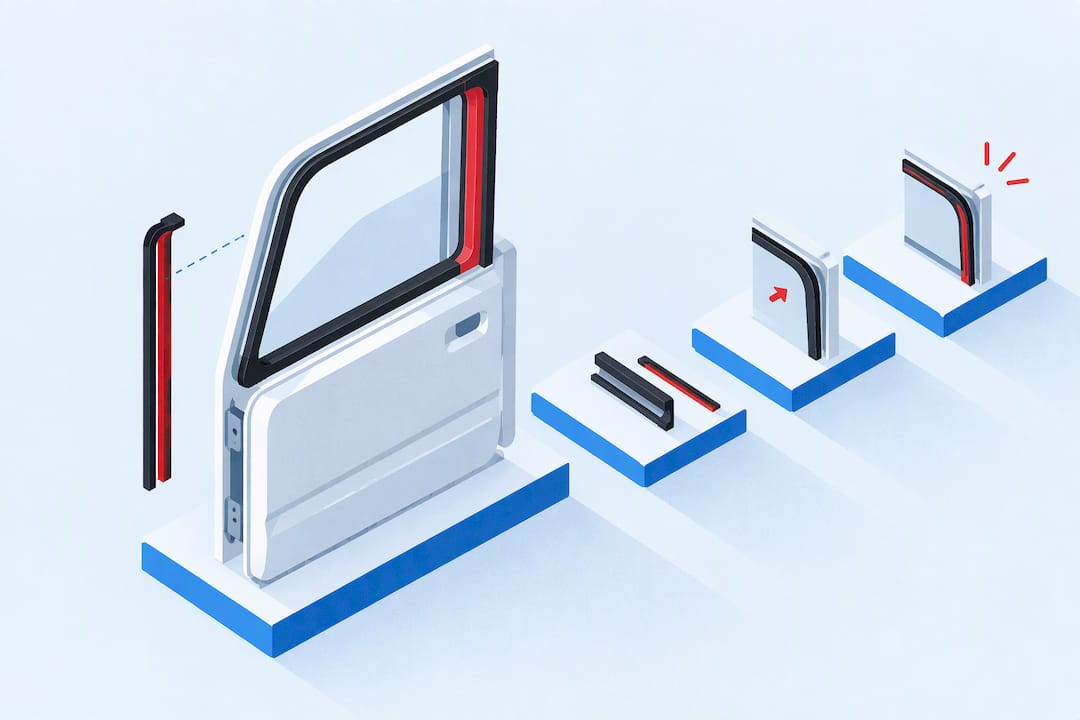
1–3 Hours Per Door: Run Channel Replacement That Puts Fitment First
DIY run channel replacement with a fitment-first approach. Follow parts, tools, and a 1–3 hours per door procedure, plus when to call a...
October 5, 2026
Expect $305–$3,400: U.S. Tesla Windshield Costs and How to Save
U.S. model-by-model Tesla windshield price ranges ($305–$3,400 observed). Practical steps to cut out-of-pocket costs, mobile ADAS calibration options, and…...
October 4, 2026
Drivers, Follow Your Installer’s Wash Time After Windshield Replacement
Follow your installer’s written safe-wash time. If none, wait 24 hours for a hand wash and 48 to 72 hours before automatic or...