
Automotive
In California, auto glass is covered through the comprehensive part of your policy, and many drivers also carry a full glass add-on that removes the deductible. Small chip repairs are often free. Replacements usually run through your deductible unless you have full glass. The simplest way to avoid surprises is to have a glass shop that bills your insurer directly and does any ADAS calibration in the same visit. That is how we work at Auto Glass Kings in Orange County, and the rest of this guide shows what to check on your own policy.
TL;DR
- Only liability insurance is legally required in California, so glass coverage exists only if your policy includes comprehensive, or full glass on top of it.
- Chip repairs are often covered with no deductible. Replacement typically applies your comprehensive deductible unless you have full glass.
- You choose the shop. Your insurer pays the shop directly after you sign the repair authorization.
- A new state law, SB 988, makes shops tell you whether your car needs ADAS recalibration and give you the result in writing.
- Cracks that block your view are a citation risk, so do not wait on a claim.
Table of Contents
- Which part of your policy covers glass
- What glass is covered
- Deductibles: what you actually pay
- Filing a glass claim in California
- ADAS calibration after a new windshield
- What California’s new glass law changes
- Do glass claims raise your rate?
- Driving with a cracked windshield
- Who this matters to most
- Getting your glass done with Auto Glass Kings
- Our perspective
- FAQ
- Sources
Which part of your policy covers glass
The California Department of Insurance explains that only liability coverage is legally required in California. Liability pays for damage you cause to others. It does nothing for your own windshield. Glass is handled by two other things.
Comprehensive coverage. The same state guide describes it as covering damage to your car from something other than a collision. AAA lists windshield, door glass and sunroof damage among the things comprehensive pays for, alongside hail, fallen objects, animals, theft and vandalism. A rock thrown up by a truck on the 405 or the 55 is the classic example.
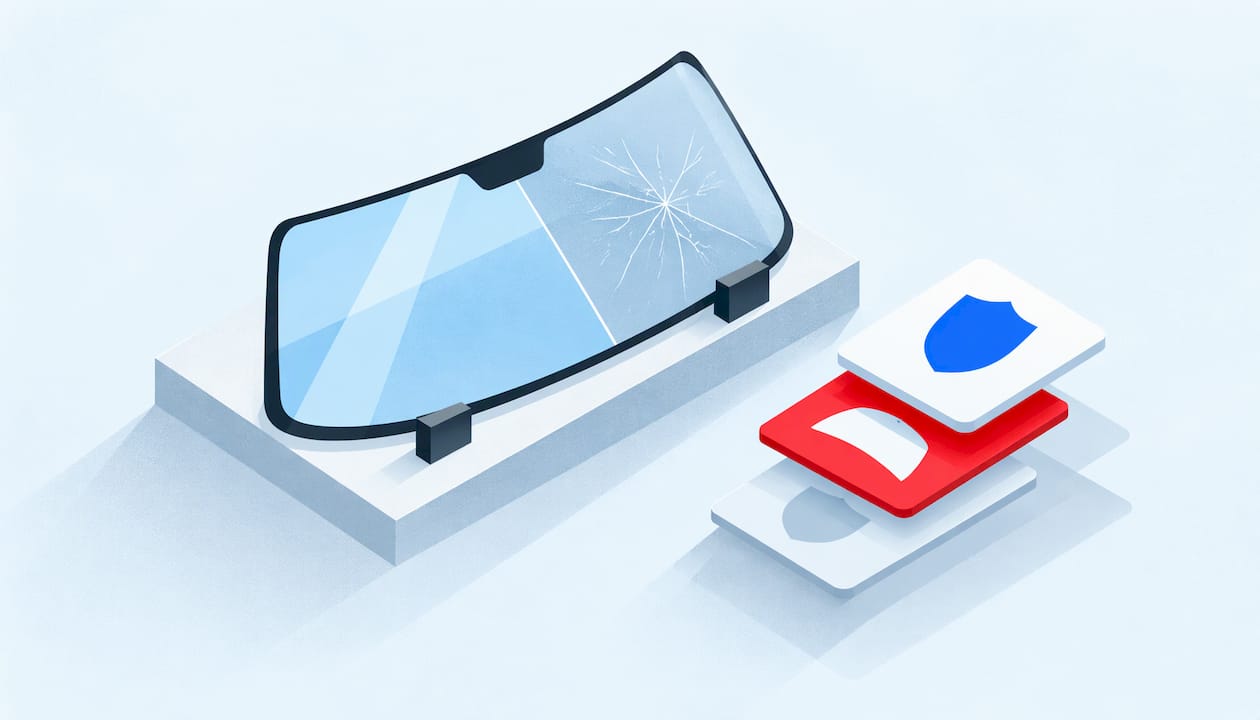
Full glass coverage. This is an optional add-on that requires comprehensive. Amica describes it as having no deductible for glass repair or replacement. Insurers name and price it differently, so look for the words “glass” or “full glass” on your declarations page, the summary sheet that lists your coverages and deductibles.
The California Department of Insurance glossary also lists “Comprehensive Glass Insurance” as an all-risks coverage for glass breakage, which is why an older policy may use that wording.
Collision coverage is a different product, for crashes. If you are unsure which one applied to your last claim, our breakdown of comprehensive versus collision glass coverage walks through it.
What glass is covered
Coverage typically reaches more than the windshield. USAA’s glass guidance says side and rearview mirrors, side windows, sunroofs and roof glass fall under glass coverage. It also says headlight, taillight, side marker and fog light glass are typically not covered by a glass claim.
That matches the work we do: windshields, side windows, back windows, quarter and vent glass, and sunroof repair. If a break-in smashed a door window, your comprehensive coverage is the place to look, and the claim is not a collision claim.
Deductibles: what you actually pay
Your deductible is the amount of a loss you pay before the insurer pays. California Casualty explains the usual split this way:
- Repair: with comprehensive, repairs are completed at no cost when damage is 6 inches or less, does not reach the edge of the glass and is not in the driver’s line of vision. It typically takes 30 to 45 minutes.
- Replacement: covered subject to your deductible when damage is larger than 6 inches, reaches the edge or sits in the line of vision.
Here is a worked example from Amica: with a $500 comprehensive deductible and an $800 windshield, you pay $500 and the insurer pays $300. With full glass, the same replacement would carry no deductible.
| Your situation | Typical result |
|---|---|
| Small chip, repairable, comprehensive | Repair often free, deductible waived |
| Large crack or damage in your line of vision, comprehensive only | Replacement, deductible applies |
| Any glass damage with full glass add-on | No deductible for repair or replacement |
| No comprehensive at all | You pay the shop directly |
Policies differ, so the numbers on your own declarations page decide. Call your insurer or send us your policy details and we can tell you what to expect before we arrive.
Why repairing early saves money
The repair-or-replace line is why a chip should be fixed quickly. USAA says technicians can repair a windshield with three or fewer chips smaller than 6 inches, and recommends replacement for four or more chips or cracks, or damage larger than 6 inches. A chip that spreads across the glass turns a possibly free repair into a replacement with a deductible. Our windshield repair service is published at $79 to $129, and we come to your home or office. For the cost comparison in detail, see the cost difference between repair and replacement.
Filing a glass claim in California
The process is short when you know the order.
- Photograph the damage. Capture the whole windshield and a close shot of the chip or crack, plus your VIN plate at the base of the windshield if you can.
- Check your coverage. Find comprehensive and any glass endorsement on your declarations page, and the deductible amount.
- Choose your shop. California Casualty’s claims FAQ states you have the right to choose any repair facility. SB 988, covered below, reinforces that for glass claims.
- Open the claim. You can file through your insurer’s app, website or claims line. If we are your shop, we can bill your insurer directly.
- Sign the repair authorization. Per the same FAQ, after you sign it the insurer pays the shop directly, and you pay your deductible and any depreciation.
- Get the glass installed and calibrated. For modern cars, this includes ADAS, covered next.
For Orange County specifics, our guides on auto glass insurance claims, filing a windshield claim step by step and the replacement claim timeline cover each stage.
ADAS calibration after a new windshield
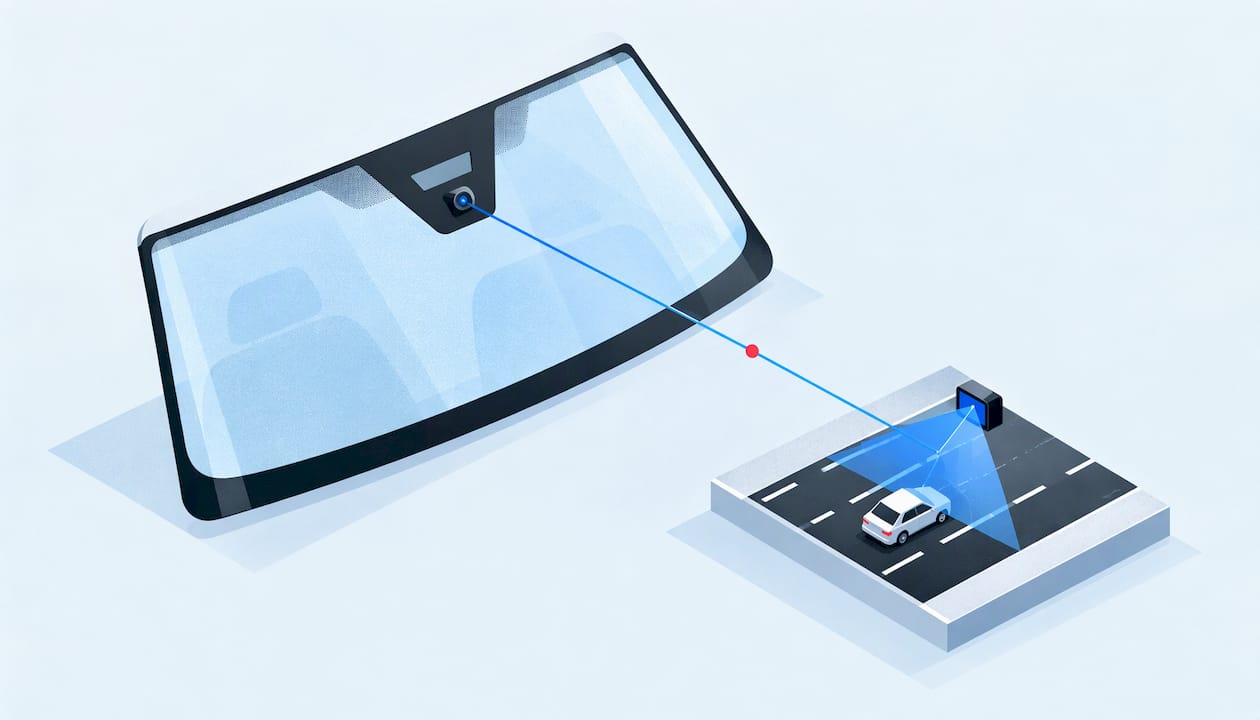
If your car has lane-keeping, automatic emergency braking or adaptive cruise control, a camera or sensor sits behind the windshield. ADAS stands for advanced driver assistance systems. After the glass is replaced, that camera must be realigned, which is called calibration. The Senate Judiciary analysis of SB 988 notes that proper calibration after replacement is imperative for features like automatic braking and adaptive cruise control to work accurately.
USAA says recalibration is usually done during the same visit as the replacement. That is our approach too: all glass work and required ADAS calibration are completed in-house, on-site and in a single visit, so you do not need a second appointment or a trip to a dealership. Our ADAS calibration is published at $250 to $700 depending on the vehicle. Many policies treat calibration as part of the covered glass claim, so ask us to include it in the billing to your insurer. More on pricing is in our ADAS calibration cost guide.
New car owners should treat this as part of the replacement, not an optional extra. Ask for the written calibration result, which the new law now requires from covered shops.
What California’s new glass law changes
SB 988, the California Motor Vehicle Glass Act, was chaptered on September 27, 2026 as Chapter 666 of the Statutes of 2026. In plain terms, for drivers:
- Shops must tell you whether your vehicle has ADAS and whether the manufacturer calls for calibration, then give you written notice that calibration succeeded.
- You get an itemized invoice and receipt.
- Assigning your policy rights or benefits to a glass shop, before or after a covered loss, is prohibited, and such contracts made on or after January 1, 2027 are void.
- The Senate analysis says shops must give a good-faith estimate and an updated estimate before service, and may not charge more than reasonable and customary fees.
Trade coverage adds that the act gives policyholders the right to choose their glass shop and calibration facility, and bars shops from offering gift cards, cash or other inducements to direct or file a claim. If a shop offers you a reward to file, that is the sign to look elsewhere. We bill your insurer for the work and do not need incentives to earn the job.
Do glass claims raise your rate?
Many drivers hesitate to file for this reason. The statutory basis is California Insurance Code section 1861.02, which, as one consumer guide summarizes, requires insurers to base rates primarily on driving safety record, annual mileage and years of experience. A no-fault comprehensive claim is not a driving record item. If your renewal notice raises questions, you can contact the California Department of Insurance at 800-927-4357 or through insurance.ca.gov.
Driving with a cracked windshield
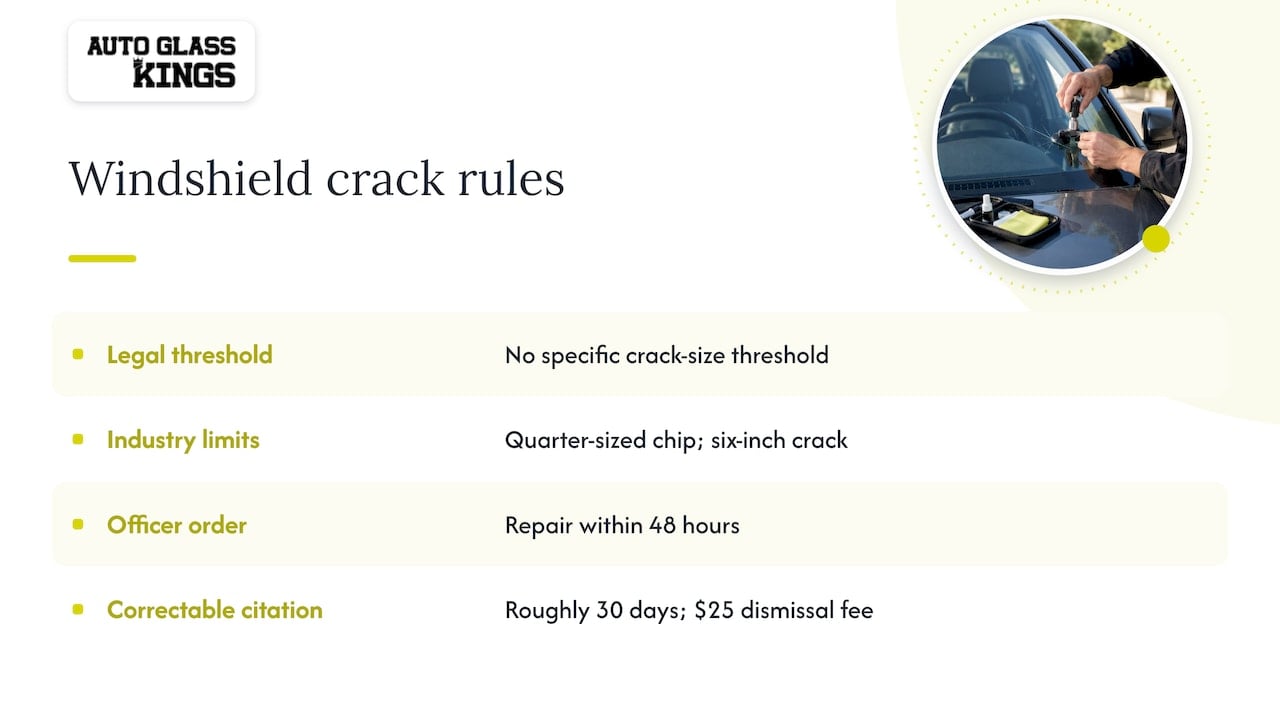
California Vehicle Code section 26710 makes it unlawful to drive with a windshield defect that impairs the driver’s vision, and there is no specific crack-size threshold. The familiar quarter-sized chip and six-inch crack limits are industry conventions for repair, not legal standards. An officer can direct a repair within 48 hours, or a correctable citation may allow roughly 30 days with a $25 dismissal fee.
In practice, a crack across your line of sight needs attention before you drive your next commute. Our guide to the California cracked windshield law explains what gets drivers cited. For routine upkeep, a quick look at your windshield and summer car checks is a good habit, since chips are easier to fix before they spread.
Who this matters to most
Busy professionals. We are available from 5 AM daily, so the glass can be done before your workday starts, at your driveway or office lot.
Parents. A cracked windshield between school runs does not need a shop waiting room. We come to you, and mobile service is free.
Classic car owners. Vintage and high-end vehicles, from classics to Tesla and Bentley, are among those we serve. Tell us the year and model when you call so we can arrange the right glass.
Policyholders. We handle insurance billing directly, and many of our customers report paying nothing out of pocket.
Getting your glass done with Auto Glass Kings
If you are in Orange County and your policy includes glass coverage, the shortest path is to call us with your vehicle and insurer. We confirm the repair or replacement, bill the insurer directly, and complete any calibration at the same visit. Every install comes with a lifetime warranty, and we use OEM-quality materials. Our other published prices: side window replacement from $189, back window replacement from $350.
Start with windshield replacement if the damage is beyond a chip, or book through Auto Glass Kings for any glass on your car.
Our perspective
Most of the trouble we see around glass claims comes from not knowing which part of the policy applies, and from splitting one job across several appointments. A windshield is a safety part, and on a modern car it is also the mount for the camera that runs your braking and lane features.
That is why we do the glass and the calibration together, on site, in one visit. The glass is installed with OEM-quality materials and backed by a lifetime warranty. Then the system is recalibrated so the car behaves the way it did before the break.
We also think paperwork should not be your job. We bill your insurer directly, and with the new written calibration notice and itemized invoice rules, you will have a clear record of what was done. Call us at 5 AM-friendly hours, tell us your vehicle, and we will take it from there.
Auto Glass Kings
FAQ
Does California require auto glass coverage?
No. Only liability coverage is required, and it does not pay for your own glass. Glass is covered through optional comprehensive coverage, or full glass if you add it. Check your declarations page to see what you carry.
Will I pay a deductible for a windshield chip repair?
Often not. Insurers commonly waive the deductible for repairs when damage is small, not at the edge and outside your line of vision. Replacement typically applies your deductible unless you have full glass coverage. Your own policy sets the exact terms.
Is there a limit on how many windshield claims I can file?
There is no official limit on the number of glass claims, though your insurer’s own terms apply. Because glass breakage is generally a no-fault comprehensive claim, ask your insurer to explain how your renewal was rated if you have concerns. California drivers can also contact the Department of Insurance.
Can I choose my own glass shop?
Yes. California insurers recognize your right to choose a repair facility, and SB 988 reinforces that for glass and ADAS calibration. After you sign the repair authorization, the insurer pays the shop directly and you pay any deductible.
Do I need ADAS calibration after replacement?
If your vehicle has a windshield-mounted camera or sensors, calibration is part of the replacement. The new California law requires shops to tell you whether it is needed and to give you written confirmation that it succeeded.
Sources
- California Department of Insurance auto insurance guide
- California Department of Insurance glossary of insurance terms
- California Department of Insurance
- AAA, What is Comprehensive Insurance
- USAA, Windshield and Glass Claims
- Amica, Auto Insurance Glass Coverage
- California Casualty, Windshield Repair or Replacement
- California Casualty, Claims FAQs
- Senate Judiciary analysis of SB 988
- SB 988 bill record, Digital Democracy
- Autobody News, California Enacts Motor Vehicle Glass Act
- Senior Drivers Coverage, rate increase after comprehensive claim
- LegalClarity, cracked windshield law in California
- Summer car checks guide
Recommended
- Comprehensive vs. Collision Glass Coverage: Which Pays?
- Drivers: File an Auto Glass Claim, Chip $50–$150, Mobile Billing
- Only 3 US States Require It: Zero Deductible Glass Coverage, ADAS Tips
- What You’ll Pay: Windshield Replacement With Insurance, ADAS $150–$400
🎧 Listen to This Article
Share
Recent Posts
November 22, 2026
Auto Glass Coverage in California: What Your Policy Pays
How California auto insurance covers windshields, side glass and ADAS calibration, what deductibles mean, and what the 2026 glass law changes for you....
November 21, 2026
Bentley Windshield Sensors: What Sits Behind the Glass
Bentley windshield sensors explained: the camera, rain and light sensors behind the glass, what a replacement does to them, and how to get...
November 20, 2026
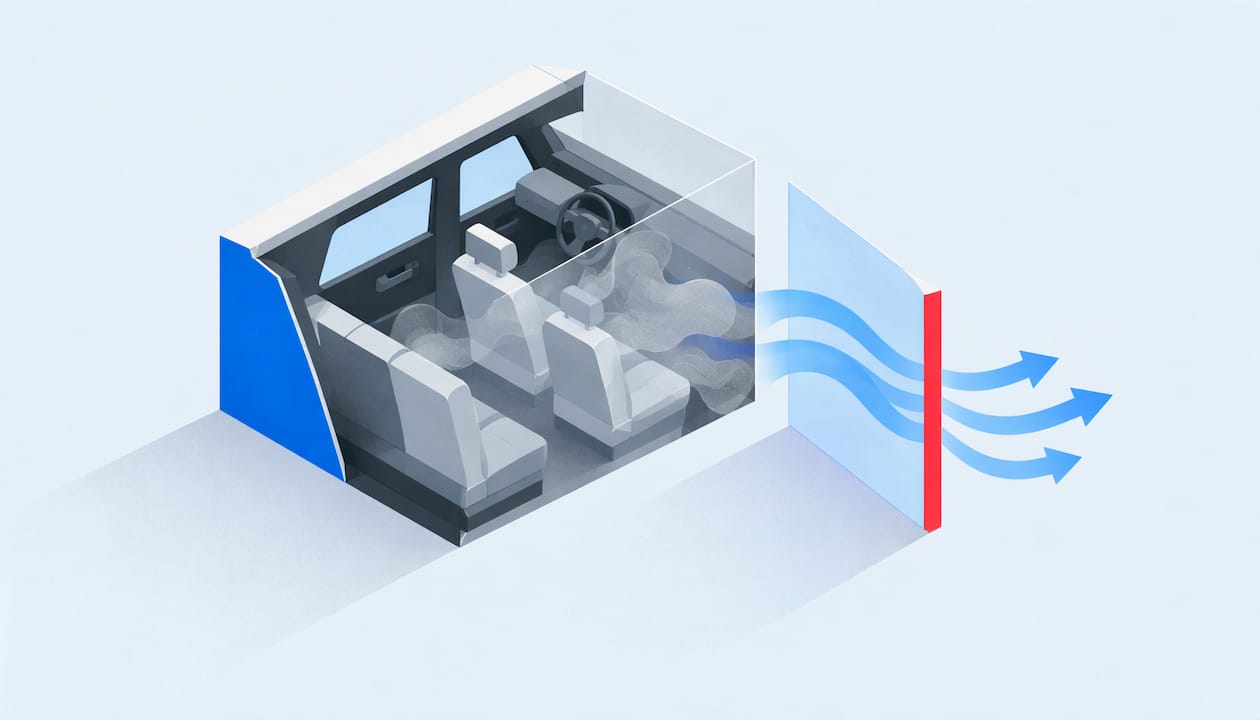
Urethane Smell in Your Car: What It Is and What to Do
A sweet, chemical smell after a windshield replacement is usually fresh urethane adhesive. Learn what causes it, how to ventilate safely and when...