
Automotive
Windshield delamination is the separation of the windshield’s plastic interlayer from the glass, and it usually requires professional replacement when it affects visibility or sensor function. If you spot cloudy patches or a bubbling edge, photograph the area in two lighting setups and contact a qualified auto glass technician before deciding whether the damage is cosmetic or a safety issue.
TL;DR:
- Windshield delamination often begins at the edges due to manufacturing faults, moisture ingress, or thermal stress, and is more likely to progress in hot, humid climates or after poor installation.
- Visual signs include cloudy, hazy patches or bubbling, and spreading usually occurs slowly from the edges inward, requiring regular photos for monitoring.
- Delamination poses safety risks if it affects sensors or occurs within a driver’s direct line of sight, which can impair ADAS functions and increase glare at night.
- Industry standards generally mandate full windshield replacement when delamination involves the inner layer, contamination, or occurs near critical sensors, as repairs are typically ineffective.
- Insurance coverage often includes delamination under comprehensive policies, with costs ranging from minor repairs to full replacements, depending on damage extent and vehicle features.
Table of Contents
- What is windshield delamination and how is it different from a scratch?
- What causes windshield delamination?
- How do you recognize delamination and watch it get worse?
- How does delamination affect safety and driving?
- When can delamination be repaired instead of replaced?
- How do you prevent or slow windshield delamination?
- Does insurance cover delamination, and what does replacement cost?
- What should you do after spotting delamination?
- Our take on handling delamination cases
- Get a professional look at your windshield
- Sources
- FAQ
What is windshield delamination and how is it different from a scratch?
A laminated windshield is built from two glass layers bonded together with a plastic interlayer, usually polyvinyl butyral (PVB). That interlayer holds the glass together on impact and blocks UV light. Delamination happens when the bond between the interlayer and one of the glass plies fails, leaving a thin pocket of air or moisture between them.
That gap changes how light passes through the glass, which is why delaminated areas often look cloudy, milky, or faintly rainbow-colored at certain angles. This is different from a surface scratch or a chip, which sits on the outer layer and does not involve the bond itself.
- A true delamination fault sits inside the glass, not on its surface.
- Surface scratches can be buffed or repaired; a failed bond between layers usually cannot.
- The optical distortion from trapped air is a strong indicator that the interlayer, not the glass, has failed.
What causes windshield delamination?
Delamination rarely comes from one problem alone. It usually starts with a weak point and gets worse from repeated exposure to heat, moisture, or stress.
- Manufacturing adhesion faults: trapped contaminants or uneven pressure during lamination can leave a weak bond from day one.
- Moisture ingress: water working into the cut edge of the glass over time breaks down the interlayer bond, a process often described as hygrothermal aging, and this kind of edge failure tends to creep inward once it begins according to research on delaminated glass plates.
- Thermal cycling and UV exposure: daily heating and cooling, plus sustained sun exposure, gradually degrade the adhesive polymers holding the layers together.
- Poor installation: a rushed or improper seal during a prior windshield replacement can let moisture in faster than a factory-sealed edge would.
- Accident-related stress: impacts that do not shatter the glass can still crack the interlayer bond in a localized spot.
Age and climate often decide whether a case looks like a defect or ordinary wear. A one-year-old windshield with a spreading edge band points to a manufacturing or installation fault. The same pattern on a ten-year-old windshield in a hot, humid climate is more likely gradual wear.
Pro Tip: If delamination shows up within the first year or two of a windshield’s life, ask the installer about warranty coverage before assuming it is normal wear.
How do you recognize delamination and watch it get worse?
Delamination shows up in a few recognizable patterns, and knowing which one you’re looking at helps you judge urgency.
- Edge banding: a narrow cloudy strip that starts at the windshield’s border and slowly moves inward.
- Field clouding: a hazier patch out in the open glass, away from the edges, often signaling a deeper interlayer issue.
- Bubbles or blisters: small trapped pockets that catch light differently than the surrounding glass.
To track whether it’s spreading, photograph the area with a light source behind the glass, then again against a dark background so the cloudy zone stands out. Include a coin or small ruler in the frame for scale, and date each photo.
Moisture-driven delamination often starts at the bottom edge, where water collects, and spreads upward over weeks or months. Once it starts, it typically does not stop or reverse on its own, so a static-looking patch today is worth rechecking in a month.
How does delamination affect safety and driving?
Delamination isn’t automatically dangerous, but certain locations and patterns turn a cosmetic flaw into a real hazard.
Cloudy or hazy patches scatter light, which shows up as glare at night or in low sun and reduces how clearly you can see the road. The windshield also carries structural weight in a modern vehicle, contributing to roof support in a rollover. So, any area with reduced adhesion is a weaker point in that structure.
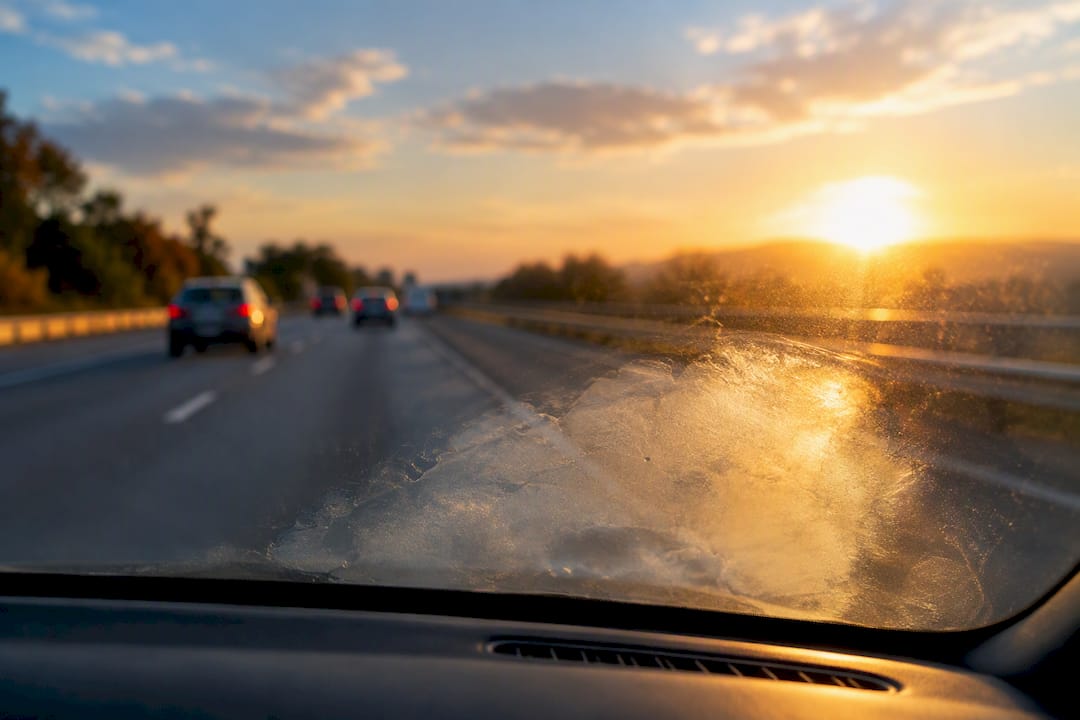
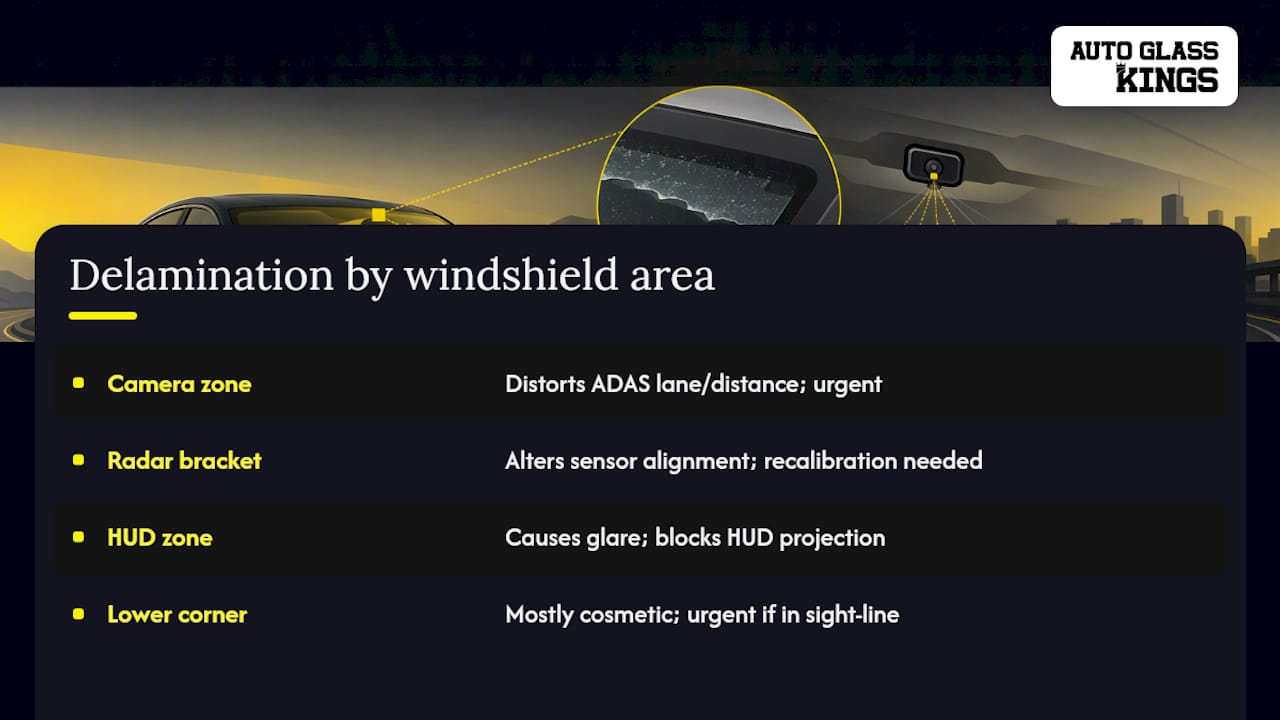
Delamination near a forward-facing camera, radar bracket, or heads-up display projection zone is a bigger concern than a spot near the lower corner. Distorted glass in that area can throw off how the ADAS calibration systems read lane markings or the distance to the car ahead, and any windshield replacement in that zone requires recalibration afterward. If the cloudy area sits directly in your line of sight or over a sensor housing, treat it as urgent rather than cosmetic.
When can delamination be repaired instead of replaced?
Most delamination cases end in replacement, not repair, and industry standards explain why. Guidance from ANSI, AGSC, and ROLAGS on laminated glass repair sets limits on what a resin repair can fix: damage confined to the outer layer, below a certain size, and away from the edge or driver’s critical vision area. Delamination fails several of those tests at once, since it involves the inner bond, often runs along the edge, and frequently shows visible discoloration or contamination.
- Inner-layer damage or contamination generally rules out a resin repair.
- Damage near the edge or in the driver’s primary sightline is treated more strictly than damage elsewhere.
- Visible cloudiness from a failed bond, as opposed to a clean crack, is a strong sign replacement is the right call.
A delaminated interlayer with visible discoloration or contamination is typically not eligible for resin repair under current repair standards, since resin fills a break in the glass rather than restoring a failed bond between layers.
A technician inspecting a suspected delamination case checks the inner ply for clouding, examines the edge seal for gaps, and verifies whether any cameras or sensors sit in the affected zone. Replacement typically involves choosing between OEM and OEM-quality aftermarket glass, followed by ADAS recalibration if the vehicle has forward-facing safety systems.
How do you prevent or slow windshield delamination?
You can’t fully control manufacturing quality, but daily habits make a real difference in how fast a weak bond breaks down.
- Park in shade or under cover when possible, and skip pouring hot or boiling water on an icy windshield, since rapid temperature swings stress the interlayer.
- Keep window and door seals in good condition so water doesn’t find a path to the glass edge.
- Avoid aggressive scraping or scrubbing right at the windshield’s border, where the seal is most vulnerable.
- Check any suspect cloudy spot every few weeks and photograph it the same way each time.
Pro Tip: A windshield cover during extreme heat or freeze cycles won’t stop an existing bond failure, but it can slow how fast a borderline case turns into a spreading one.
Does insurance cover delamination, and what does replacement cost?
Comprehensive auto insurance typically covers windshield damage that isn’t caused by a collision, which includes most delamination cases, and some insurers offer glass coverage with no deductible according to Allstate’s windshield damage guidance. Whether delamination qualifies often depends on whether your insurer treats it as a covered defect or ordinary wear, so it’s worth calling before assuming either way.
On cost, small chip repairs commonly run a moderate cost typical for minor auto glass work, while full windshield replacement can vary widely depending on vehicle type and ADAS recalibration requirements, generally from modest to higher-end pricing, according to AAA’s cost breakdown.
- If the windshield was installed recently, contact that installer first, since a bonding defect may fall under their warranty rather than your insurance.
- Save dated photos showing when the cloudy area first appeared and how it has spread.
- Ask your insurer directly whether they offer zero-deductible glass coverage before filing.
What should you do after spotting delamination?
Once you’ve confirmed the cloudy or bubbling pattern is delamination and not a surface mark, a few steps keep your options open.
- Photograph the area backlit and against a dark background, and repeat every few weeks to document growth.
- Check your windshield’s install date and any paperwork for warranty terms, and contact the original installer if the part is recent.
- Schedule an inspection with a qualified technician and mention any ADAS features on your vehicle so recalibration gets planned into the visit.
- Avoid driving if the cloudy area sits in your direct line of sight or over a sensor, and arrange mobile service or a shop appointment as soon as possible.
For a deeper look at what a full windshield replacement process involves, including insurance claims, our guide for drivers walks through each step.
Our take on handling delamination cases
Delamination is easy to dismiss as cosmetic until it sits over a sensor or in the driver’s sightline, and that’s where a lot of owners underestimate the urgency. A mobile provider handling these cases should document the fault clearly, distinguish a manufacturing defect from age-related wear, and treat ADAS recalibration as part of the job, not an afterthought. The service backs every install with a lifetime warranty and uses OEM-quality materials, with calibration work handled in-house rather than outsourced.
— Auto Glass Kings
Get a professional look at your windshield
If you’ve spotted cloudy patches or a spreading edge on your windshield, a proper inspection settles whether it’s a quick fix or a full windshield replacement. Auto Glass Kings handles both, along with in-house ADAS calibration so your safety systems are recalibrated in the same visit rather than a separate dealer trip.

- Mobile inspection and replacement come to your location, backed by a lifetime warranty and OEM-quality materials.
- ADAS calibration is done on-site, avoiding a second appointment for camera or sensor recalibration.
- Many customers pay nothing out of pocket, since claims can be billed directly to insurance carriers.
Request a quote through our service page and get a technician scheduled.
Sources
This article draws on ANSI/AGSC/ROLAGS repair standards, Allstate, and AAA cost guidance.
- Windshield Repair and Repair of Laminated Auto Glass (ANSI/AGSC/ROLAGS)
- An overview of the effect of various interlayer materials and boundary conditions on delaminated glass plates
- Windshield damage information — Allstate
- How much does windshield repair or replacement cost? — AAA
FAQ
Can you fix windshield delamination?
A small, early-stage delaminated area can sometimes be monitored, but true delamination involving the inner bond usually cannot be resin-repaired under current industry standards. Most cases require full replacement, especially once the cloudy area affects visibility or sits near a sensor.
Is windshield delamination covered by insurance?
Comprehensive auto insurance typically covers non-collision windshield damage, and delamination often qualifies, according to Allstate’s coverage guidance. Coverage details vary by insurer, so confirm whether your policy treats it as a defect claim before filing.
How much does it cost to fix delamination?
Small repairable chips generally cost between about $50 and $150, while full windshield replacement can range from a few hundred to over $1,000 depending on vehicle and ADAS recalibration needs, per AAA’s cost data. Delamination itself typically falls into the replacement category rather than the repair category.
Is delamination considered damage?
Yes, delamination is a genuine defect in the windshield’s structure, not just a cosmetic flaw, since it reflects a failed bond between the glass and its interlayer. It can affect visibility, structural support, and ADAS sensor accuracy depending on where it appears.
Recommended
- ADAS Calibration Orange County
- Auto Glass Kings Review: ADAS Calibration After Glass Replacement
- Auto Glass Replacement: A Complete Guide for US Drivers
- Auto glass replacement: 7 common mistakes to avoid
🎧 Listen to This Article
Share
Recent Posts
October 6, 2026
1–3 Hours Per Door: Run Channel Replacement That Puts Fitment First
DIY run channel replacement with a fitment-first approach. Follow parts, tools, and a 1–3 hours per door procedure, plus when to call a...
October 5, 2026
Expect $305–$3,400: U.S. Tesla Windshield Costs and How to Save
U.S. model-by-model Tesla windshield price ranges ($305–$3,400 observed). Practical steps to cut out-of-pocket costs, mobile ADAS calibration options, and…...
October 4, 2026
Drivers, Follow Your Installer’s Wash Time After Windshield Replacement
Follow your installer’s written safe-wash time. If none, wait 24 hours for a hand wash and 48 to 72 hours before automatic or...