
Automotive
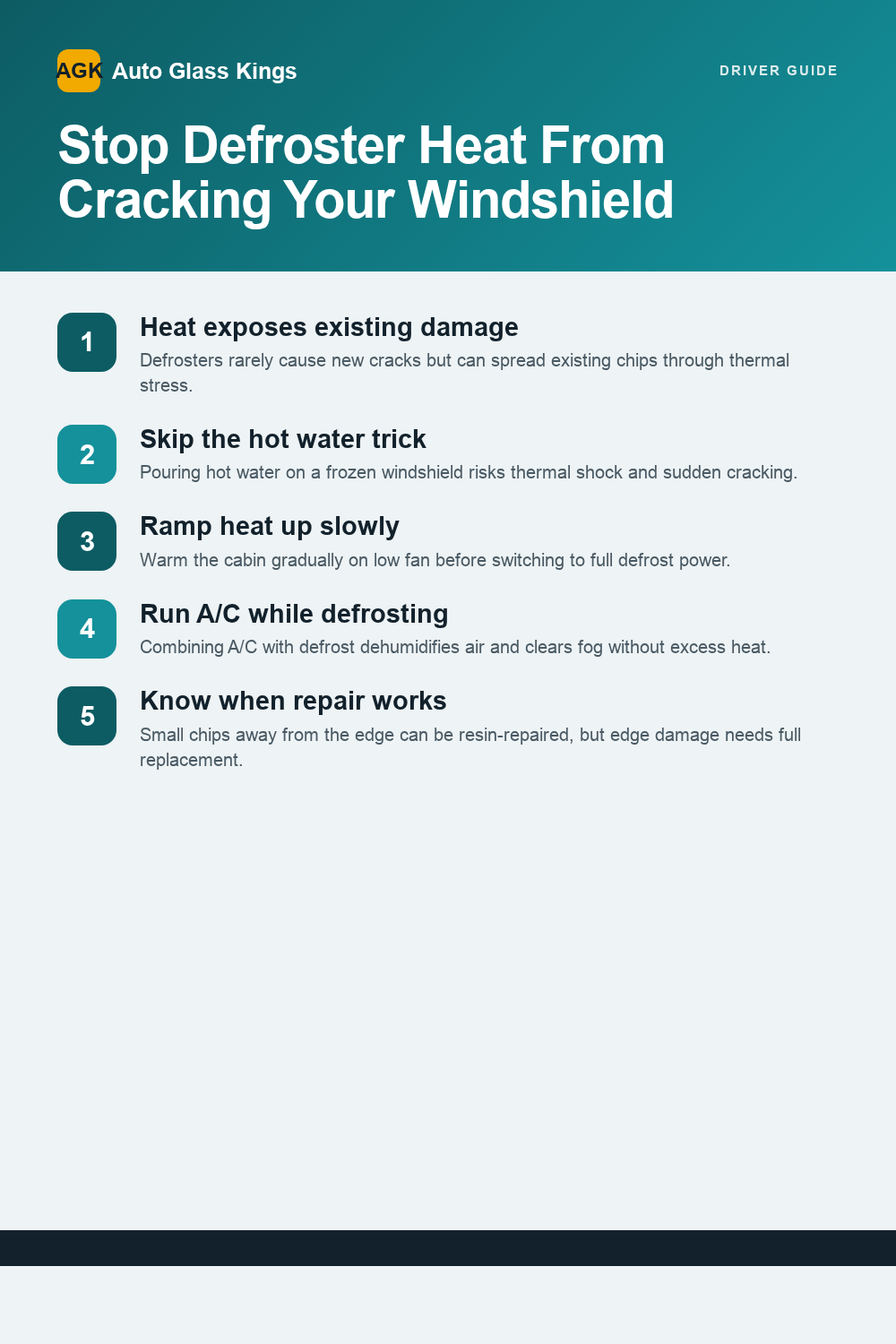
Your defroster can spread or worsen an existing chip or crack through thermal stress, but it rarely creates damage in glass that had none to begin with. If you see any chip, pit, or hairline crack, skip the hot water, ramp your heat up gradually, and get the glass checked before the damage grows. AAA warns that fast temperature swings are the real trigger, not the defroster itself.
TL;DR:
- Hot water should never be poured on a frozen windshield, as it can cause thermal shock and crack the glass.
- Gradually ramping up heat with the defroster and running the A/C to dehumidify reduces the risk of crack spreading.
- Small chips and cracks under a few inches away from the edge can often be repaired with resin injection if addressed early.
- Longer cracks or damage reaching the glass edge typically require full windshield replacement and sensor recalibration.
- Protect the windshield during winter by avoiding rapid temperature changes, parking in the shade or garage, and using proper de-icing tools.
Table of Contents
- Why heat from a defroster can make an existing chip or crack worse
- Step-by-step safe defrosting routine to reduce the chance a crack spreads
- Repair vs. replacement: when resin will stop a crack and when you need new glass
- Temporary mitigation and prevention: immediate fixes and better winter habits
- How a professional mobile technician evaluates and fixes cracks
- What drivers get wrong about defrosters and cracked glass
- How Auto Glass Kings can help with defroster-related damage
- Sources
- FAQ
Why heat from a defroster can make an existing chip or crack worse
Windshield glass expands when heated and contracts when cooled. When your defroster blasts hot air across one section of glass while the rest stays cold, you create a temperature gradient across the surface. The heated area tries to expand while the surrounding glass resists, and that mismatch generates internal stress. In flawless glass, that stress usually dissipates harmlessly. Where a chip, pit, or edge nick already exists, the damage acts as a stress concentrator, and the energy has a weak point to release into, often as a spreading crack.
A few conditions raise the odds of trouble:
- Extreme cold overnight widens the temperature gap the defroster has to close.
- Heavy ice buildup forces you to run the defroster longer and hotter to clear the glass.
- Steeply raked windshields, common on many modern vehicles, hold heat unevenly across the curved surface.
- Existing chips near the edge of the glass are under more structural tension than chips in the middle.
Watch for signs that a crack is already moving: a chip that looks slightly larger than you remember, a faint line extending from a pit, or a soft ticking or cracking sound as the defroster runs. Extreme heat and rapid temperature swings are linked to increased windshield cracking incidents, according to regional reporting on the issue, which is why technicians recommend catching movement early rather than waiting for a full crack across the glass.
Step-by-step safe defrosting routine to reduce the chance a crack spreads
A slow, deliberate defrost routine keeps the temperature gradient small and gives any existing damage less reason to move.
- Start the engine and set the fan to low with air routed to the mixed or floor vents for 2 to 5 minutes before touching the windshield setting.
- Switch to defrost and increase the temperature and fan speed gradually over 5 to 10 minutes rather than jumping straight to full heat.
- Turn on the A/C even in cold weather. Running the compressor pulls moisture out of the air, which clears fog faster without relying purely on high heat, and AAA notes that combining defrost with A/C is standard practice for clearing glass efficiently. Skip the recirculate setting so the system pulls in fresh, drier outside air.
- Clear exterior ice with a plastic scraper, a commercial de-icer spray, or winter-grade windshield wiper fluid as recommended in Tips for Maintaining Your Windshield Wipers During Summer Showers. Metal scrapers can gouge the glass, and hot water is a known cause of sudden cracking.
While the system warms up, stay with the vehicle and listen for any faint cracking or popping sound, and glance at existing chips for movement. If you notice a crack extending, stop the defroster and let the cabin cool before trying again.
Pro Tip: Warm the cabin gradually with the engine running and the fan on low before you ever touch the defrost button. That single habit, sometimes called ramping, does more to protect a stressed windshield than any de-icing product.
Repair vs. replacement: when resin will stop a crack and when you need new glass
A prompt resin injection fills the damaged area and bonds the layers of glass back together, which removes the air pocket that thermal stress uses to push a crack forward. Applied soon after the damage appears, it typically stops the crack from spreading and restores much of the glass’s structural integrity.
Not every chip qualifies for this fix. Technicians generally sort damage this way:
- Repairable: small circular chips, short star breaks, and cracks under a few inches that sit away from the edge.
- Not repairable: long cracks, damage that reaches the edge of the glass, or breaks that cross through both layers of the laminate.
When the damage falls into the second category, full windshield replacement is the safer route, and any vehicle with cameras or sensors mounted near the glass will need ADAS recalibration afterward to keep lane-keeping and collision-avoidance systems working correctly. For cost, a chip repair runs $79 to $129, while a full replacement price depends on the vehicle and is quoted individually. Many insurance policies waive the deductible for a repair since it costs far less than a replacement claim, which is worth checking before you pay out of pocket.
Temporary mitigation and prevention: immediate fixes and better winter habits
Until you can get the glass serviced, a few habits limit how much a crack grows.
- Park in the shade or a garage when you can, since direct sun on cold glass recreates the same thermal gradient a defroster does.
- Avoid rapid temperature changes, including cranking the heat to maximum the moment you start the car.
- Skip DIY patches like clear tape or nail polish. They look harmless but contaminate the damaged area, which can prevent a proper resin bond later.
Longer term, a windshield cover, winter-grade washer fluid, and gentle heat ramping year after year cut down on the number of chips that turn into full cracks. If a crack already spans more than a few inches or sits directly in your line of sight, it is safer to have the vehicle towed or serviced on-site than to drive it.
| Situation | Recommended action |
|---|---|
| Small chip, no visible spreading | Schedule a resin repair soon |
| Crack extending or reaching the edge | Avoid driving; arrange replacement |
| Heavy ice, existing chip present | Ramp heat slowly, skip hot water |
| Crack in direct line of sight | Do not drive until repaired |
How a professional mobile technician evaluates and fixes cracks
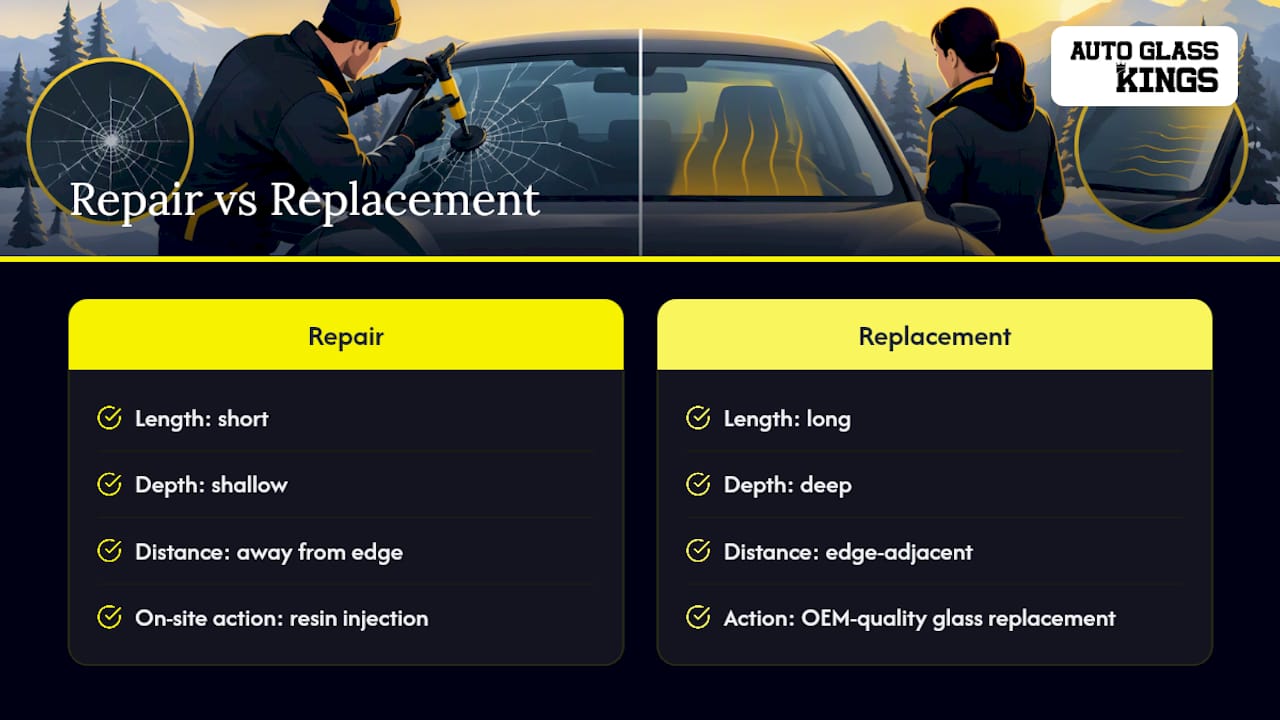
A technician evaluating a chip or crack on-site checks its length, depth, and distance from the edge of the glass before deciding between repair and replacement. Short breaks away from the edge usually get a resin injection on the spot. Longer or edge-adjacent damage points toward replacement with OEM-quality glass to preserve the windshield’s structural role and its fit with the vehicle’s sensors.
When a replacement is needed, ADAS recalibration restores the accuracy of cameras and sensors mounted near the glass, and doing that calibration in the same visit as the glass work avoids a second appointment. Auto Glass Kings performs both in-house, with mobile service available from early morning and insurance billing handled directly.
What drivers get wrong about defrosters and cracked glass
The defroster itself is rarely the villain. Thermal shock is, and it shows up any time hot air meets cold, damaged glass too fast. The biggest myth on this topic is that hot water “cures” a frozen windshield. It does the opposite, since AAA specifically warns against pouring hot or boiling water on frozen glass because of the shock it causes. The simplest checklist: ramp your heat, skip the hot water, watch existing chips, and get any damage repaired before winter turns it into a full crack.
— Auto Glass Kings
How Auto Glass Kings can help with defroster-related damage
If a chip or crack has already started moving, Auto Glass Kings handles resin repair, full windshield replacement, and in-house ADAS calibration in one mobile visit, so you are not juggling separate trips for glass work and sensor recalibration.
 Appointments may be available early in the morning, installs often carry a warranty, and insurance billing may be handled directly; some customers could pay little or nothing out of pocket. Request a quote at Autoglasskings and get the glass sorted before a small chip becomes a windshield replacement.
Sources
- The Extra Mile Magazine — winter car care myths (AAA)
- How to defrost windows quickly (AAA Via)
- Car glass cracking in extreme heat? Here’s how to avoid it | Raleigh News & Observer
FAQ
Is it worth filing an insurance claim for a cracked windshield?
It often is for a full crack, since replacement typically costs more than most deductibles, while many insurers waive the deductible entirely for a repair. Check your specific policy, since coverage for glass damage varies by insurer and state.
What is the best thing to put on a cracked windshield?
Nothing you apply at home fixes a crack safely. A prompt professional resin injection is the recommended fix for small chips and short cracks, since DIY options like tape or nail polish can contaminate the site and complicate a later repair.
Will pouring warm water on a frozen windshield crack it?
Yes, pouring hot or boiling water on a frozen windshield can cause thermal shock and crack or shatter the glass, according to AAA. Use a commercial de-icer spray or a slow defrost cycle instead.
Does AC help defrost a windshield?
Yes, running the A/C alongside the defroster helps pull moisture out of the cabin air, which clears fog faster and reduces how much high heat you need. This is standard practice even in cold weather, since the A/C dehumidifies rather than cools the cabin when paired with heat.
Recommended
- Auto Glass Replacement: A Complete Guide for US Drivers
- Auto glass replacement: 7 common mistakes to avoid
- Top 5 Benefits of Mobile Windshield Repair Near You
🎧 Listen to This Article
Share
Recent Posts
October 6, 2026
1–3 Hours Per Door: Run Channel Replacement That Puts Fitment First
DIY run channel replacement with a fitment-first approach. Follow parts, tools, and a 1–3 hours per door procedure, plus when to call a...
October 5, 2026
Expect $305–$3,400: U.S. Tesla Windshield Costs and How to Save
U.S. model-by-model Tesla windshield price ranges ($305–$3,400 observed). Practical steps to cut out-of-pocket costs, mobile ADAS calibration options, and…...
October 4, 2026
Drivers, Follow Your Installer’s Wash Time After Windshield Replacement
Follow your installer’s written safe-wash time. If none, wait 24 hours for a hand wash and 48 to 72 hours before automatic or...