Automotive
Yes, after a windshield replacement you need to clear camera calibration through the touchscreen, then let the car relearn itself while you drive. Go to Controls, then Service, then Camera Calibration, then Clear Calibration. Self-calibration typically finishes within 20 to 25 miles, though it can take up to 100 miles, and Autopilot features stay limited until it completes.
TL;DR:
- Clear calibration after windshield replacement is essential to prevent outdated camera data from limiting Autopilot functions.
- Proper installation, including correct hardware placement and clean camera glass, significantly reduces calibration failures.
- Most Tesla models complete calibration within 20 to 25 miles of driving on a straight, well-marked highway, but may take up to 100 miles.
- Certified service should document calibration clearance and validation drives to avoid needing repeat visits or incurring extra costs.
- Handling both windshield replacement and calibration in a single visit, preferably with a qualified shop, minimizes errors and reduces overall repair time.
Table of Contents
- How to clear calibration and drive for a successful reset
- What Tesla’s official guidance actually requires
- What a qualified installer should do before and after the swap
- What calibration-related costs typically look like
- If calibration doesn’t finish, here’s what to do next
- Why in-house calibration makes more sense than splitting the job
- Get your windshield and calibration handled in one visit
- Where this guidance comes from
- Sources
- FAQ
How to clear calibration and drive for a successful reset
Clearing the old calibration data is the step people skip, and it’s the one that actually triggers a fresh relearn. Skipping it means the car may keep using outdated camera position data even after a windshield swap.
- Open Controls, tap Service, select Camera Calibration, then choose Clear Calibration.
- Confirm the front camera housing is clean and free of tint, stickers, or residue from the installation.
- Check that your car is running the latest available software before you start driving.
- Choose a long, straight road with multiple lanes and clearly painted lane markings.
- Drive at a steady highway speed for at least 20 to 25 miles without heavy stop-and-go traffic.
- Watch the touchscreen for calibration progress and note any messages about limited Autopilot features.
Pro Tip: Pick a route with minimal construction, few sharp curves, and light traffic. Winding local streets slow the relearn process far more than a straight highway does.
If the touchscreen still shows calibration in progress after a long highway drive, don’t panic. The system tracks cumulative mileage in the right conditions, not just one trip, so a second similar drive often finishes the job.
What Tesla’s official guidance actually requires
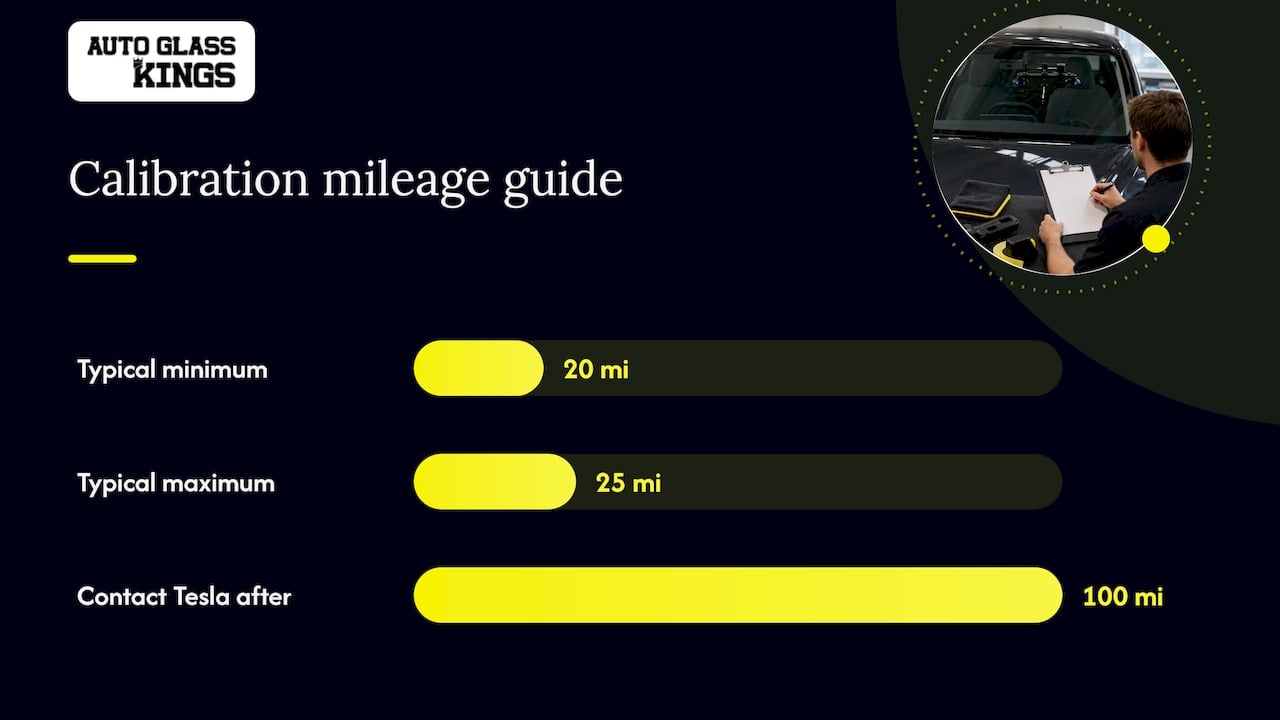
Tesla’s own documentation lays out the process plainly: clear the calibration, then drive until the system relearns camera position on its own. According to Tesla’s public calibration guidance, most vehicles finish within 20 to 25 miles, but owners should contact Tesla if calibration hasn’t completed after 100 miles in suitable driving conditions.
Clearing and driving alone don’t always finish the job. Tesla’s Model 3 service manual describes an additional forward-camera pitch verification step that some models and hardware generations require after glass replacement, separate from the standard drive-cycle relearn.
Common reasons calibration stalls or fails include:
- The camera bracket shifted slightly during installation, even by a small margin.
- Incorrect screws, torque, or bracket hardware were used during the reinstall.
- Something is blocking the camera’s view, like leftover adhesive, tint, or a smudge.
- The vehicle’s firmware or configuration settings don’t match what the calibration routine expects.
A properly installed windshield matters as much as the calibration step itself. The Auto Glass Safety Council notes that windshield curvature, glass clarity, and bracket positioning all affect the camera’s optical path, which is exactly why correct-spec glass and a trained installer reduce calibration headaches.
What a qualified installer should do before and after the swap
Not every glass shop treats calibration as part of the job. A shop that understands Tesla’s requirements will handle a specific sequence of tasks, not just swap the glass and send you on your way.
- Inspect the new windshield for the correct camera bracket mounts and optical specifications before installing it.
- Clean the camera-area glass precisely and reinstall brackets and hardware to Tesla’s specified torque.
- Clear the old calibration data on the touchscreen and perform a validation drive.
- Complete forward-camera pitch verification when the vehicle’s hardware generation requires it, per Tesla’s body repair procedures.
Pro Tip: Ask any shop for written confirmation that calibration was cleared and that a validation drive was completed. That documentation protects you if Autopilot features act strangely weeks later.
Independent collision repair guidance backs this up: skipping documented validation steps is one of the most common reasons cars return for a second visit.
What calibration-related costs typically look like
Windshield replacement cost usually breaks into a few pieces: the glass itself, labor, and any ADAS verification work the vehicle needs. Auto Glass Kings lists ADAS Calibration separately at $250 to $700 one-off, since pitch verification and validation drives take real technician time beyond the glass swap.
- A separate calibration line item is reasonable when a validation drive or pitch verification was actually performed.
- It’s not reasonable when a shop charges for calibration but only clears the system without a documented drive.
- If you carry comprehensive insurance, ask about direct billing. Many claims cover the glass and the calibration together, and some customers pay nothing out of pocket.
If calibration doesn’t finish, here’s what to do next
- Clear the calibration once more and drive another 20 to 25 miles on a straight, well-marked road.
- Check the front camera for smudges, tint, or anything blocking its view.
- Confirm your car’s software is current, since outdated firmware can interfere with the relearn.
- If warnings persist after 100 miles of suitable driving, stop retrying and contact Tesla Service or a qualified ADAS-capable glass shop.
- Bring your installation paperwork, including confirmation that calibration was cleared and any validation notes from the shop that did the work.
Tesla Service and independent ADAS shops both run diagnostics and pitch verification when clearing alone doesn’t resolve the issue. What separates a good visit from a repeat one is having documentation ready so the technician isn’t starting from zero.
Why in-house calibration makes more sense than splitting the job
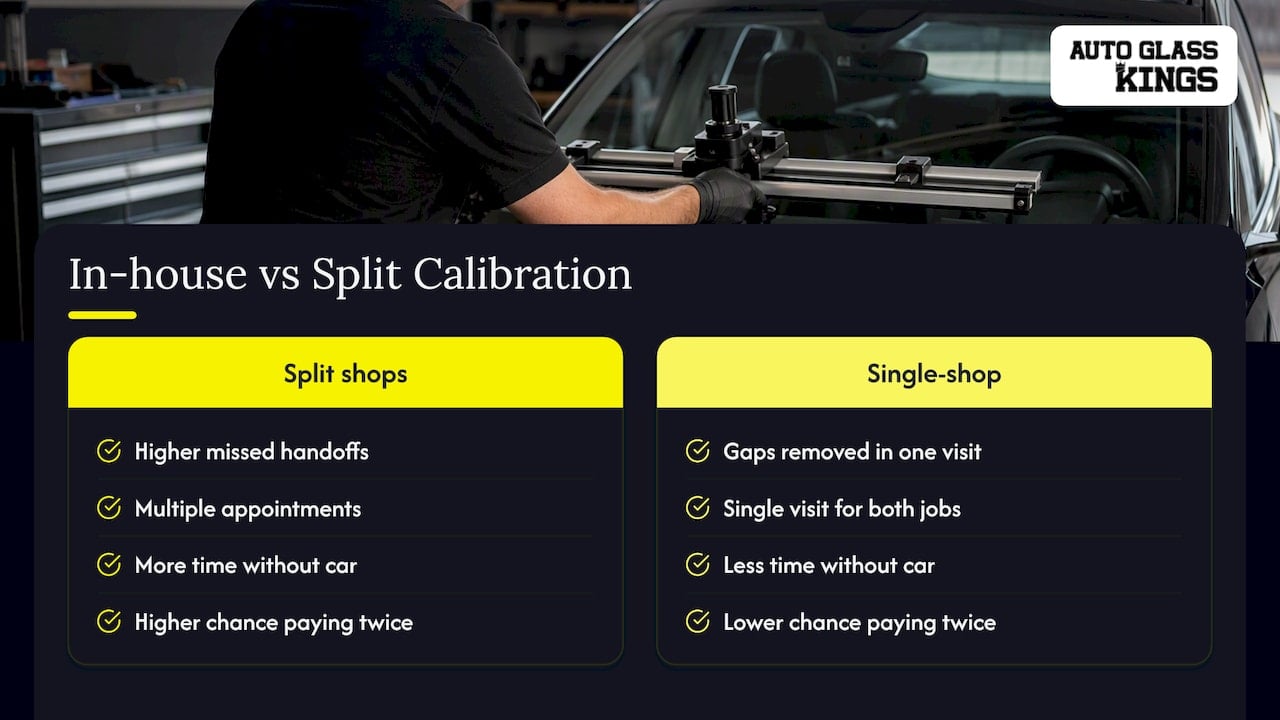
Sending a car to one shop for glass and another for calibration multiplies the chances something gets missed between visits, whether it’s a bracket detail or a validation drive that never happened. Handling both in one visit removes that gap entirely.
Mobile service and direct insurance billing also matter more than people expect: fewer appointments mean less time without a car and less chance of paying twice for work that should have been bundled from the start. Before booking anywhere, ask specifically about the shop’s Tesla experience and whether they document validation steps in writing.
— Auto Glass Kings
Get your windshield and calibration handled in one visit
A cracked or replaced windshield on a Tesla isn’t just a glass problem, it’s an Autopilot problem until calibration is done right. Auto Glass Kings handles both the windshield replacement and the ADAS calibration in the same mobile visit, so you’re not scheduling a second appointment or driving to a dealership.
- OEM-quality glass installed with a lifetime warranty on every job.
- In-house ADAS calibration, including validation steps, completed the same day as the glass.
- Direct insurance billing is offered, which can help reduce out-of-pocket costs for customers.
- Early morning availability starting early each day for drivers who need their Tesla back on the road quickly.
Request a free quote and get your windshield and calibration done in one mobile visit.
Where this guidance comes from
This guidance draws on Tesla’s public camera calibration documentation, the Model 3 service manual, and industry ADAS calibration standards from GWP Glass Works.
Sources
FAQ
Do Tesla windshields need calibration after replacement?
Yes, any time the windshield or front camera is removed and reinstalled, the camera position can shift enough to require recalibration. Clearing the old calibration data and completing a drive cycle, as described in Tesla’s documentation, resets the system so Autopilot features work as intended.
Can I calibrate my Tesla windshield myself?
You can clear the calibration yourself through Controls, then Service, then Camera Calibration, then Clear Calibration, and the car will self-calibrate as you drive. What you can’t do yourself is pitch verification or bracket-level fixes if the service manual flags those as necessary for your model.
How long does Tesla camera calibration usually take?
Most vehicles finish self-calibration within 20 to 25 miles of driving on straight, well-marked roads. If it hasn’t completed after 100 miles in suitable conditions, Tesla recommends contacting service rather than continuing to drive and wait.
Do I really need to recalibrate my windshield after replacement?
Yes, skipping calibration means the car may rely on outdated camera position data, which can limit or disable Autopilot features until it’s corrected. It’s not optional if you want those features working reliably again.
How much does Tesla ADAS calibration cost?
Costs vary by shop and by whether pitch verification is needed beyond the standard drive cycle. Auto Glass Kings lists ADAS Calibration at $250 to $700 one-off, which is separate from the windshield replacement itself.
Recommended
- Auto Glass Kings Review: ADAS Calibration After Glass Replacement
- Windshield Replacement Orange County
- Auto glass replacement: 7 common mistakes to avoid
🎧 Listen to This Article
Share
Recent Posts
October 6, 2026
1–3 Hours Per Door: Run Channel Replacement That Puts Fitment First
DIY run channel replacement with a fitment-first approach. Follow parts, tools, and a 1–3 hours per door procedure, plus when to call a...
October 5, 2026
Expect $305–$3,400: U.S. Tesla Windshield Costs and How to Save
U.S. model-by-model Tesla windshield price ranges ($305–$3,400 observed). Practical steps to cut out-of-pocket costs, mobile ADAS calibration options, and…...
October 4, 2026
Drivers, Follow Your Installer’s Wash Time After Windshield Replacement
Follow your installer’s written safe-wash time. If none, wait 24 hours for a hand wash and 48 to 72 hours before automatic or...