
Automotive
If your installer gave you a written safe-wash or drive-away time, follow that instruction over any general rule. When no specific guidance was given, wait at least 24 hours before a gentle hand wash and wait longer before any automatic or high-pressure wash under typical conditions. If you need to clean the car sooner, stick to a light rinse that avoids the windshield’s edge entirely.
TL;DR:
- Follow your installer’s specific safe-wash or drive-away time first, and wait up to 72 hours in cold or dry conditions before washing the vehicle.
- Avoid pressure washers, automated car washes, slamming doors, or towing during the adhesive curing period to prevent shifting or damaging the windshield seal.
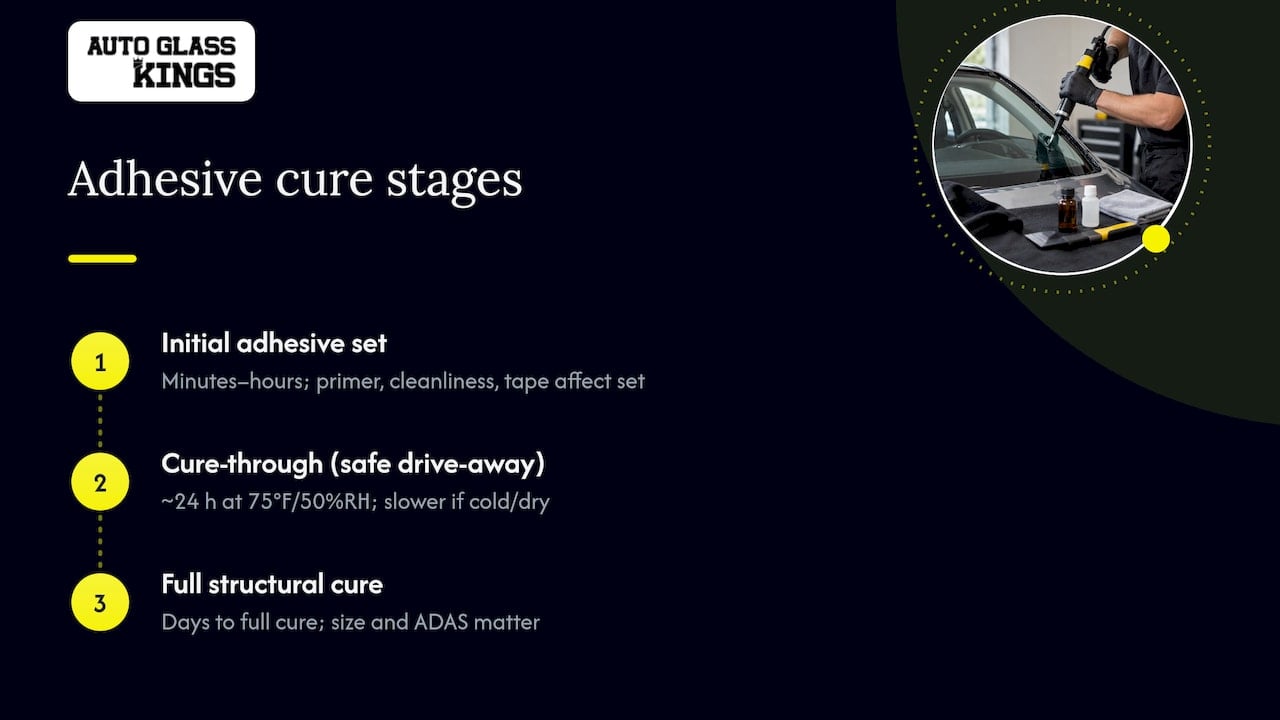
- Expect the adhesive to reach structural support in about 24 hours at 75°F and 50% humidity, but longer in colder or drier environments.
- Use gentle rinsing and spot cleaning with microfiber towels and ammonia-free cleaner if you need to clean before the wait time expires.
- Ask your installer for the exact adhesive type and curing time, and confirm if any calibration or post-install adjustments are necessary.
Table of Contents
- Recommended wait times and quick rules of thumb
- What affects adhesive curing time
- What to avoid while the adhesive is curing
- Safe interim cleaning if you can’t wait
- How to wash the car once the adhesive has cured
- What to ask your installer about your specific windshield
- Why installers give conservative wait time guidance
- How Auto Glass Kings supports safe post-install care
- FAQ
- Sources
Recommended wait times and quick rules of thumb
Three windows cover most situations, and the right one depends on what your installer told you and the conditions during your install.
Typical wait times include an initial minimum window suitable for a gentle hand wash when fast-cure urethane and normal conditions are confirmed, a safer default wait longer period before automatic or high-pressure washing if adhesive type is unknown, and an extended wait that applies in cold or dry conditions, since moisture-curing urethanes depend on ambient humidity to set properly, as 3M’s technical data shows.
Use this decision order when you’re unsure:
- Follow the installer’s written safe-wash or drive-away time first, since it reflects the specific adhesive and conditions used on your vehicle.
- If no instruction was given, default to the conservative 48 to 72 hour window rather than the 24-hour minimum.
- Extend the wait further if the install happened in cold weather, low humidity, or if you don’t know which adhesive product was used.
- Treat any uncertainty as a reason to wait longer, not shorter. A windshield bead that hasn’t reached adequate strength is cheap insurance against a leak or a loose molding later.
Indoor installs in a controlled shop environment tend to cure closer to the manufacturer’s lab conditions, while mobile installs in cold driveways or humid garages can shift the timeline in either direction. That’s one reason the installer’s product-specific guidance beats any blanket number you find online.
What affects adhesive curing time
Most windshields are set with a moisture-curing polyurethane, meaning the adhesive hardens by reacting with humidity in the air rather than by drying out. That reaction happens in stages: the bead reaches a “cure through” point where it can handle light driving loads, and separately builds toward full structural strength over a longer span. Those are not the same milestone, and confusing them is why wait-time advice online varies so widely.
Temperature and relative humidity drive the pace of that reaction directly. According to 3M’s urethane technical data, one common auto-glass urethane reaches cure-through at 24 hours when tested at 75°F and 50% relative humidity, but colder or drier conditions extend that considerably. A winter install in a dry climate can take noticeably longer to reach the same strength than a summer install in a humid one.
Installation variables matter just as much as weather. Primer application, how well the pinchweld was cleaned and prepped, the specific tape used to hold the glass during set-up, the size of the windshield, and whether ADAS sensor hardware had to be reattached to the glass all influence how the bead performs in those first hours. DuPont’s training guidance identifies surface contamination during installation, rather than elapsed time alone, as a leading cause of bond problems. That’s a strong argument for trusting a careful installer’s judgment over a generic countdown.
What to avoid while the adhesive is curing
Certain actions concentrate force exactly where the bead is weakest or introduce contaminants before the seal has set. Manufacturer and industry guidance both point to the same handful of risks:
- Avoid pressure washers and rotating brushes, since both concentrate mechanical force at the windshield perimeter before the bead has reached adequate strength.
- Don’t aim a hose or any jet directly at the molding or the edge of the glass, even at moderate pressure.
- Skip automated car washes entirely until your wait window has passed, since brushes and high-pressure arches can’t be aimed selectively around your windshield.
- Avoid slamming doors or trunk lids, since the pressure change inside the cabin can push against a bead that hasn’t fully set.
- Don’t tow the vehicle, drive on rough roads unnecessarily, or expose it to heavy vibration during the wait period.
- Leave retention tape in place until your installer tells you to remove it. Pulling it early can shift the glass before the adhesive locks it in position.
These precautions exist because the pinchweld area, where glass meets frame, is the structural connection holding the windshield in place. Manufacturer guidance warns specifically against concentrated mechanical loading during this period, and low-pressure, perimeter-avoiding contact is the safer approach across the board.
Safe interim cleaning if you can’t wait
Sometimes you need the car presentable before your wait window closes, maybe for a client meeting or a weekend trip. A careful, limited clean is possible without stressing the new seal.
- Rinse with a garden hose on low pressure, directing water away from the windshield edge and the surrounding molding rather than straight at it.
- Spot-clean the center of the glass, away from the perimeter, using a microfiber towel and an ammonia-free automotive glass cleaner.
- Blot the glass dry rather than wiping with pressure, and leave the outer two inches near the frame untouched.
- Skip the trunk, roof, and anywhere that requires pressing near the new install if you’re working around a tight timeline.
Avoid pressure washers, foam cannons aimed at the glass, rotating brushes, and any aggressive spray near the moldings during this interim clean. If you notice the glass shifting, hear a new rattle, or see gaps opening around the trim while cleaning, stop immediately and call your installer rather than continuing. A quick phone call is faster and cheaper than a redo.
How to wash the car once the adhesive has cured
Once your wait window has passed, normal washing resumes with a few habits worth keeping permanently, since they protect both the glass and the surrounding trim.
- Pre-rinse the whole car first to lift grit and dirt before any contact, reducing the chance of scratching the new glass.
- Keep the spray angle away from the bead line even after curing, since it’s a good habit that also protects the molding’s finish over time.
- Wash with a mild, pH-neutral car soap, then rinse thoroughly before moving to the glass itself.
- Clean the windshield with an ammonia-free glass cleaner, since AAA’s guidance notes that ammonia-based products can damage window tint and shouldn’t contact trim or paint.
- Dry and buff with a clean microfiber towel in the shade rather than direct sun, which helps prevent streaking, a point testing from Road & Track confirms when comparing purpose-made automotive glass cleaners against household products.
After the wash, run a quick check: look along the molding for gaps, listen for new wind noise on your next drive, confirm the wipers still park and sweep correctly, and glance underneath the dash for any sign of water intrusion after a heavier rinse, as recommended in this detailed auto-inspection checklist.
What to ask your installer about your specific windshield
A thorough installer documents the details that determine your actual wait time, not just a generic number. Before you leave your appointment, ask a few direct questions.
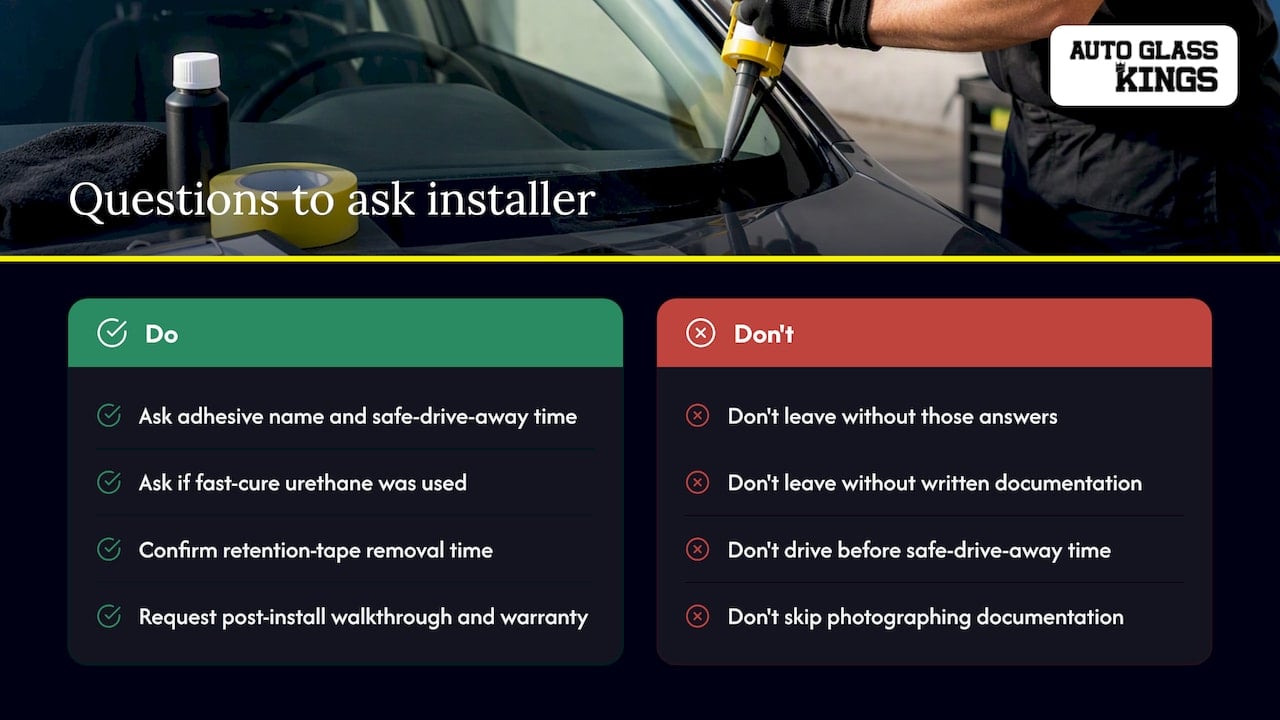
Ask for the adhesive product name and its recommended safe-drive-away time, and ask whether a fast-cure urethane was used, since that changes your realistic wait window. Confirm when any retention tape should come off and whether ADAS calibration was completed and documented, since many modern windshields carry camera or sensor hardware that needs recalibration after replacement. Request a brief post-install walkthrough covering what to watch for, water leaks, new wind noise, or molding movement, along with your warranty terms in writing.
Pro Tip: Take a photo of your installer’s written safe-drive-away time and adhesive product name right after your appointment, so you have it on hand if any question comes up later.
For a deeper walkthrough of what a full replacement appointment should include, our complete guide for drivers covers the process end to end.
Why installers give conservative wait time guidance
Conservative wait times aren’t about covering liability. They reflect the real variability in adhesive performance across temperature, humidity, and install conditions that no single customer can see or measure at home.
A urethane that cures through in 24 hours in a warm, humid shop might need meaningfully longer in a cold driveway, and no installer can promise a customer which scenario applies without knowing the specific product and conditions involved. Giving a wider buffer protects against the cases where cure runs slower than the lab average, and it costs the customer nothing but a bit of patience.
The same logic applies to ADAS calibration. Raising the question before your appointment, rather than after, gives your installer time to confirm whether your vehicle’s cameras or sensors need recalibrating and to document that work properly. A rushed wash or a skipped calibration question rarely saves real time, but it can cost a redo.
— Auto Glass Kings
How Auto Glass Kings supports safe post-install care
Our service includes mobile windshield replacement, window and glass repairs, and ADAS calibration, completed on-site in a single visit. Every install comes with a lifetime warranty, and we handle insurance billing to streamline the process for customers.
When we finish a windshield replacement, you leave with a documented safe-wash and drive-away time specific to the adhesive used, clear guidance on when any retention tape comes off, and a post-install inspection covering seals, molding, and wind noise before we leave your driveway. Because calibration happens during the same appointment, you’re not left guessing whether your vehicle’s sensors are ready to go.
If you’re due for a replacement or want a documented wait time for your specific vehicle, start with our windshield replacement page or request a quote directly at Autoglasskings.
FAQ
How long should I wait to wash my car after windshield replacement?
Wait at least 24 hours for a gentle hand wash and 48 to 72 hours before any automatic or high-pressure wash under typical conditions, unless your installer’s written instruction says otherwise. Cold or dry weather can extend that window further, since the adhesive cures more slowly in those conditions.
What can’t you do after getting your windshield replaced?
Avoid pressure washers, rotating brushes, and direct jets aimed at the windshield perimeter, since these concentrate force on the bead before it reaches full strength. Also skip slamming doors, towing, heavy vibration, and removing retention tape early, since all of these can shift the glass before the seal sets.
How long does it take for a windshield replacement to adhesive fully set?
Cure time depends on the adhesive and the conditions during install. 3M’s technical data shows one common urethane reaches cure-through at 24 hours at 75°F and 50% relative humidity, but colder or drier conditions extend that timeline, which is why your installer’s specific guidance matters more than a generic number.
What’s the difference between drive-away time and safe-wash time?
Drive-away time refers to when the bead can structurally support the glass for normal driving, while safe-wash time refers to when the seal can handle cleaning forces like water pressure or brushes without being disturbed. These two numbers can differ, so a vehicle cleared to drive isn’t automatically cleared for an automatic car wash.
When should I contact my installer after an early wash?
Contact your installer if you notice water entering the cabin, new wind noise, visible gaps along the molding, or any shifting of the glass after cleaning. These symptoms call for a professional inspection rather than a wait-and-see approach, even if the wash happened only once.
Sources
- 3M Auto Glass Urethane technical data (TDS)
- DuPont BETASEAL / technical training guide
- AAA Club Alliance: Wash your car’s windshield (advice)
- Road & Track: Best car glass cleaners tested (2026)
Recommended
- Auto Glass Replacement: A Complete Guide for US Drivers
- Auto glass replacement: 7 common mistakes to avoid
- Auto Glass Replacement in Orange County: Cost, Process, and What to Expect
🎧 Listen to This Article
Share
Recent Posts
October 6, 2026
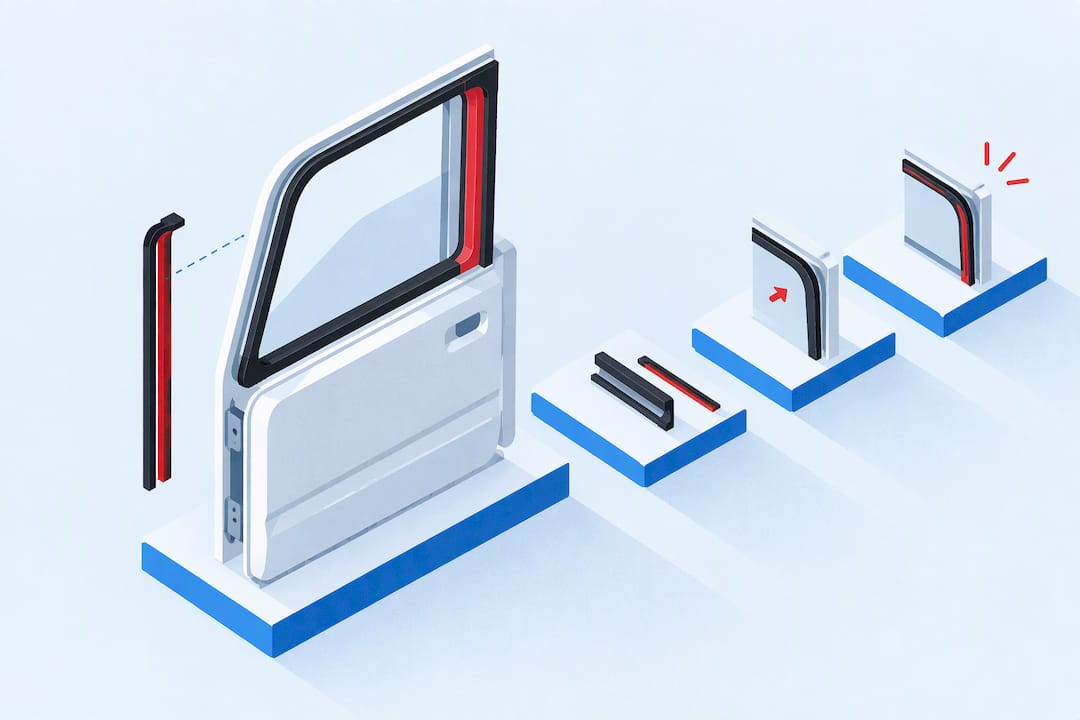
1–3 Hours Per Door: Run Channel Replacement That Puts Fitment First
DIY run channel replacement with a fitment-first approach. Follow parts, tools, and a 1–3 hours per door procedure, plus when to call a...
October 5, 2026
Expect $305–$3,400: U.S. Tesla Windshield Costs and How to Save
U.S. model-by-model Tesla windshield price ranges ($305–$3,400 observed). Practical steps to cut out-of-pocket costs, mobile ADAS calibration options, and…...
October 4, 2026
Drivers, Follow Your Installer’s Wash Time After Windshield Replacement
Follow your installer’s written safe-wash time. If none, wait 24 hours for a hand wash and 48 to 72 hours before automatic or...