
Automotive
Yes, a sudden temperature change can crack a windshield, but it rarely does so to perfectly sound glass. Heat or cold usually finishes the job on a chip, pit or edge flaw that was already there. A rapid swing, like blasting a hot defroster on frozen glass or hitting sun-baked glass with cold air conditioning, creates uneven stress, and the crack grows from the weakest point. If you already have a chip, the fastest way to protect the glass is to get it repaired before the weather does the damage for you.
TL;DR
- Thermal stress happens when one part of the glass expands or contracts faster than the part next to it. Existing chips, pits and edge damage are where cracks start.
- Never pour hot water on frozen glass or point a hot defroster blast at a cold windshield. Warm the cabin gradually instead.
- Water inside a chip can expand when it freezes and push a small nick into a long crack, so chips are worth fixing early.
- Repair is usually the cheaper route when damage is small. Our windshield repair runs $79 to $129, and we come to you.
- A crack that appeared “out of nowhere” usually began as damage you did not notice, and an edge crack may need replacement and ADAS recalibration.
Table of Contents
- What actually happens to glass when the temperature swings
- The most common ways temperature cracks a windshield
- Why a windshield seems to crack “out of nowhere”
- How to prevent temperature-related windshield cracks
- What to do when a windshield cracks in hot or cold weather
- Repair or replace: how to decide
- Does temperature affect the repair itself?
- Our perspective
- Fix it before the next temperature swing
- FAQ
- Sources
What actually happens to glass when the temperature swings
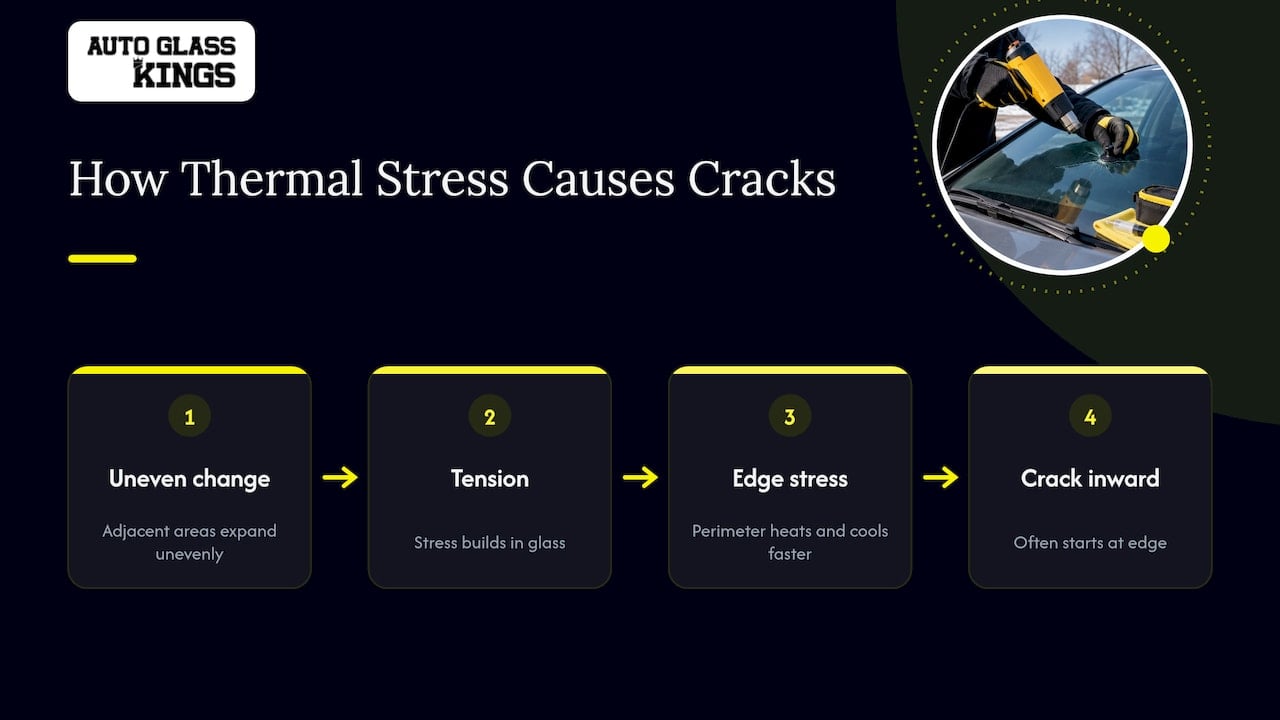
The Corning Museum of Glass explains that glass breaks from extreme temperature changes when one part expands or contracts faster than the part beside it, which creates tension inside the material. That is the whole mechanism, and it is called thermal stress or thermal shock. The bigger the difference between neighboring areas of glass, and the faster it happens, the greater the stress.
A windshield makes this worse in a few ways. It is a large panel, it is heated by sun on one side and cooled by cabin air on the other, and its edges sit against metal, rubber and sealant. One consumer finance guide notes that a windshield is typically thicker in the middle than at the edges, so the perimeter heats and cools faster, while the frame materials around it expand with heat and stress those weaker areas. That is why so many temperature-related cracks start at the edge and run inward.
Why a healthy windshield usually survives
Windshields are made of laminated glass: two layers bonded around a plastic interlayer, designed to hold together when damaged. According to a Yahoo Autos explainer on extreme heat and cold, side and rear windows are tempered glass instead, designed to shatter all at once when they hit their stress limit. A local news fact check found that heat can put stress on laminated windshields, but it will not crack one unless it is already chipped or cracked.
So the honest answer to “at what temperature does a windshield crack?” is that there is no single number. What matters is how fast the temperature changes, how evenly the glass is heated, and whether the glass already carries damage. A windshield with a clean surface can sit through a lot. One with a chip can fail on an ordinary morning.
The most common ways temperature cracks a windshield
Hot defroster on frozen glass
This is the classic. Reporting on the topic describes how blasting a hot defroster on a frozen windshield creates thermal stress that forces cracks to expand from existing weak points. The outside is freezing, the inside surface warms in seconds, and the glass tries to expand unevenly. We have a full walkthrough on this in how to ramp heat so a defroster does not crack your windshield.
Boiling or hot water poured on ice
It looks like a shortcut and it is the fastest way to turn a chip into a crack. Guidance from insurers and the research we reviewed consistently says to avoid pouring boiling water on frozen glass. Use a safer deicing approach instead (more below).
Cold air conditioning on sun-baked glass
The reverse also works. Park in direct summer sun, then jump in and run the A/C on max cold aimed at the glass. The same Yahoo Autos piece describes this as another route to thermal stress that expands cracks from pre-existing weak points.
Water freezing inside a chip
This one is not about speed but about expansion. Water can get into pits and chips, and when temperatures rise or drop below freezing it expands and puts pressure on the outer glass layer, turning a small nick into a lengthy crack. A chip you ignored in October can be a crack across your line of sight by January in colder parts of the country.
Heat building inside a parked car
A car left in the sun gets hot inside, and the frame and glass edges heat unevenly. The Hartford’s glass tips suggest that drivers can crack the windows slightly in extreme heat to reduce pressure on the glass and fix chips quickly. Shade or a sunshade helps for the same reason: it keeps the glass temperature more even.
Why a windshield seems to crack “out of nowhere”
Drivers often report a loud pop and a fresh crack with no impact. Almost always, there was a trigger you did not see: a tiny pit from highway gravel, a flaw at the edge from installation or rust, or an old chip that quietly collected moisture and dirt. The temperature swing is the last straw, not the first cause.
This is also why edge cracks deserve attention. They start near the frame, where stress is highest, and they behave differently from a crack in the middle of the glass. If yours runs from the edge, read our guide on edge windshield cracks near the frame and ADAS recalibration, because replacement is more likely.
How to prevent temperature-related windshield cracks
Most of this comes down to gentle, gradual changes and fixing damage early.
- Inspect for chips and pits. Look at the glass in daylight, from inside and outside. Run a fingertip over any spot that looks like a tiny star or dimple.
- Get chips repaired quickly. A repair stops the damage from spreading and keeps the original factory bond. A professional standard for laminated glass says trained technicians can repair damage to improve clarity, restore a smooth surface, stop the damage from spreading, and retain the original bond when replacement is unnecessary.
- Warm the cabin gradually. On a frozen morning, start the car, set the defroster to low or moderate heat and let it climb. Do not start on full hot.
- Deice with the right solution. AAA’s Minneapolis club suggests mixing one part isopropyl alcohol to two parts water with a few drops of dish soap. The mix freezes at around 5°F, compared with 32°F for water, so it melts a layer of ice without the shock of hot water.
- Use shade and a sunshade in summer. Keep the glass from baking and avoid blasting cold air on it straight away. Let the cabin cool first, and aim vents toward you, not the glass.
- Keep glass clean and smooth. Dirt packed into pits makes damage harder to repair well. If you want to understand how to care for surface clarity without making things worse, this overview of polishing car glass safely is a good place to start. Polishing is for surface haze, never for chips or cracks. For pitting, see why we say stop polishing and get windshield pitting assessed, especially if your car has driver assistance cameras.
What to do when a windshield cracks in hot or cold weather
The first rule is to avoid making the temperature swing bigger. Do not crank the heat or the A/C toward the cracked glass. Park in a stable spot if you can, out of direct sun or out of freezing wind, and let the glass come to a steady temperature.
Then follow these steps:
- Photograph the damage. Take a clear picture of the crack, with a coin or ruler for scale. It helps with an insurance claim and shows whether the crack has grown later.
- Protect it. A clear piece of tape over a chip keeps out water and dirt until repair. Do not use household glue or nail polish.
- Measure and classify it. Length, location and type decide whether repair is possible. Our guide to windshield crack types and the repair rules explains the common thresholds, and our page on chip size limits covers when a vehicle’s own rule overrides the general one.
- Book soon. Cracks tend to spread after the next temperature swing, bump or door slam. For more on slowing the spread, see how to stop windshield cracks from spreading.
- Check driver assistance features. If your car has a forward camera behind the glass, any replacement needs recalibration. Repair professionals are expected to consult vehicle manufacturer recommendations before repairing damage near a value-added feature that the damage or repair could affect, and cameras and sensors are exactly that.
Repair or replace: how to decide
A short, shallow chip away from the edge is generally a repair candidate. A long crack, one that reaches the edge, damage in the driver’s primary line of sight, or a chip that has already spread usually points to replacement. Weather makes the decision more urgent, not different.
| Situation | Typical route | Why |
|---|---|---|
| Small chip or star break, not at the edge | Repair | Resin fills the damage and stops it spreading |
| Chip that has started to crack after a cold night | Repair if still short, otherwise replace | Depends on length and location |
| Crack running from the edge | Replace in most cases | Edge stress keeps driving it |
| Long crack across the glass | Replace | Structural and visibility concerns |
| Damage in front of a camera or sensor | Assess first, likely replace plus calibrate | Clarity and calibration both matter |
The cost gap is real. Our cost difference between windshield repair and replacement page breaks it down, and if you carry comprehensive coverage, what you will pay for windshield replacement with insurance explains how claims usually work.
Does temperature affect the repair itself?
Yes, and this is where professional technique matters. Resin and urethane adhesive are both temperature sensitive, so a good technician controls the conditions rather than working through them.
According to the Auto Glass Safety Council, before repairing in extreme heat the glass should be brought down to the preferred working range, for example by parking in the shade, using a heat exchanger or placing a damp towel on the inside of the glass to avoid thermal shock during resin application. The same source advises keeping the pinchweld out of direct sunlight and storing urethane adhesives in a climate-controlled environment during replacement to prevent bonding issues and gassing.
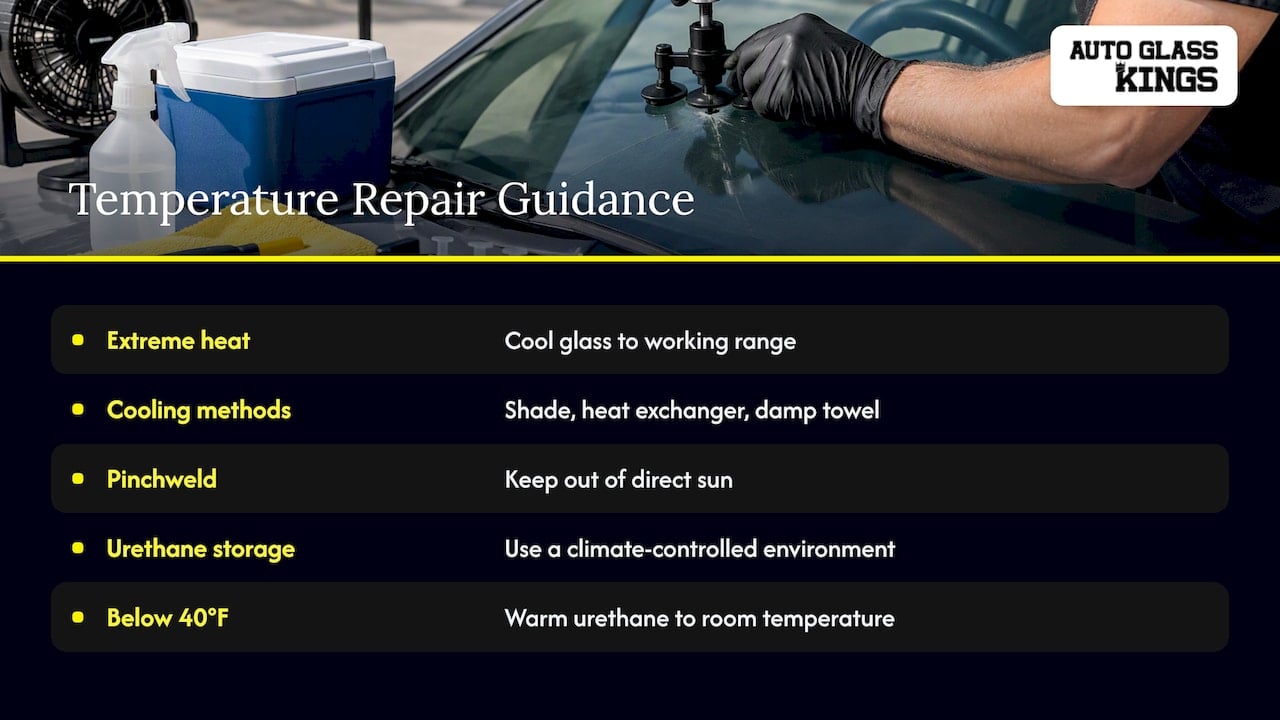
Cold has its own rules. A manufacturer training manual states that urethanes exposed below 40°F are not adversely affected, but they should be warmed to room temperature so technicians can push them through application equipment. If you want to know more about adhesives, we explain urethane types, primer and cure times separately.
Our perspective
Most temperature cracks we see did not start with the temperature. They started with a chip the driver meant to deal with later. The cold night or the hot defroster just showed the glass where it was weak.
That is why we built our service around removing every excuse to wait. We come to your home, office or the carpool line, starting at 5 AM, so a repair does not cost you a morning. Repair costs $79 to $129, and a small chip fixed today can save a full replacement later.
When replacement is the right call, we do the glass and any required ADAS recalibration ourselves, in-house and in a single visit, with OEM-quality materials and a lifetime warranty on the install. No second appointment, no trip to a dealership. We also bill most insurance carriers directly, and many customers pay nothing out of pocket.
Weather will keep swinging. Your windshield does not have to be the thing that gives.
Auto Glass Kings
Fix it before the next temperature swing
If you have a chip, a pit or a crack that grew overnight, we can handle it where your car is parked. Our mobile windshield repair runs $79 to $129 and stops small damage before heat or frost spreads it. If the glass needs replacing, our windshield replacement comes with free mobile service, OEM-quality materials and a lifetime warranty.

If your car has a forward camera or driver assistance sensors, ask us about ADAS calibration, which is priced from $250 to $700 depending on the vehicle. For Teslas, see our guide on whether to drive to recalibrate or book a technician. After a replacement, our aftercare steps for the first 48 to 72 hours keep the new bond safe, including how to treat the glass in extreme weather.
FAQ
At what temperature can a windshield crack?
There is no single temperature. Cracking depends on how fast the temperature changes and whether the glass already has a chip or edge flaw. A healthy laminated windshield is built to hold together, while a damaged one can fail when one part of the glass expands or contracts faster than another. Gradual changes are far safer than sudden ones.
Do windshield cracks get worse in cold weather?
Often, yes. Water that gets into a chip can expand as temperatures fall below freezing, putting pressure on the outer glass layer and extending the damage. Heating the cabin too fast on a frozen morning can add more stress. Repair small chips early and warm the car gradually.
Why did my windshield suddenly crack?
Usually because of damage that was already there, such as a tiny pit, a small chip or a flaw at the edge. A temperature swing, like a hot defroster on cold glass or cold A/C on sun-heated glass, created enough stress to spread it. Have a technician check the cause, especially if the crack starts at the edge.
Can I use hot water to clear ice off my windshield?
No. Hot or boiling water on cold glass causes the rapid temperature change that cracks windshields. Use a deicing solution of one part isopropyl alcohol to two parts water with a few drops of dish soap, or run the defroster on low and let it build slowly.
Should I repair or replace a crack caused by weather?
It depends on length, location and depth. Short damage away from the edge can often be repaired, while edge cracks and long cracks usually need replacement. If your car has ADAS cameras, replacement should include recalibration, which we complete in the same visit.
Sources
- Does glass break if it gets too hot or too cold? (Corning Museum of Glass)
- What Happens to Your Windshield When the Temperature Changes (Capital One)
- Can Extreme Heat Or Cold Break Car Windows? (Yahoo Autos)
- VERIFY: Can heat cause your windshield to crack? (WUSA9)
- From Chips and Shatters to Tints: Windshield and Glass Tips (The Hartford)
- Repair of Laminated Auto Glass Standard (ROLAGS, 2022)
- How to Deice Your Car’s Windshield (AAA Minneapolis)
- Installing Auto Glass in Extreme Heat (AGSC)
- DINITROL AGR Training Manual 2024 (AGSC)
- Polish Car Glass Safely
Recommended
- Stop Windshield Cracks: NHTSA Backed Steps, Repair Rules for Drivers
- 3 in and 14 in Repair Rules: Windshield Crack Types & ADAS Notes
- Car Owners: Windshield Stress Crack? Replace If Over 6 Inches, 4 Rules
- Replace Edge Windshield Cracks Near the Frame, ADAS Recalibration
🎧 Listen to This Article
Share
Recent Posts
November 22, 2026
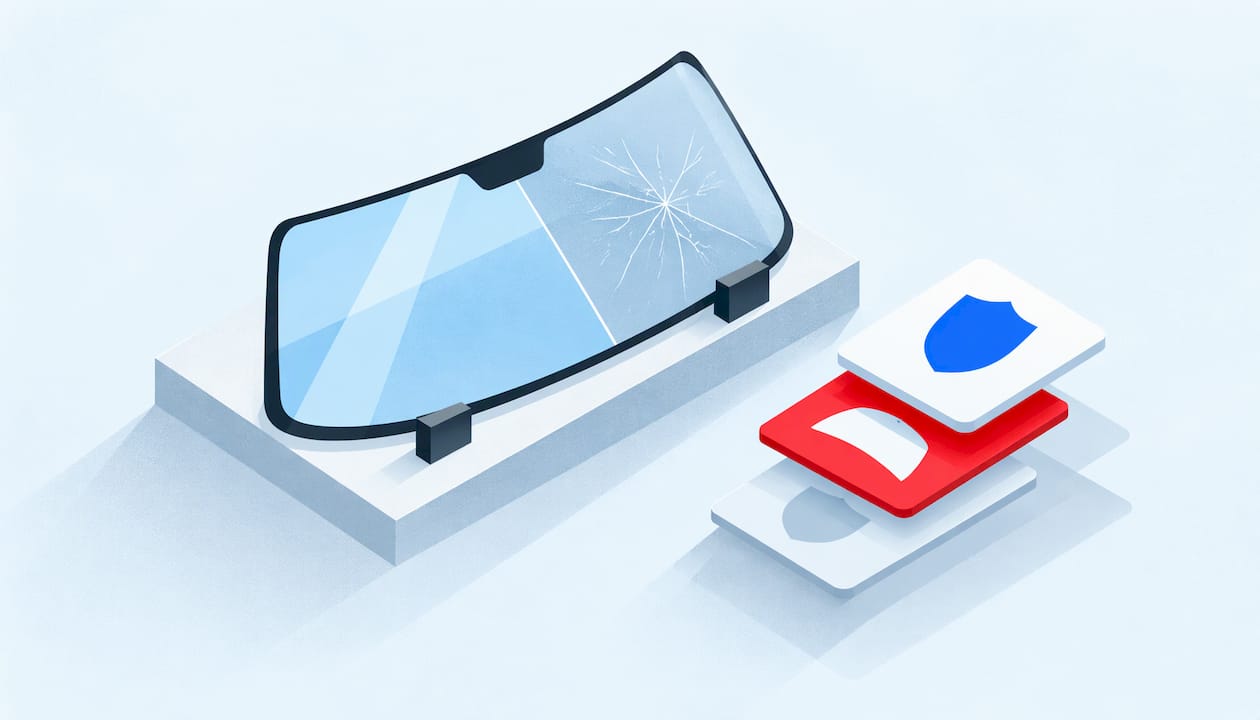
Auto Glass Coverage in California: What Your Policy Pays
How California auto insurance covers windshields, side glass and ADAS calibration, what deductibles mean, and what the 2026 glass law changes for you....
November 21, 2026
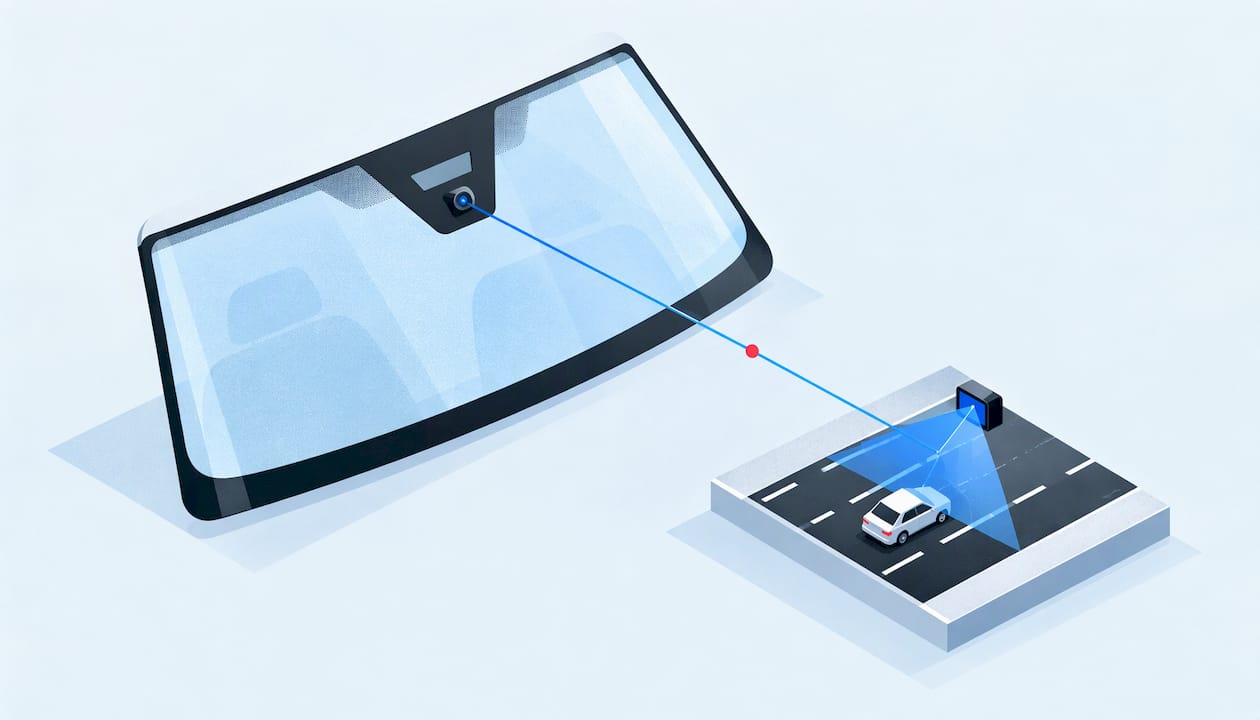
Bentley Windshield Sensors: What Sits Behind the Glass
Bentley windshield sensors explained: the camera, rain and light sensors behind the glass, what a replacement does to them, and how to get...
November 20, 2026
Urethane Smell in Your Car: What It Is and What to Do
A sweet, chemical smell after a windshield replacement is usually fresh urethane adhesive. Learn what causes it, how to ventilate safely and when...