
Automotive
The safest way to clean broken glass out of a car is to work in a fixed order: pick up the big pieces by hand with gloves on, loosen the buried fragments, vacuum, lift the fine dust with tape, then check every hidden spot with a flashlight. A vacuum alone will not do it. Tempered side and rear glass breaks into thousands of small cubes that end up in carpet, seat seams, vents and the door itself. This guide covers the full process, what to protect first, and when it is smarter to let a technician handle it.
TL;DR
- Wear thick gloves and eye protection, pick up large pieces by hand, then vacuum with a shop vac if you have one.
- Loosen buried shards with a stiff brush, compressed air and tapping, and lift fine dust with tape or a lint roller.
- Check the vents, the defroster, the seat belt retractors and the inside of the door, where glass hides and causes trouble later.
- Cover the opening with a heavy trash bag or tarp, not cardboard, and photograph everything before you clean if it was a break-in.
- Mobile glass service can replace the window and clean the cabin in one visit, often billed straight to your insurer.
Table of Contents
- Before you touch anything
- What you need for broken glass cleanup
- Step-by-step: cleaning glass out of the interior
- The hidden spots that cause problems later
- Cleaning glass off the outside of the car
- Cover the opening until the window is fixed
- Will insurance cover it?
- Why tempered glass makes such a mess
- When to let a professional handle the cleanup
- Perspective: why we clean up as part of the job
- Get the window fixed and the car cleaned in one visit
- FAQ
- Sources
Before you touch anything
If the window was broken in a break-in, do not start cleaning. AAA advises calling the police first to file a report, then your insurance carrier, and leaving things in and on the vehicle alone until both know. Take photos of the damage so you have a visual record. Cleanup comes after that.
If the glass broke from road debris, a rock chip that spread, or a stray ball, you can skip the police call and go straight to photos and then cleanup.
Our own guide on what to do after a car break-in window goes deeper on the report, the claim and the repair.
What you need for broken glass cleanup
You probably own most of this already:
- Thick work gloves and safety glasses. Long sleeves and closed shoes help too.
- A shop vacuum, or a household vacuum with a hose and crevice attachment. AAA calls a shop vac the ideal tool but says a household vacuum works.
- A stiff-bristled scrub brush for carpet and upholstery.
- A compressed-air can or an air nozzle to blow shards out of seams.
- Duct tape, wide packing tape or a lint roller for fine dust.
- A flashlight, ideally held low and flat.
- A heavy garbage bag or a cardboard box for the glass. Tape the bag shut and label it so no one reaches in bare-handed.
- A soft towel or drop cloth to lay over the seat while you work.
Skip metal scrapers and abrasive cleaners. They scratch plastic, leather and paint, and the glass itself can do enough of that.
Step-by-step: cleaning glass out of the interior
These steps follow the order that works best. Each one makes the next one easier.
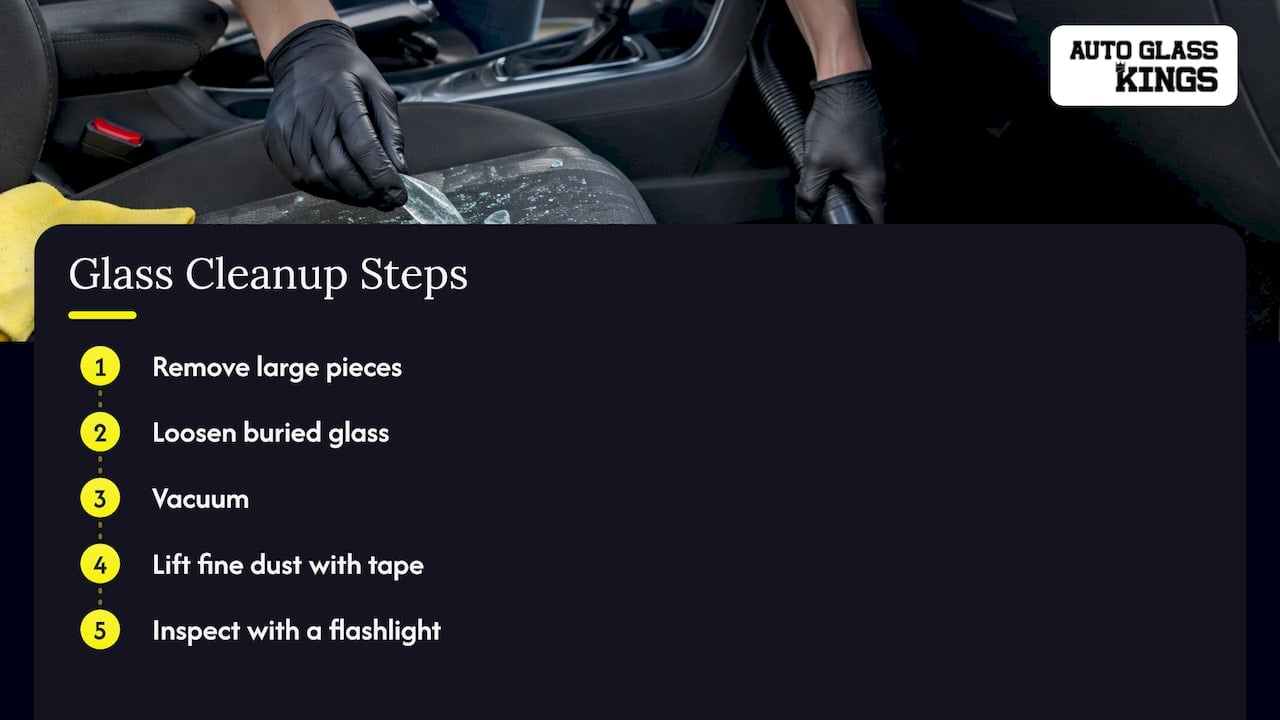
1. Remove the big pieces by hand
With gloves on, pick out the large fragments from the seat, the floor and the window frame. Drop them into your bag or box. Do not brush them around the cabin, because that pushes pieces into the carpet.
If the seat is covered in glass, lift the whole piece of glass-laden towel or sheet out together when you can, rather than sweeping.
2. Loosen what is buried
Glass that sits in carpet or upholstery fibers needs to come up before the vacuum sees it. The Spruce recommends using a stiff-bristled scrub brush to lift the glass to the surface of the fabric first.
A mobile detailing guide adds two useful moves: blow buried shards loose with a compressed-air nozzle swept across carpet and seats, and vibrate the fabric by tapping the back of the carpet and seats so fragments work their way up. Blow in one direction, toward the open door, so you are not driving glass deeper under the dash.
3. Vacuum slowly and thoroughly
Go over the seats, then the carpet, then the door pockets and the cargo area, using the crevice tool along seams and under the seat rails. Use a blotting motion rather than dragging the nozzle across leather or plastic. A rigid attachment dragged over a surface with glass on it will scratch it.
Empty the vacuum into your glass bag when you are done, and wipe the canister. Do not shake it out in the open.
4. Lift the fine dust with tape
This is the step most people skip. Glass dust and tiny slivers survive the vacuum.
The Spruce suggests wrapping duct tape around your hand, sticky side out, and pressing it onto the glass. It also notes that a lint roller made for pet hair has stronger adhesive and does the best job of picking up glass. Press tape into stitching, seams and the grooves of floor mats, then dispose of it in the garbage bag.
5. Inspect with a flashlight
Hold the flashlight flat against the carpet or seat surface, almost parallel. Glass catches the beam and glitters, even slivers you could not see from above. Check at different times of day if you can, since sunlight at a low angle shows leftovers well.
Repeat the vacuum and tape steps wherever you see sparkle.
The hidden spots that cause problems later
A car can look clean and still have glass in places that matter. I-CAR, the collision repair training organization, lists three specific risks of leaving glass behind:
- Air vents. Glass that settles into the vents can become airborne when you turn them on, and can be blown into the eyes of passengers or embed in clothing.
- Seat belt retractors. Shards in the retractor can cut the webbing and damage the belt.
- The door shell. Broken door glass can abrade the interior surface of the door shell and create a corrosion hotspot.
AAA gives similar advice on the climate system: check the heat, AC and defroster, because glass can fall into the HVAC system and hurt someone if it is not cleared.
| Hiding spot | What to do |
|---|---|
| Dash and door vents | Use a crevice tool and compressed air with the fan off, then check with a flashlight before running the fan |
| Defroster slots | Vacuum the slots gently and lift dust with tape on a flat tool |
| Seat seams and stitching | Brush, tap, then press tape into the stitching |
| Seat rails and under the seats | Slide the seats fully forward and back and vacuum each time |
| Seat belt retractor and webbing | Pull the belt all the way out and check the slot and the belt surface |
| Door pockets and armrest cavities | Vacuum and tape; look for glass wedged at the edges |
| Inside the door | Needs the door panel off (see below) |
| Trunk and cargo area | Rear glass breaks send glass well behind the seats; check under the cargo cover and in the spare tire well |
The door cavity
When a side window breaks, most of the glass falls straight down inside the door. The same detailing guide calls this the biggest spot people miss, and says the panel often has to come off or the glass will rattle and work its way back up onto the new window’s seal. That is why a proper window replacement should include cleaning inside the door, not only the cabin.
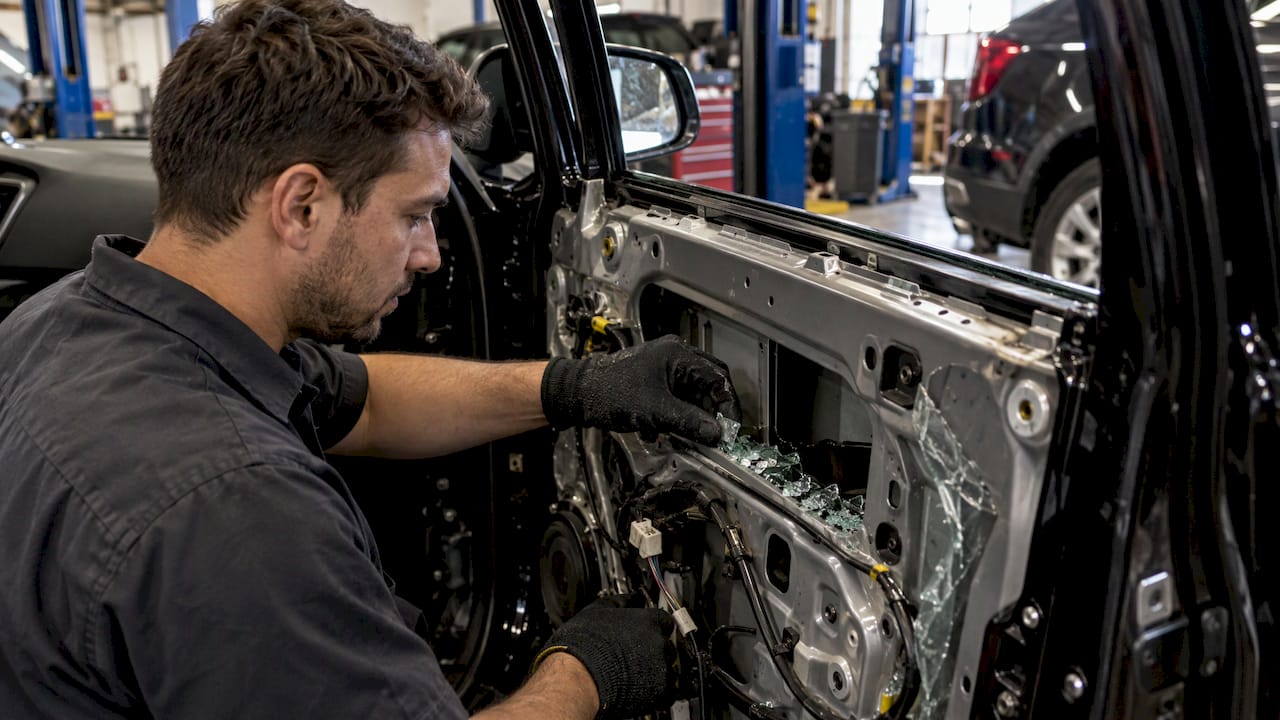
Removing a door panel involves hidden clips, wiring for windows and speakers, and sometimes an airbag-related component. If you have not done it before, this is where a technician earns their fee.
Cleaning glass off the outside of the car
If glass landed on the hood, trunk or roof, do not wipe it dry. Dry wiping drags fragments across the clear coat and leaves scratches.
- Rinse with a gentle stream from a hose, letting water carry the loose pieces off the panel.
- Pick off any stuck pieces by hand while wearing gloves.
- Wash the panel normally with a soft mitt and plenty of soap and water.
- Check the weatherstripping and the area under the hood cowl near the windshield, where glass collects.
Glass in the cowl and wiper area can get pulled into the wiper motor or blown into the cabin vents by the fan, so clear it before you drive.
Cover the opening until the window is fixed
While you wait for the repair, protect the interior. AAA advises a garbage bag or heavy plastic tarp secured with packing tape, duct tape, or a vehicle-safe tape from an auto parts store. It specifically says not to use cardboard, because cardboard is not waterproof and leaves the interior open to rain.
Family Handyman gives a more detailed method:
- Remove all remaining glass from the frame while wearing thick work gloves.
- Cut a high-density garbage bag to fit the window plus about 1/2 inch all around.
- Tape it from the inside, with masking tape placed underneath the rubber window seal.
- Use duct tape on the bottom seal only if masking tape will not stick to the soft rubber. Duct tape used on its own can damage the paint when peeled off the frame.
The same source says a temporary cover should ideally not stay on longer than a week. A cover is a short-term fix, not a plan.
If the glass is shattered but still in the frame, do not push on it. A partly intact window can fall apart on its own, and a window that is jammed needs a technician to look at the regulator rather than force.
Will insurance cover it?
Often, yes. Under comprehensive coverage, Progressive’s glass coverage explainer on WalletHub lists vandalism, hail and other weather, animal damage, road debris, fallen trees and natural disasters as covered glass causes. If the glass breaks in a crash, the cost falls under liability or collision depending on fault.
Deductibles vary by insurer and policy. As one example of a published policy term, a State Farm amendatory endorsement states that no deductible applies to the repair of windshield glass under comprehensive or collision coverage. Your own policy may differ, so read your declarations page or ask your carrier before you book.
If you want the breakdown of which coverage pays for which break, see our comprehensive vs. collision glass coverage guide, and for the claim itself, our step-by-step windshield claim guide.
There is one more case worth naming. If the break-in or accident left more than a broken window and you are weighing what to do with a badly damaged car, this guide on how to transfer liability after an accident covers the paperwork side of that decision.
Why tempered glass makes such a mess
Side and rear windows are usually tempered glass. When it fails, it crumbles into small cubes rather than long, sharp splinters. That is safer in a crash, but it means one broken window can scatter thousands of pieces across the whole cabin. Windshields are laminated, which holds the pieces together, so they crack and spider instead of showering the car.
If you want to know what your car uses, our explainer on tempered vs. laminated glass covers it, and some cars also have laminated side windows, which behave differently when they are hit.
When to let a professional handle the cleanup
DIY cleanup makes sense for a small chip fallout or a single cracked window you can reach easily. Hand it over when:
- The side or rear window shattered and glass is inside the door or deep in the trunk.
- You have kids or pets who ride in the car. Missed glass shows up later under a knee or paw.
- The car has airbags, sensors or wiring in the door you do not want to disturb.
- You are short on time. A thorough cleanup with tape and flashlight inspection can take an hour or more.
- Your vehicle has ADAS cameras or sensors near a broken windshield. Replacing the glass can require calibration afterward.
A technician who replaces the window should remove the leftover glass from the frame and the door and vacuum the cabin as part of the job. Ask whether cleanup is included when you book.
Perspective: why we clean up as part of the job
We replace broken glass at your home or workplace in Orange County, and we treat the cleanup as part of the repair, not an extra. A new window sitting on a door full of loose glass will rattle and wear, and nobody wants to find a shard in a seat a month later.
That is why we do the work on site, from 5 AM daily, in a single visit. For modern vehicles, we complete the required ADAS calibration in-house during that same visit, so you do not need a second appointment or a trip to a dealership.
Every install carries a lifetime warranty and uses OEM-quality materials. We bill your insurance directly, and many customers report paying nothing out of pocket. We service everything from classic cars to Tesla and Bentley.
Auto Glass Kings
Get the window fixed and the car cleaned in one visit
If your side, rear or quarter glass is broken, we come to you and handle it on site. Published starting points: side window replacement from $189, back window replacement from $350, and windshield repair from $79 to $129. If your windshield was replaced and the car needs ADAS calibration, that service runs $250 to $700. Windshield replacement and quarter and vent glass are quoted by vehicle.

Book through our windshield replacement page or start at Auto Glass Kings. If the break just happened, our shattered window guide walks through the first hour. A rear window break has its own plan in our emergency rear window guide.
FAQ
How do I remove broken glass from my car?
Put on gloves and eye protection, pick out the large pieces by hand, then loosen buried fragments with a stiff brush and compressed air. Vacuum thoroughly, lift fine dust with tape or a lint roller, and inspect with a flashlight held flat. Do not forget the vents and the inside of the door.
Will insurance cover a shattered car window?
Comprehensive coverage typically covers glass broken by vandalism, weather, road debris and similar causes, while crash damage falls under collision or liability. Deductibles depend on your policy, and some policies waive them for certain glass claims. Call your carrier or ask us to verify before booking.
Can I use cardboard to cover a broken window?
AAA advises against it, because cardboard is not waterproof and leaves the interior open to rain. Use a heavy garbage bag or a plastic tarp, taped securely. Plan to get the glass replaced within a week.
Is a vacuum enough to clean up the glass?
No. A vacuum picks up the loose pieces but leaves fragments wedged in carpet backing, seat stitching, vents and the door cavity. Brushing, tapping, tape and a flashlight inspection finish the job.
Do I need ADAS calibration after replacing a broken window?
Calibration is tied to the windshield’s cameras and sensors, so it matters most after windshield replacement on vehicles with driver-assist features. Side and rear glass usually do not involve it. Check your owner’s manual or ask us about your specific vehicle.
Sources
- What to Do When You Have a Broken Car Window, AAA
- How to Clean Up Broken Glass Safely, The Spruce
- How to Get Broken Glass Out of a Car, mobile detailing guide
- Back-To-Basics: Cleaning Up Broken Glass, I-CAR
- How to Temporarily Cover a Broken Car Window, Family Handyman
- Amendatory Endorsement, State Farm
- Does Progressive Have Glass Coverage?, WalletHub
Recommended
- Car Window Shattered? One Mobile Visit Can Handle Glass and ADAS
- Under 2 Hours: Car Owners’ Emergency Plan for a Shattered Rear Window
- Auto Glass Replacement: A Complete Guide for US Drivers
- Car Break-In Window: What to Do and How to Fix It
🎧 Listen to This Article
Share
Recent Posts
November 22, 2026
Auto Glass Coverage in California: What Your Policy Pays
How California auto insurance covers windshields, side glass and ADAS calibration, what deductibles mean, and what the 2026 glass law changes for you....
November 21, 2026
Bentley Windshield Sensors: What Sits Behind the Glass
Bentley windshield sensors explained: the camera, rain and light sensors behind the glass, what a replacement does to them, and how to get...
November 20, 2026
Urethane Smell in Your Car: What It Is and What to Do
A sweet, chemical smell after a windshield replacement is usually fresh urethane adhesive. Learn what causes it, how to ventilate safely and when...