
Automotive
If the plastic cover behind your rearview mirror sits crooked, gapped or loose after windshield work, treat it as a safety-system problem, not a cosmetic one. That cover protects a forward-facing camera that your lane-keeping and automatic braking rely on. The fix is a technician’s inspection of the camera mount and then a recalibration, and in Orange County we do both at your driveway or office in a single visit.
TL;DR
- The cover hides the windshield camera. If it looks off, the camera may be seated wrong, and lane and braking features can misjudge the road.
- A crooked cover, new dashboard warnings, or lane alerts at odd moments after glass work are all reasons to get it checked.
- Don’t pry, press or reseat the cover or touch the lens. Automakers’ own service procedures call for inspection and recalibration.
- Most automakers call for camera recalibration after a windshield is replaced or the camera is removed and reinstalled.
- Auto Glass Kings does the inspection and ADAS calibration in-house, on-site, and bills insurance directly.
Table of Contents
- What the camera cover is and why its position matters
- Signs the cover or the camera has moved
- Why it happens after a windshield replacement
- What to do the day you notice it
- Why you shouldn’t touch it yourself
- How a misaligned cover is actually fixed
- One caution about calibration order
- Other things that change a camera’s view
- What it costs and how insurance fits in
- Calibrating at your door in Orange County
- Our perspective
- FAQ
- Sources
What the camera cover is and why its position matters
Most newer cars carry a small camera on the glass, just above the rearview mirror. A plastic cover, sometimes called the mounting cover, sits over it. The camera feeds lane departure warning, lane keeping, forward collision warning and automatic emergency braking. Together these are called advanced driver assistance systems, or ADAS.
The cover does a real job. One shop-floor expert writing in Fender Bender says that when a technician checks behind the cover, the cover should be tightly sealed against the windshield to keep out intruding light. The same article says the technician should confirm the connections are plugged in, the camera is seated properly, and the heating element and mounting pad are intact.
So a cover that sits crooked is a clue. It can mean the cover simply wasn’t clipped on right. It can also mean the camera behind it isn’t in the position the car expects.
Angle matters more than most drivers expect. IIHS research found that a camera mounting bracket just 1 degree different from the factory mounting changed how automatic emergency braking and lane-departure warnings performed. The car braked later than normal, and warnings came too early or too late. A cover you can see from the driver’s seat is a much bigger visible gap than 1 degree.
Signs the cover or the camera has moved
You don’t need tools to notice the early signs. Look for these:
- A visible gap or tilt. The cover is crooked, doesn’t sit flush with the glass, or rattles.
- Dashboard warnings. Lane-keeping, collision warning or cruise control messages that weren’t there before the glass work.
- Features switched off. Lane assist or adaptive cruise that says it’s unavailable on a clear day.
- Alerts at wrong moments. Lane warnings on a straight, well-marked road, or collision alerts with nothing ahead.
- Several systems failing at once. A shared fault in the front camera is a common explanation when adaptive cruise, lane departure and collision warnings all drop out together, according to TheFixCar’s symptom guide. Warnings that only appear in sun glare, rain, fog or snow often clear on their own after a few minutes.
Don’t count on a warning light to tell you. Fender Bender’s expert notes a camera may show no codes or warning lights after being dismounted and remounted. A quiet dashboard doesn’t prove the camera is aimed correctly.
If you’re seeing the warnings without any recent glass work, our lane assist checklist and adaptive cruise checklist walk through what to look at first.
Why it happens after a windshield replacement
The camera is attached to the glass or to a bracket bonded to it. When a windshield comes out, the camera has to be unplugged and detached, then reattached to the new glass. Several things can go wrong in that handoff:
- The cover or camera isn’t fully clipped into its locators.
- The connector isn’t pushed all the way in, or has bent terminals.
- The mounting pad or bracket on the new glass sits a hair differently.
- The camera is never recalibrated for the new glass.
A 2022 manufacturer service bulletin posted on NHTSA’s site describes exactly this. After a windshield replacement, a lane-departure message appeared with codes for front camera missing calibration and incorrect camera mounting. The repair steps start with inspecting the camera-to-bracket locators to make sure they are fully engaged and secure, then checking the connector for bent or pushed-out terminals.
That is why the quality of the install matters as much as the glass. A technician who knows the camera has to be handled as a precision sensor, not a clip-on accessory, avoids most of these problems.
What to do the day you notice it
- Treat the driver-assist features as off. Don’t count on lane keeping, adaptive cruise or automatic braking to save you. Leave extra following distance.
- Never test the braking. Don’t drive toward an object to see whether the car reacts.
- Note what you see. Write down which warning appeared, when, and the conditions (weather, road type, speed). A clear note helps the technician find the fault faster.
- Leave the cover and camera alone. Don’t pry, push or reseat anything yourself.
- Call the installer and ask for a recheck. That means a fresh scan and a calibration, not just a cover adjustment.
- Check your paperwork. If insurance paid for the glass, ask whether the calibration was part of the claim.
If you want the fix without arranging a day at a shop, book our ADAS calibration. We come to you from 5 AM, so it can happen before your workday or the school run.
Why you shouldn’t touch it yourself
It’s tempting to snap the cover back into place. The problem is what you can’t see. The camera behind it may have shifted, and once it has, the position is something only calibration equipment can verify.
Automakers are explicit about handling. Tesla’s Model S service manual cautions technicians not to touch the camera lenses at any point during camera removal. A fingerprint or smudge on the lens is its own problem.
The same manual says that when a camera has been moved out of its original position, such as after a camera or windshield replacement, the stored calibration data has to be cleared and the camera calibrated again. Our Tesla camera calibration guide explains how that works on those vehicles.
Pressing a loose cover back on might close the gap, but it doesn’t tell you whether the camera still looks where the car thinks it does.
How a misaligned cover is actually fixed
The repair has two parts: put the hardware back correctly, then teach the car where its camera is now looking.
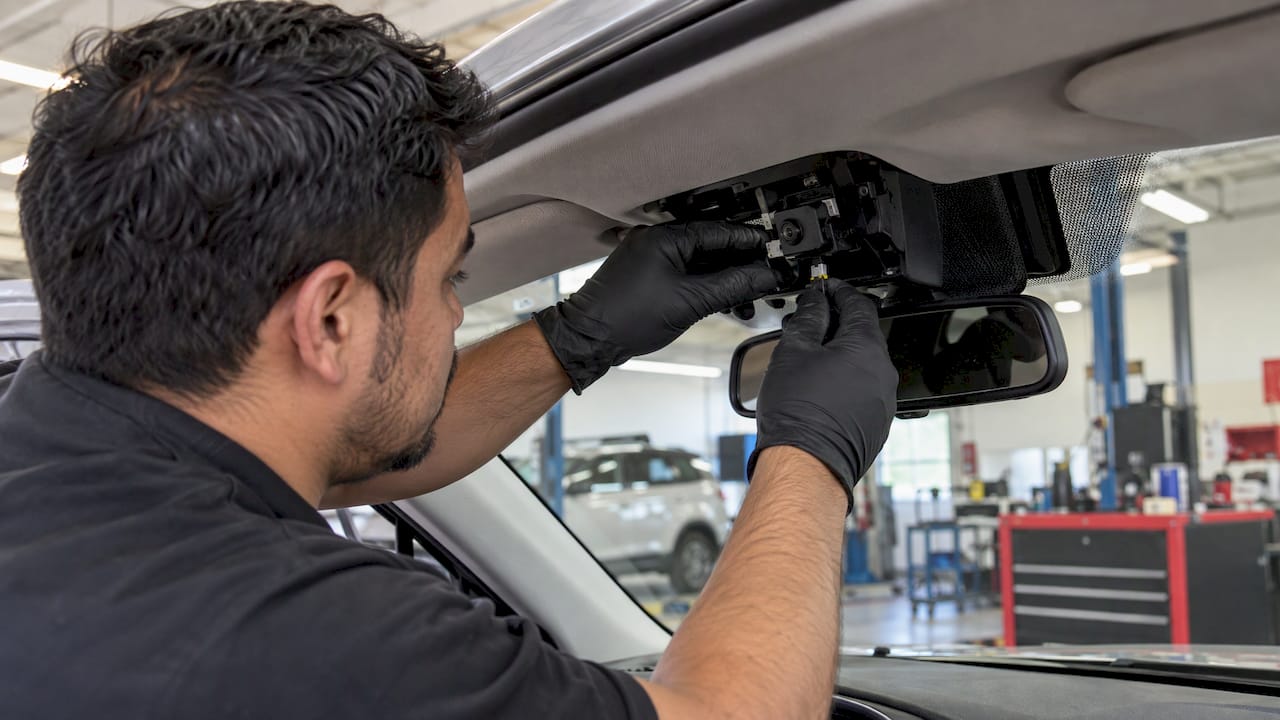
Step 1: Inspect the mount
A technician removes the cover and checks the camera seating, the locators, the connector and the mounting pad. This is the same inspection the 2022 bulletin above calls for first. In some cases the procedure also calls for resetting a module and re-securing the connector before calibration, and only if that fails does the camera itself get replaced.
Step 2: Recalibrate
Calibration is how the car learns the camera’s exact aim. The requirements are well documented across brands:
- Toyota says front camera optical-axis learning is necessary after camera replacement, windshield replacement, or removal and reinstallation, or when certain axis codes appear.
- Ford’s glass job aid lists lane-keeping camera calibration as required when a windshield, camera or camera module is replaced, and after tire-size changes, suspension repair or alignment, or front airbag deployment.
- GM says the windshield-mounted camera must be calibrated if the camera was removed from its bracket and reinstalled, or if the windshield was replaced, or if a camera-misaligned code is set.
- FCA (Chrysler, Dodge, Jeep, Ram) stated in 2019 that a forward-facing camera must be recalibrated after the windshield is installed.
The pattern is consistent. If the glass moved or the camera moved, the camera gets calibrated.
Step 3: Choose the right method
Some vehicles need a static calibration, using targets set up in a controlled space. Others need a dynamic one, driven on marked roads at set speeds. Some need both. Our static vs. dynamic comparison explains the difference, and how long calibration takes covers the time you should plan for.
One caution about calibration order
Calibrating a camera that isn’t seated correctly produces a calibration that doesn’t hold. Manufacturers say so directly. One bulletin tells technicians not to run target calibration when a code shows the camera’s auto-calibration range was exceeded, because it triggers a different system code, as stated in a 2026 manufacturer notice. That notice lists a camera that isn’t properly installed, or is partly detached, among the causes.
The lesson for you: the hardware inspection comes before the calibration. Doing the two together, by the same crew, in one visit, keeps that order from being skipped.

Other things that change a camera’s view
The cover isn’t the only thing that can throw off the camera’s reading. The Ford job aid also warns that aftermarket alterations can cause a system to malfunction or reject a correct calibration. Add-ons near the glass, tint strips and window film are worth discussing with your technician before you buy them.
If you’re considering a protective film for your paint, paint protection film and ADAS sensors is a helpful look at how coverings interact with the sensors on your car, including what to do if you suspect your camera has drifted.
A delaminating windshield can also interfere with the camera’s view. Our guide to windshield delamination shows what to look for. If the mirror mount itself has come loose, see rearview mirror reattachment, since the camera often rides on the same bracket area.
What it costs and how insurance fits in
Our published ADAS calibration price is $250 to $700, depending on the vehicle. If you need the full picture of what a glass claim costs with calibration included, our windshield replacement cost and insurance guide and the ADAS calibration cost breakdown go through it.
On insurance, the practical points are:
- Glass damage from a rock or road debris typically falls under comprehensive coverage, and your deductible applies. Check your own policy for the amount.
- Calibration that is part of a proper glass repair should be billed with the glass claim. Ask your insurer to confirm that in writing.
- If the camera was knocked out of position in a collision, collision coverage is the usual route, again after your deductible.
We bill insurance directly, and many of our customers pay nothing out of pocket. We handle the claims process so you don’t have to chase it.
Calibrating at your door in Orange County
We’re a mobile service. We come to your home, office or the school pickup line, and the trip is free. All glass work and the ADAS calibration it requires are done in-house, on-site, in one visit, with no second appointment and no trip to a dealership. We start at 5 AM daily, and every install carries a lifetime warranty with OEM-quality materials.
If you just had glass replaced and the cover looks off, or warnings appeared afterward, book the calibration and we’ll sort out both the mounting and the calibration together. If your cracked windshield hasn’t been replaced yet, see our windshield replacement service and our aftercare steps for the first 48 to 72 hours.
Our perspective
A crooked cover is the part of the problem you can see. The part you can’t see is whether the camera behind it is aimed where your car believes it is.
That’s why we don’t treat glass and calibration as two separate jobs. When the windshield comes out, the camera comes with it, and the car needs to be told where that camera ended up. Doing the glass, the mounting check and the calibration together, on-site, means nobody has to hand your car off between a glass shop and a calibration shop and hope the first one left it right.
Our approach is to finish the work in a single visit, back it with a lifetime warranty, and handle the insurance billing so the job doesn’t become a second project for you.
Auto Glass Kings
FAQ
Is a misaligned camera cover dangerous to drive with?
It can be, because the cover may be a sign the camera behind it has shifted. Lane keeping and automatic braking depend on that camera’s aim. Treat those features as unavailable, leave extra following distance and get it inspected promptly.
Do I need recalibration if the cover just looks loose?
If the camera was removed, moved or the windshield was replaced, automakers such as Toyota, Ford, GM and FCA call for calibration. A technician can tell you whether your cover is a clip issue or whether the camera has moved. Recalibration is the safe way to confirm the camera’s aim.
Will a warning light always come on if the camera is off?
No. A camera can show no codes or warning lights after being removed and reinstalled, so a clean dashboard doesn’t prove it’s aimed correctly. If the cover looks wrong or features behave oddly, ask for a scan and calibration.
Who pays for the recalibration after a windshield replacement?
Typically your comprehensive coverage handles glass claims, subject to your deductible, and calibration done as part of the repair should be included. We bill insurance directly, and you should still confirm the calibration is part of your claim with your insurer.
Sources
- Fender Bender: the ADAS calibration environment
- Repairer Driven News: IIHS research on 1 degree of miscalibration
- TheFixCar: pre-collision system malfunction
- NHTSA-hosted service bulletin MC-10225997 (2022)
- Tesla Model S service manual: forward camera
- Toyota bulletin T-SB-0184-17 on NHTSA’s site
- Ford and Lincoln ADAS job aid, glass version
- GM Repair Insights: ADAS support
- Repairer Driven News: FCA camera recalibration statement
- Manufacturer notice MC-11029906 on front camera auto-calibration
Recommended
- 3 in and 14 in Repair Rules: Windshield Crack Types & ADAS Notes
- Drivers: Spot Windshield Delamination Before It Disrupts ADAS
- Replace Edge Windshield Cracks Near the Frame, ADAS Recalibration
- Windshield Polishing After Replacement: What to Know
🎧 Listen to This Article
Share
Recent Posts
November 22, 2026
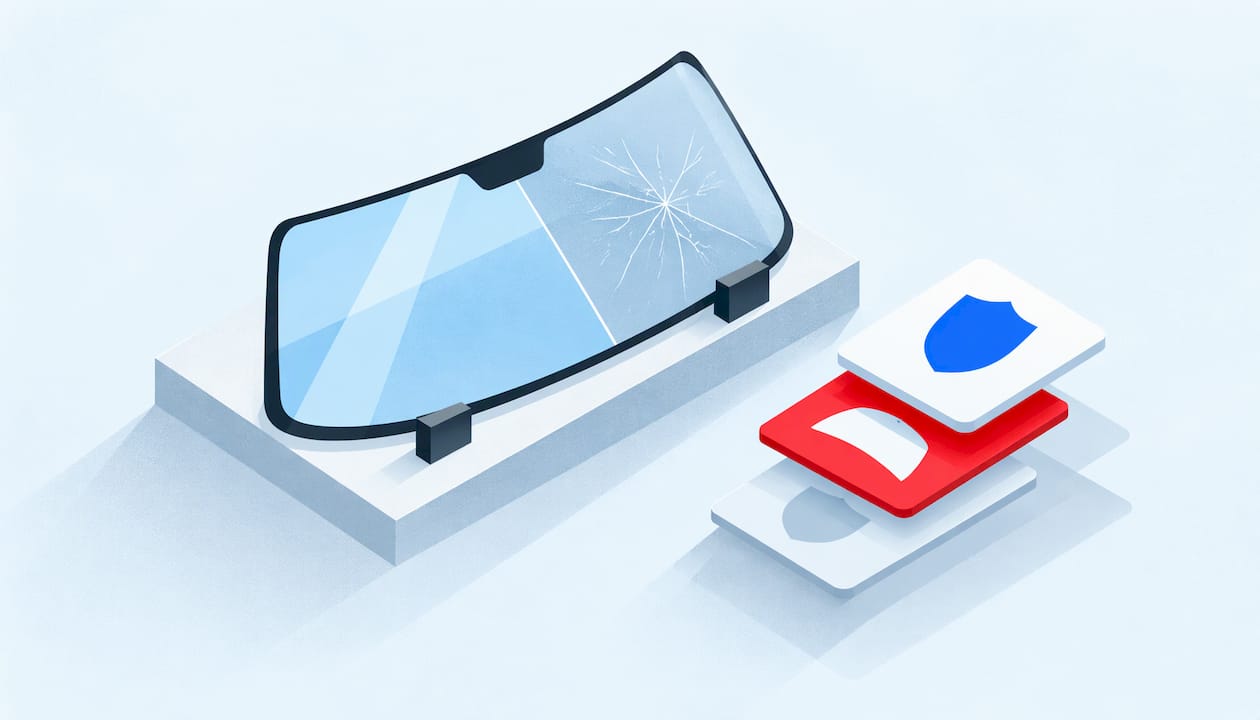
Auto Glass Coverage in California: What Your Policy Pays
How California auto insurance covers windshields, side glass and ADAS calibration, what deductibles mean, and what the 2026 glass law changes for you....
November 21, 2026
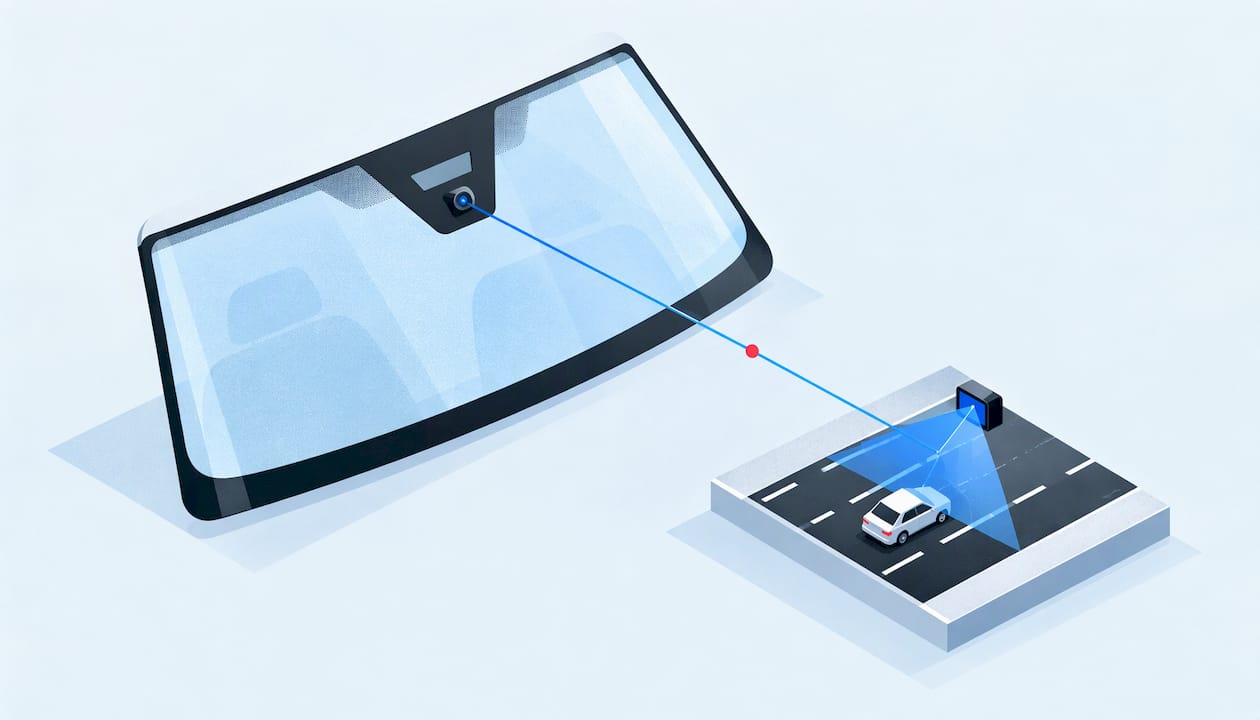
Bentley Windshield Sensors: What Sits Behind the Glass
Bentley windshield sensors explained: the camera, rain and light sensors behind the glass, what a replacement does to them, and how to get...
November 20, 2026
Urethane Smell in Your Car: What It Is and What to Do
A sweet, chemical smell after a windshield replacement is usually fresh urethane adhesive. Learn what causes it, how to ventilate safely and when...