
Automotive
DIY quarter glass replacement works fine on older, simple vehicles with framed glass and basic tools. Bonded OEM glass, models with cameras or sensors nearby, or rusted mounting channels call for a mobile professional. Done right, either route ends with a watertight seal, correctly cured adhesive, and any ADAS recalibration completed before you drive. Read the checklist below, then decide.
TL;DR:
- Bonded quarter glass with sensors or cameras near the panel requires professional replacement and in-house calibration to ensure safety and proper function.
- DIY replacement is feasible for framed, non-ADAS-equipped quarter glass on older vehicles, but bonded panels demand specialized tools and skills.
- Using OEM adhesives and primers from the same manufacturer shortens cure times and reduces the risk of leaks or sensor miscalibration.
- Replacement costs vary based on vehicle make, construction type, and whether ADAS calibration is necessary, often completed in a single mobile visit.
- Proper cure and leak checks, along with timely calibration, are essential to ensure a safe, watertight seal and full feature functionality after installation.
Table of Contents
- What Is Quarter Glass, and Does Your Vehicle Have It?
- Should You DIY or Hire a Pro?
- Tools, Materials, and Pre-Install Checks
- How to Replace Quarter Glass Step by Step
- Adhesive Rules, Drive-Away Time, and ADAS Recalibration
- What Quarter Glass Replacement Costs and How Long It Takes
- Auto Glass Kings’ Perspective on Getting This Right
- Book Auto Glass Kings for Quarter and Vent Glass Replacement
- Primary Manuals and Guides Worth Bookmarking
- Sources
- FAQ
What Is Quarter Glass, and Does Your Vehicle Have It?
Quarter glass is the small, often triangular window behind the front doors or ahead of the rear doors, sometimes called a quarter window or vent window. It sits in the C-pillar area on sedans, coupes, and trucks, and it’s easy to overlook until it cracks.
Some quarter glass is framed and bolted in like a door window. Most modern vehicles use bonded glass, held in with urethane adhesive the same way a windshield is installed. That distinction matters for the whole job. Framed panels usually swap out with hand tools. Bonded panels need adhesive removal, primer, and a proper cure, which is why bonded quarter glass replacement costs more and takes longer than a framed swap.
Should You DIY or Hire a Pro?
Framed quarter glass on an older car, with no trim to remove and no wiring nearby, is a reasonable weekend DIY project if you have the right adhesive tools and patience.
Hire a pro when any of these apply:
- The glass is bonded and requires trim removal to access the pinch weld
- A camera, radar sensor, or blind spot module sits near the opening
- The mounting channel shows rust or previous repair damage
- You don’t have access to urethane adhesive, primer, or a cutting tool rated for automotive glass
There’s also a practical reason beyond skill level: professionals typically handle insurance claims directly and back the work with a lifetime warranty, something a solo DIY job never comes with.
Tools, Materials, and Pre-Install Checks
You’ll need a glazing wire (or a tool like the Equalizer), an adhesive cutting tool, an applicator or caulking gun, plastic scrapers, a shop vacuum, painter’s tape, isopropyl alcohol wipes, and gloves. On the materials side: the correct replacement glass for your make and model, urethane adhesive and matching primer, and any locator clips the original glass used.
- Inspect the new glass for chips or warping before you start cutting anything
- Check the pinch weld for rust or old adhesive buildup
- Confirm ambient temperature and humidity match what your adhesive’s label allows
- Read the adhesive’s working time and drive-away time before you mix or apply anything
Pro Tip: Buy adhesive and primer from the same manufacturer. Mixing brands can void the cure time listed on the label, and that’s the number you’re relying on to know when the car is safe to drive.
How to Replace Quarter Glass Step by Step
1. Protect the vehicle and clear the area. Tape off paint near the opening, pull interior trim panels if the glass is bonded, and vacuum any broken glass before you touch the frame.
2. Remove the old glass. Feed a glazing wire or adhesive cutting tool along the urethane bead to cut the bond, then lift the glass out. If it’s framed, pull the retaining clips or fasteners instead. Community DIY guides describe using small-gauge piano wire for this cut when a powered tool isn’t available.
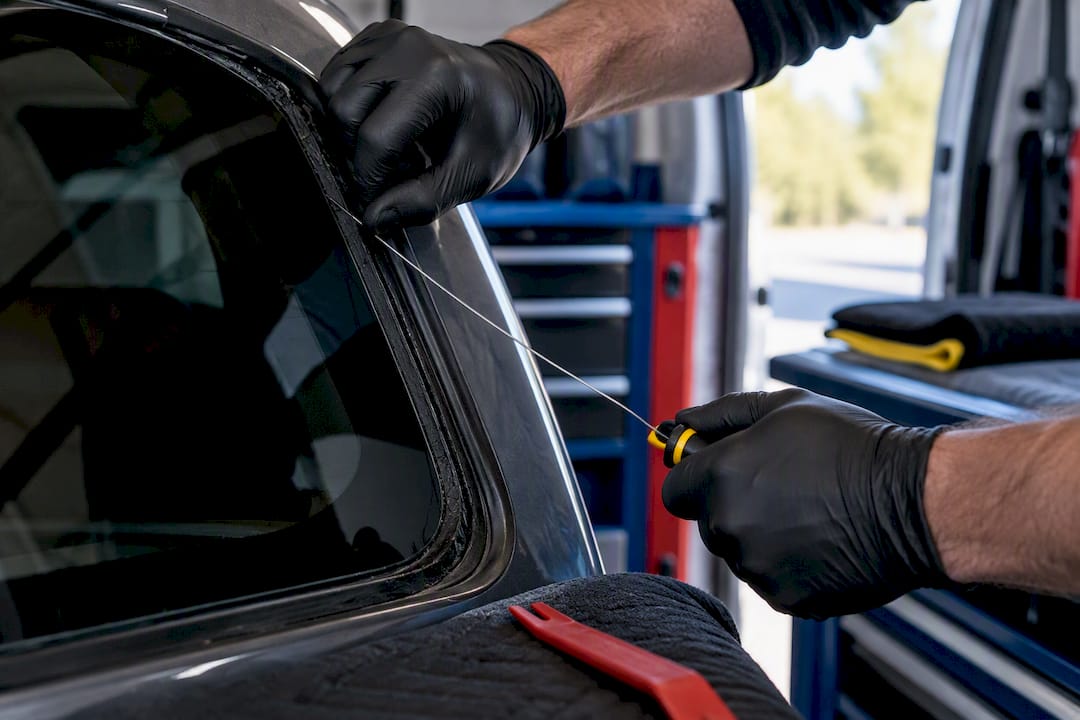
3. Clean the bonding surface. Scrape off remaining urethane down to a thin, even layer, then wipe the pinch weld and the glass edge with isopropyl alcohol.
4. Prime both surfaces. Apply primer to the body flange and to the etched edge of the new glass, following the working time printed on the label. Skipping this step is one of the most common reasons a bonded install leaks.
5. Apply the adhesive bead. Cut the tube nozzle to the cross-section your adhesive spec calls for, then run a continuous bead around the opening with no gaps or breaks.
6. Set the glass. Position the new panel using the factory locator clips as a guide, press it into the bead evenly, and check that the gap is consistent all the way around before the adhesive skins over.
7. Cure and verify. Respect the manufacturer’s drive-away time, then run a garden hose over the seam and check inside for leaks. Reinstall trim panels once the seal has set. Tesla’s own service documentation for rear quarter window replacement follows this same sequence: glazing wire removal, primer, urethane, and a specified cure window before the vehicle leaves the shop.
Adhesive Rules, Drive-Away Time, and ADAS Recalibration
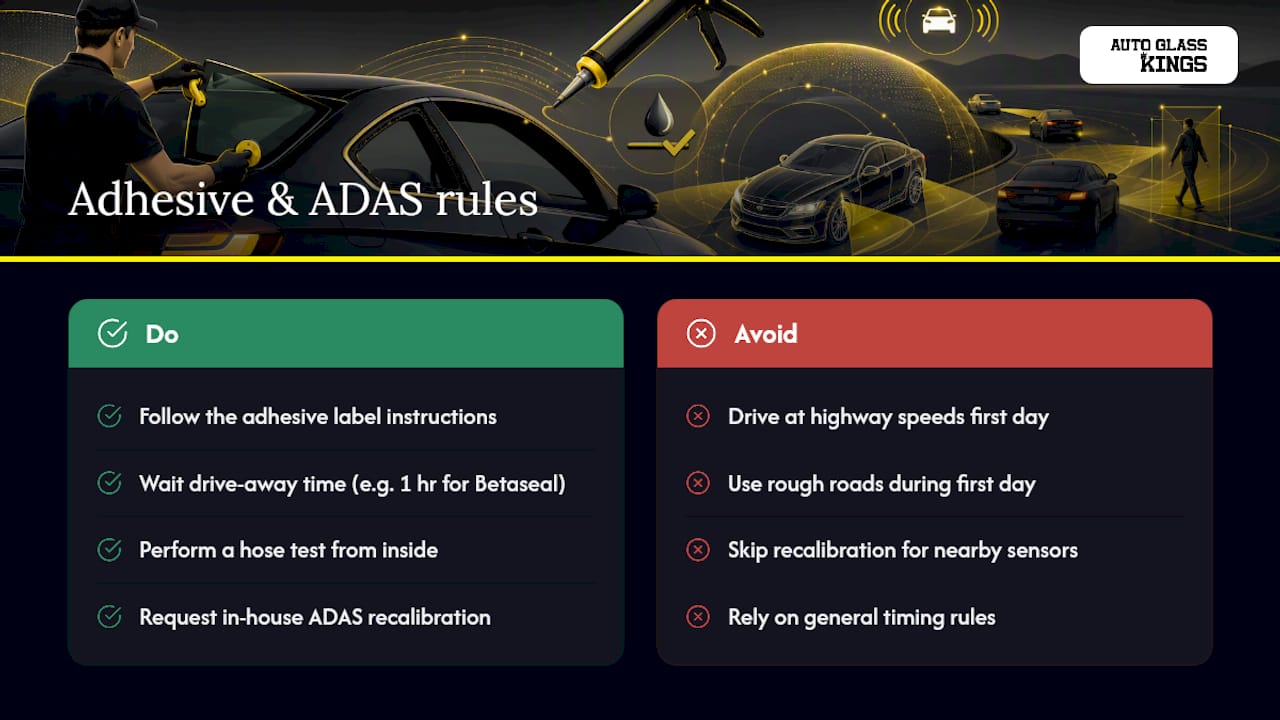
Every urethane adhesive has its own primer sequence, bead profile, and cure schedule, and the label overrides any general rule of thumb you’ve read online. As an example, Tesla’s service manual references Dow Betaseal Express with a minimum one hour drive-away time at 0°F (-18°C) or warmer, and other adhesives require far longer.
Avoid highway speeds and rough roads for the first day after install, especially if tape is still holding trim in place. A simple hose test across the seam, checked from inside the cabin, catches most leaks before they become a real problem.
If a backup camera, blind spot sensor, or radar unit sits near the quarter glass, recalibration is required after the panel is disturbed. A shop that handles calibration in-house avoids sending you to a second appointment for a feature your car may not even flag as broken until you need it.
What Quarter Glass Replacement Costs and How Long It Takes
Price depends on a few variables that shift the estimate more than people expect:
- Vehicle make and model, since some quarter glass is stocked and some is special order
- Bonded versus framed construction, with bonded jobs running higher due to adhesive and labor time
- OEM versus aftermarket glass
- Whether ADAS calibration is needed after the install
Most mobile quarter glass replacement price quotes reflect same-day service, since a mobile technician can complete the install at your home or office. Add the adhesive’s drive-away time on top of the actual install, and you’re usually looking at a single visit rather than a multi-day repair. If you’re filing through insurance, ask up front whether the shop bills the carrier directly and what warranty backs the glass and the seal.
Auto Glass Kings’ Perspective on Getting This Right
A glass install is only as good as its weakest step, and that’s usually adhesive cure time or a skipped calibration. Professionals who work mobile, use OEM-quality materials, and back installs with a lifetime warranty offer the best service. In-house, on-site ADAS calibration helps avoid a second appointment if sensors are near the quarter glass.
Our internal checklist covers pre-install inspection, adhesive and primer matching, and a post-install leak and calibration check before we call the job done. Compare your own situation, framed or bonded, sensors or none, against that list, and you’ll know pretty quickly which side of the DIY line you’re on.
— Auto Glass Kings
Book Auto Glass Kings for Quarter and Vent Glass Replacement
Mobile services offer an alternative to shop appointments for quarter and vent glass replacement in Orange County: technicians come to you, complete the glass work and any ADAS calibration in the same visit, and often bill insurance directly so many customers pay nothing out of pocket.
Our quarter and vent glass replacement service covers everything from framed side windows to bonded OEM panels near backup cameras, with early appointment slots starting at 5 AM for drivers who need the car back before work. If your vehicle has a nearby sensor or camera, our ADAS calibration team handles it on-site so nothing gets missed. Have your vehicle’s year, make, and model ready, along with your insurance information if you’re filing a claim, and request a quote to get a same-day mobile appointment scheduled.
Primary Manuals and Guides Worth Bookmarking
For model-specific procedures, Tesla’s rear quarter window service documentation lays out the manufacturer sequence step by step. Community threads like this Honda-Tech rear-quarter window walkthrough fill in the practical tricks a factory manual skips. For a broader look at the whole replacement process, Auto Glass Kings’ complete guide for US drivers covers pre-install checks that apply across most glass jobs.
Sources
FAQ
How Much Does It Cost to Replace a Quarter Glass?
Cost depends on whether the glass is bonded or framed, OEM or aftermarket, and whether ADAS calibration is needed after the install. Auto Glass Kings doesn’t publish a flat rate for quarter and vent glass replacement since pricing varies by vehicle. You can request a quote based on your specific make and model.
How Much Does It Cost to Replace Rear Quarter Glass?
Rear quarter glass pricing follows the same variables as front quarter glass: bonded panels cost more than framed ones because of the adhesive, primer, and cure time involved. A vehicle with a nearby sensor or camera adds ADAS calibration to the total, which can be handled in-house during the same visit.
How Do You Replace Rear Quarter Glass Yourself?
Cut the old adhesive bead with a glazing wire or adhesive cutting tool, clean the pinch weld with isopropyl alcohol, apply primer, then set the new glass in a fresh urethane bead. Follow the adhesive manufacturer’s drive-away time before driving, and run a hose test to check the seal.
Is Quarter Glass More Expensive to Replace Than a Regular Window?
Bonded quarter glass generally costs more than a standard framed door window because it requires adhesive, primer, and cure time similar to a windshield. Framed quarter glass, common on older vehicles, is closer in price to a typical side window replacement.
Recommended
- Auto Glass Replacement: A Complete Guide for US Drivers
- Auto Glass Kings Review: ADAS Calibration After Glass Replacement
- ADAS Calibration Orange County
- Quarter & Vent Glass Replacement OC
🎧 Listen to This Article
Share
Recent Posts
October 6, 2026
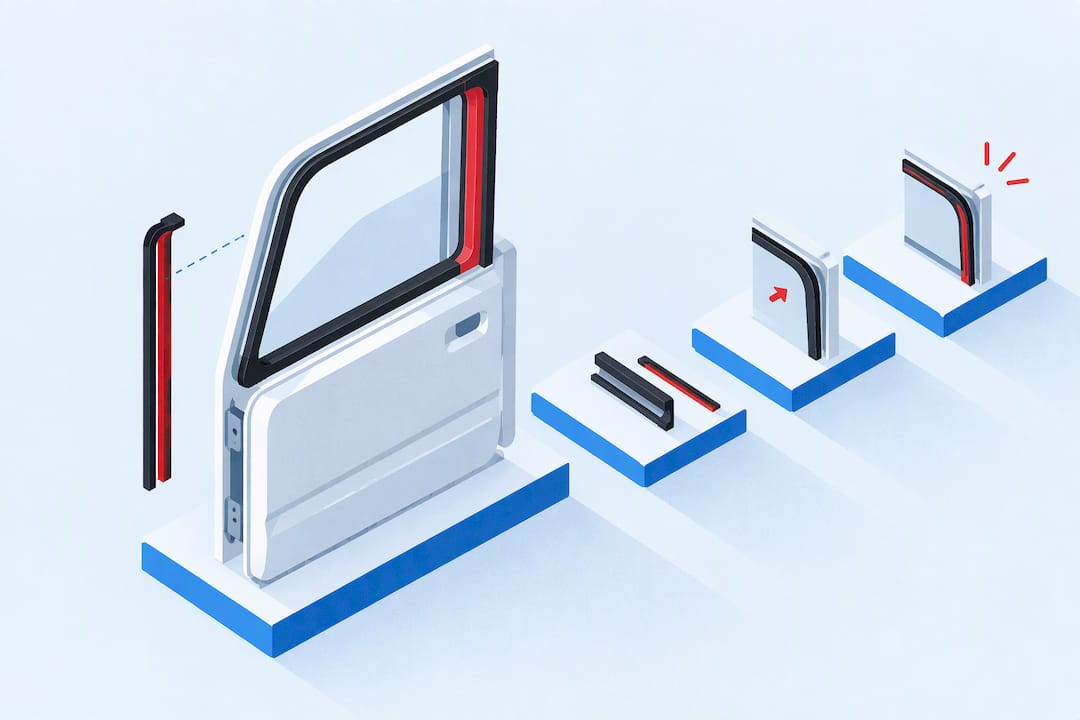
1–3 Hours Per Door: Run Channel Replacement That Puts Fitment First
DIY run channel replacement with a fitment-first approach. Follow parts, tools, and a 1–3 hours per door procedure, plus when to call a...
October 5, 2026
Expect $305–$3,400: U.S. Tesla Windshield Costs and How to Save
U.S. model-by-model Tesla windshield price ranges ($305–$3,400 observed). Practical steps to cut out-of-pocket costs, mobile ADAS calibration options, and…...
October 4, 2026
Drivers, Follow Your Installer’s Wash Time After Windshield Replacement
Follow your installer’s written safe-wash time. If none, wait 24 hours for a hand wash and 48 to 72 hours before automatic or...