
Automotive
Yes. A mobile windshield replacement is as safe as a shop install when the technician follows the adhesive maker’s instructions, uses certified glass, lets the bond cure for the right drive-away time and recalibrates any driver-assistance cameras. The industry’s installation standard treats in-shop and mobile installs the same way: the work must happen under conditions the adhesive maker allows. At Auto Glass Kings, we replace glass at your home or office in Orange County, complete any required ADAS calibration ourselves in the same visit, and back every install with a lifetime warranty.
TL;DR
- Safety depends on the process, not the location: adhesive conditions, certified glass, a trained technician and the right drive-away time.
- Weather and work area matter. A good mobile technician controls both or reschedules.
- Cars with cameras or radar behind the windshield need ADAS recalibration after replacement, and doing it in one visit keeps you from making extra stops.
- You should be told the minimum drive-away time before and after the install.
- Auto Glass Kings does replacement and calibration on site, from 5 AM daily, with direct insurance billing.
Table of Contents
- Why a windshield install is a safety job
- What the installation standard says about mobile work
- Weather, temperature and cure time
- A clean work area counts
- The glass itself
- The part most people miss: ADAS calibration
- Checklist: what a safe mobile install looks like
- When to replace and when a repair is enough
- What to expect on the day
- Our perspective
- Book a replacement that is finished in one visit
- FAQ
- Sources
Why a windshield install is a safety job
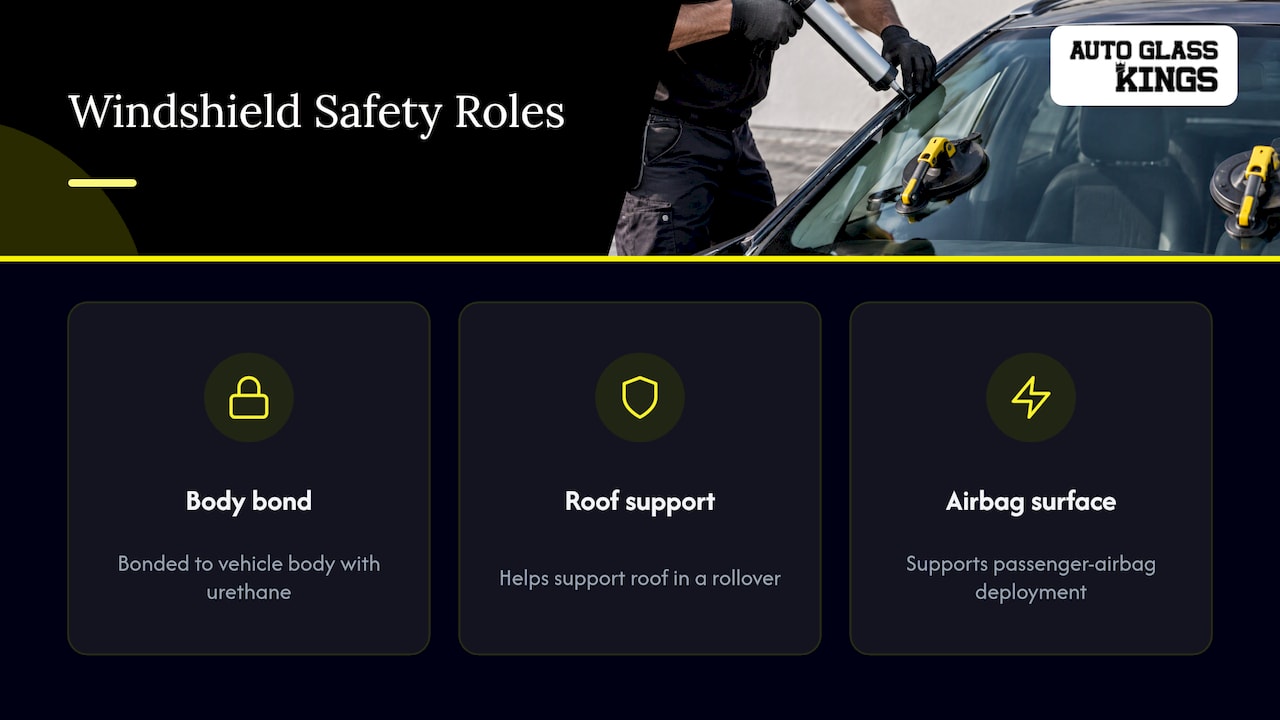
Your windshield is not just a window. It is bonded to the body with urethane adhesive and it helps hold the roof up in a rollover. It also gives the passenger airbag a surface to push against as it deploys. If the bond is weak, those jobs are compromised, which is why installation quality matters far more than where the car is parked.
That is also why the question “mobile or shop?” is the wrong one to start with. The better question is whether the install follows the rules that make the bond reliable. Those rules exist in writing, and they apply to every technician, wherever the car sits.
What the installation standard says about mobile work
The Auto Glass Safety Council administers the ANSI/AGSC/AGRSS 005-2022 standard, the industry’s safe installation standard. Several of its requirements answer the mobile question directly:
- Conditions (Section 6.1). All in-shop or mobile installations must be done under environmental and other conditions compatible with the adhesive manufacturer’s application instructions.
- Written instructions (Section 5.4). Technicians must obtain and follow current written instructions from the adhesive manufacturer. These include minimum drive-away time charts with temperature and humidity variables, plus any special procedures for bad weather.
- Drive-away strength (Section 6.3). No replacement may use an adhesive system that would not reach minimum drive-away strength by the time the vehicle can reasonably be expected to be driven.
- Owner notice (Section 6.4). You must be told the minimum drive-away time before and after the installation.
Notice what is absent: nothing in the standard says a shop is required. It says the conditions must be right. A mobile technician who brings the correct adhesive, tools and a clean, dry work area meets the same bar as a bay with a roof.
Weather, temperature and cure time
The real mobile question is weather. Urethane cures with moisture and heat, so cold or very dry air slows it. Adhesive manufacturers publish charts for this. One example is the SRP installation manual, which lists a minimum of 30 to 45 minutes at 0 to 20°F and 30 minutes at 20 to 30°F at 50% relative humidity and above. Below 20°F, it calls for a specific fast-curing adhesive and cold weather procedures.
Two details from that manual matter to you:
- Drive-away time depends on the temperature and humidity where the vehicle will sit and cure, not where the glass was set.
- A technician must pick the adhesive to fit the conditions, not the other way around.
I-CAR, the collision repair training organization, notes that fast-cure urethane can allow driving in as little as 30 to 60 minutes, while conventional moisture-cured products can take 2 to 8 hours or longer. Its shortest times assume 75°F and 50% relative humidity, and cooler or drier conditions need longer. I-CAR also points out that full strength takes longer than drive-away time, up to 24 hours or more, and that some automakers set their own waiting periods.
What this means in Orange County
Orange County’s mild climate is friendly to adhesive work. Rain and strong winds are the usual reasons to reschedule or to move the car under cover, and a direct hot sun on a dashboard calls for shade. Your technician should decide that on the spot. If the conditions are wrong for the adhesive, the right call is to move the car, wait or reschedule, not to push ahead.
What to do after the install:
- Ask for the drive-away time in writing or out loud, and wait it out.
- Follow the aftercare for the first days. Our windshield replacement aftercare guide covers the first 48 to 72 hours.
- Check your installer’s wash guidance before visiting a car wash. We explain it in our page on car washes after windshield replacement.
The urethane adhesive types, primer and cure times we work with are covered in more detail on our site.
A clean work area counts
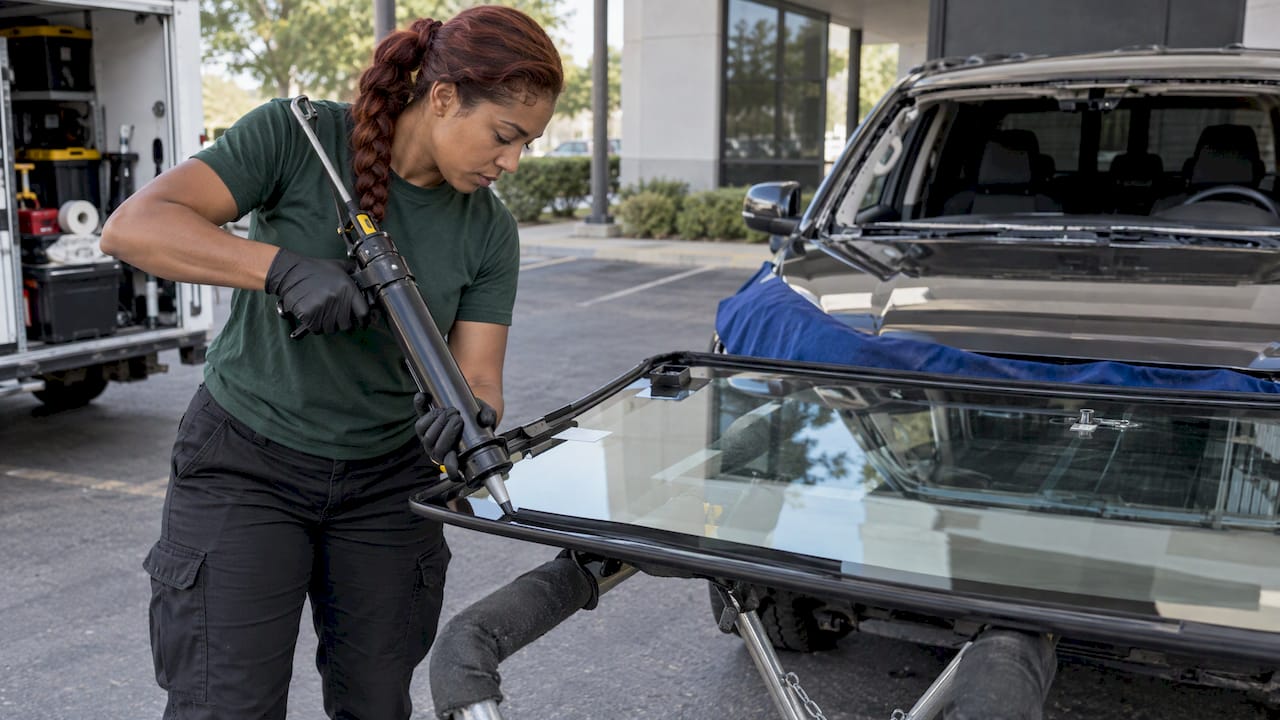
Adhesive bonds to prepared surfaces. Dust, water and contamination on the pinch weld or glass weaken that bond. Keeping a car and its work area clean is a safety issue, and the role of detailing in vehicle safety touches on why a clean vehicle matters for work done outside a shop. A careful mobile technician protects your interior, preps the bonding surface and applies the adhesive bead in the profile the manufacturer specifies. Sika’s glass replacement guideline recommends a triangular bead from a V-notched nozzle held at 90 degrees, and says it must match the location and profile of the trimmed original bead.
The glass itself
Replacement glass must meet federal standards. NHTSA states that all replacement glazing must meet, and be certified by its manufacturer as meeting, FMVSS No. 205. The installation standard adds that glass must meet ANSI Z26.1 and that the retention system must be OEM-approved or certified in writing by its maker.
At Auto Glass Kings we use OEM-quality materials. If you are weighing glass types, our pages on OEM vs OEE glass and matching glass to your sensors explain how glass choice interacts with heads-up displays and camera systems. This matters more on newer cars. Volvo’s USA position statement, for example, says its camera and radar unit sits at the upper edge of the windshield and is sensitive to glass thickness and materials.
The part most people miss: ADAS calibration
If your car has lane-keeping, automatic emergency braking or adaptive cruise control, a camera is usually mounted on or behind the windshield. When the glass changes, that camera’s view changes. Sika’s guideline states that vehicle manufacturers require ADAS recalibration when the windshield has been changed.
Automakers say so in public statements. Honda’s July 2025 position requires recalibration on all Honda and Acura vehicles after windshield replacement, with a scan before and after the repair. Volvo requires camera and radar calibration after replacement as well.
Here the mobile question becomes sharp. A replacement without calibration can leave safety systems misreading the road, and that is a bigger risk than a mobile setting ever creates. The solution is to choose a provider that completes both parts together.
What we do
We perform all required ADAS calibration in-house and on site, in a single visit, so you do not make a second appointment or drive to a dealership. Our ADAS calibration service is published at $250 to $700. Our pages on static vs dynamic calibration, calibration time and Tesla camera calibration explain the methods.
Checklist: what a safe mobile install looks like
Use this before and after any appointment:
| Check | What good looks like |
|---|---|
| Technician training | Trained in safe installation. The AGRSS standard requires a comprehensive training program, final exam and ongoing education. |
| Glass | Meets FMVSS 205 and ANSI Z26.1, with OEM-quality materials. |
| Adhesive | Fresh, with a lot number and expiration date, matched to the weather. |
| Conditions | Dry, clean work area, or the car is moved or the job rescheduled. |
| Drive-away time | Told to you before and after the install. |
| ADAS | Recalibration completed after install when your car has a camera or radar. |
| Warranty | In writing. Ours is a lifetime warranty on every install. |
The AGSC certification program also offers a Glass Calibration Specialist credential, which shows how seriously the industry takes calibration knowledge.
When to replace and when a repair is enough
Not every crack needs a new windshield. AAA advises that repair is generally a good option when a chip is an inch or less across, or when a dollar bill can fully cover the crack. Larger cracks or cracks near the edge may compromise structural integrity, and replacement is likely needed. Our windshield repair is published at $79 to $129, and our guide to the cost difference between repair and replacement helps you decide. Fixing a chip early also keeps it from spreading into a crack that forces a full replacement. California rules on obstructed driver view can apply to cracks in your line of sight, so a crack in front of the driver is a good reason to book promptly.
For side, back and quarter glass, the same principles of correct glass and a clean install apply. See our side window replacement from $189 and back window replacement from $350.
What to expect on the day
A mobile appointment from us follows a simple pattern:
- We arrive at your home or workplace. Mobile service is free, and we start as early as 5 AM so you can be on the road for work or the school run.
- We inspect the damage and confirm the correct glass for your vehicle, including any sensors, heads-up display or rain sensor.
- We remove the old glass, prep the surface and set the new windshield with the correct adhesive.
- We tell you the drive-away time and the aftercare for your conditions.
- If your car needs ADAS calibration, we complete it in the same visit.
- We bill your insurer directly when your policy covers the work. Many customers pay nothing out of pocket.
Our guide to auto glass replacement for US drivers goes deeper on each step, and what you’ll pay with insurance covers the billing side.
Our perspective
We believe a safe windshield job is decided by preparation, not by the address. A mobile technician who arrives with the right adhesive, certified glass and calibration equipment can deliver the same bond a shop does, and can do it in your driveway.
What we care about most is that nothing is left half-finished. Replacing the glass and then sending you to a dealership for calibration means a second appointment and a gap in your car’s safety systems. We complete the glass work and required ADAS calibration ourselves, in one visit.
We tell every customer how long to wait before driving, and we stand behind the work with a lifetime warranty on every install. That is how a mobile service earns trust: clear steps, quality materials and accountability after we leave.
Auto Glass Kings
Book a replacement that is finished in one visit
If your windshield is cracked or your car needs calibration after glass work, Auto Glass Kings comes to you anywhere in Orange County. We handle the replacement, the ADAS calibration and the insurance billing, with a lifetime warranty on every install.
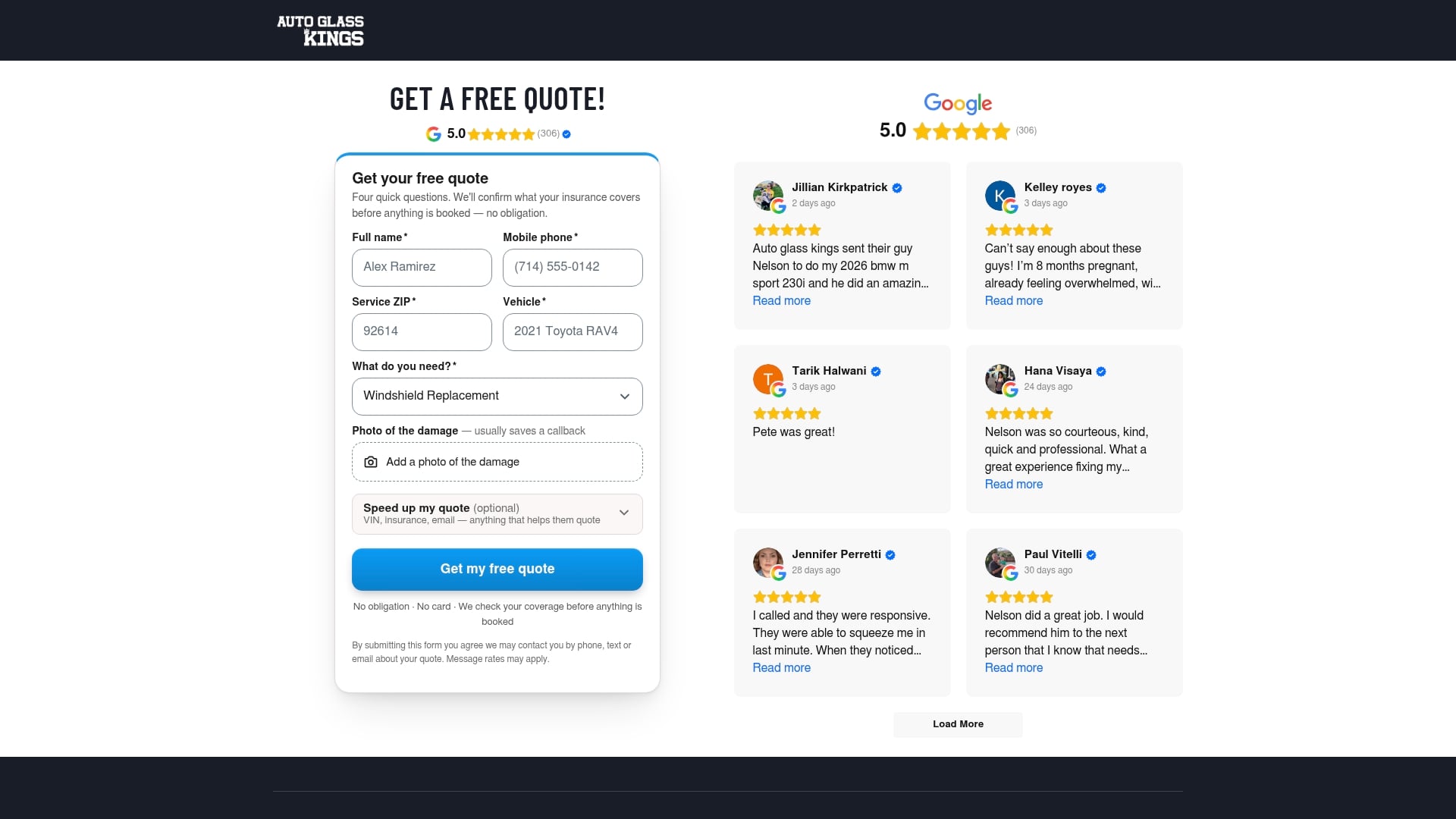
You can also start from our windshield replacement page or our home page.
FAQ
Is a mobile windshield replacement as strong as one done in a shop?
Yes, when the installation follows the adhesive maker’s instructions. The industry standard requires that both mobile and in-shop installs meet the same conditions. Strength comes from correct prep, adhesive and cure time.
How long should I wait before driving after a mobile replacement?
It depends on the adhesive and the temperature and humidity. I-CAR says fast-cure products can be as short as 30 to 60 minutes under ideal conditions, and longer in cooler or drier air. Your technician must tell you the exact time for your car.
Does my car need ADAS calibration after a new windshield?
If it has a camera or radar tied to driver-assistance features, automakers require it. Sika’s guideline states that manufacturers require recalibration after the windshield changes. We do it on site in the same visit.
Can bad weather stop a mobile install?
Yes, and that is a good sign when a technician says so. Rain, cold and wind affect adhesive curing, so we move the car, adjust the adhesive or reschedule to protect the bond.
Sources
- ANSI/AGSC/AGRSS 005-2022 standard
- SRP Installation Manual 2025
- I-CAR: Minimum Driveaway Time for Urethane Adhesive
- Sika General Guideline for Vehicle Glass Replacement
- NHTSA interpretation on replacement glazing
- Volvo Car USA windshield replacement statement
- Honda position on ADAS recalibration
- AGSC certification program
- AAA: windshield repair vs. replace
Recommended
- Top 5 Benefits of Mobile Windshield Repair Near You
- Why Mobile Windshield Repair Is Ideal for Busy Drivers
- Mobile Windshield Replacement: 60–90 Minutes, Plus ADAS Checks
🎧 Listen to This Article
Share
Recent Posts
November 22, 2026
Auto Glass Coverage in California: What Your Policy Pays
How California auto insurance covers windshields, side glass and ADAS calibration, what deductibles mean, and what the 2026 glass law changes for you....
November 21, 2026
Bentley Windshield Sensors: What Sits Behind the Glass
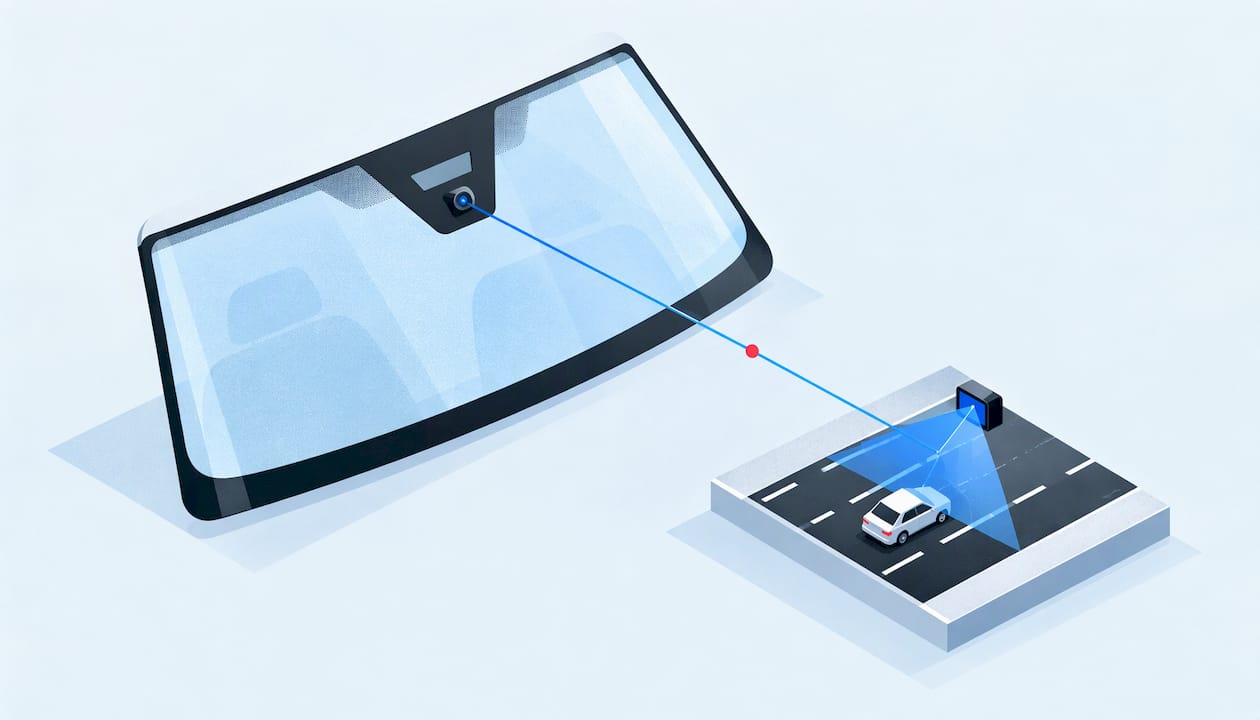
Bentley windshield sensors explained: the camera, rain and light sensors behind the glass, what a replacement does to them, and how to get...
November 20, 2026
Urethane Smell in Your Car: What It Is and What to Do
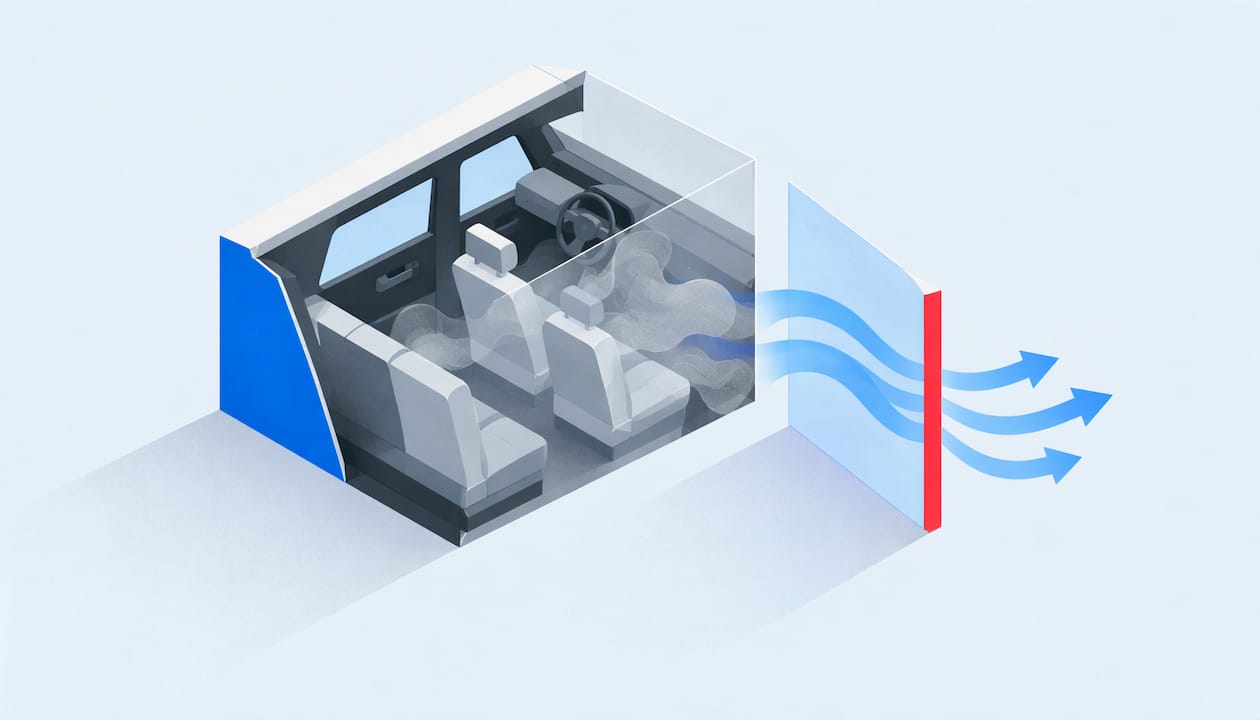
A sweet, chemical smell after a windshield replacement is usually fresh urethane adhesive. Learn what causes it, how to ventilate safely and when...